
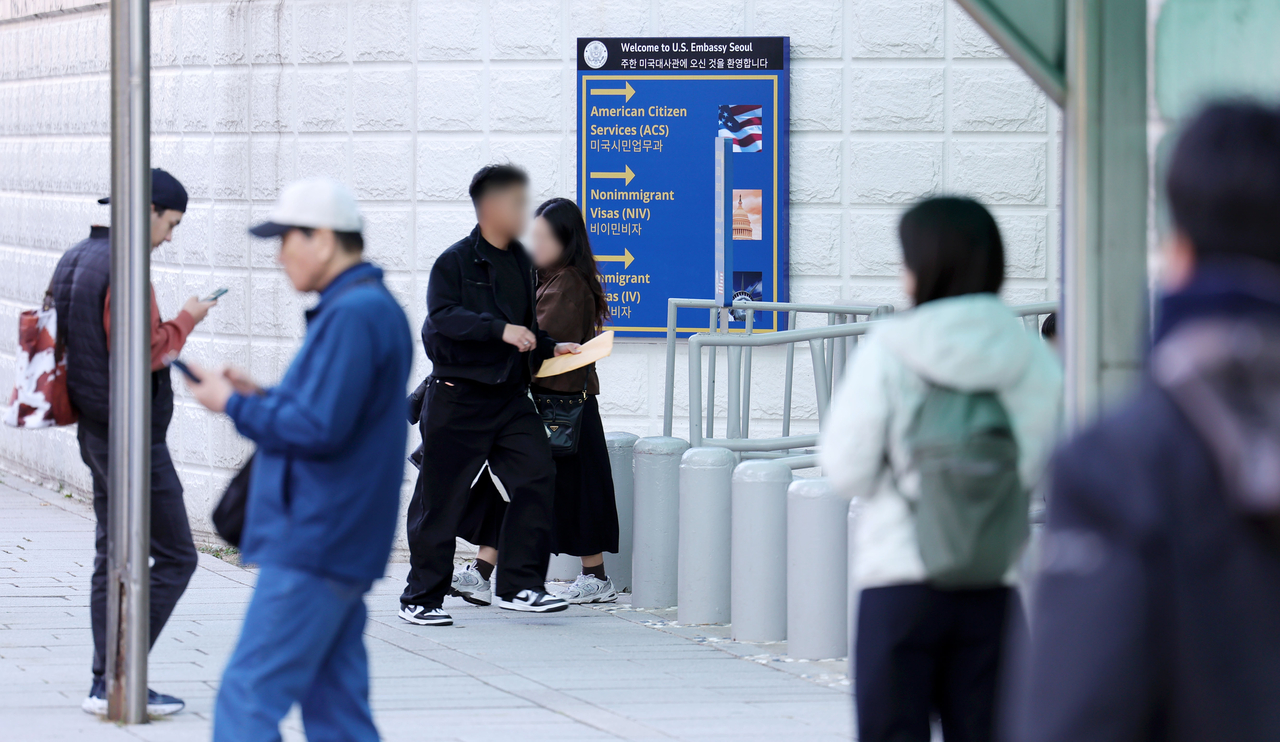
The proportion of South Korean applicants denied US visitor visas surged to nearly 25 percent last year, exceeding refusal rates for applicants from several other major countries.
Foreign Ministry officials suggested that tighter screening amid heightened political debate over immigration in the US may have contributed to the increase. Rep. Kim Dai-sik of the opposition People Power Party questioned whether bilateral relations had also played a role.
According to ministry data released by Kim on Monday, the adjusted refusal rate for South Korean nationals seeking B visitor visas reached 24.73 percent between October 2024 and September 2025, up 9.76 percentage points from the previous fiscal year.
The number of those visas issued also fell by 21.2 percent, from 15,508 to 12,226.
The B-1 visa covers temporary business visits, while the B-2 visa is intended for tourism, medical treatment and visits to family or friends.
The figures cover B visa applicants, excluding South Koreans traveling visa-free under the Electronic System for Travel Authorization.
Differences in who needs to apply for a visa limit direct comparisons with countries outside the visa waiver program.
The refusal rate for South Korea exceeded those of several other visa waiver participants. The United Kingdom recorded 20.44 percent, while Japan, France and Germany stood at 5.68 percent, 9.67 percent and 12.22 percent, respectively.
Although the rates for the UK and France increased, the rises were limited to 2.41 and 1.17 percentage points, respectively.
The refusal rate for China fell from 25.37 percent to 20.21 percent. India and Vietnam recorded rates of 22.05 percent and 22.08 percent, respectively, also below South Korea’s. None of the three participates in the visa waiver program.
“Exact reasons for visa refusals are difficult to determine, as the US does not disclose them,” a Foreign Ministry official told Kim. “I suspect that immigration becoming a contentious domestic political issue in the US has led to tighter visa screening policies.”
Kim cited the figures amid wider opposition party concerns about Seoul-Washington relations. During a parliamentary audit of the South Korean Embassy in Washington on Oct. 12, Ambassador Kang Kyung-wha spoke of difficulties in communicating with the White House.
Ruling Democratic Party of Korea leader Kim Min-seok also postponed a planned US visit earlier this month.
Those developments, however, occurred more than a year after the period covered by the visa data.
“We need to closely examine whether our government’s diplomatic and defense policies toward the US, as well as changes in Korea-US relations, have contributed to US visa refusals,” Kim Dai-sik said.
forestjs@heraldcorp.com