
After trailing SK hynix in AI memory sales for years, Samsung may have pulled ahead in Q3
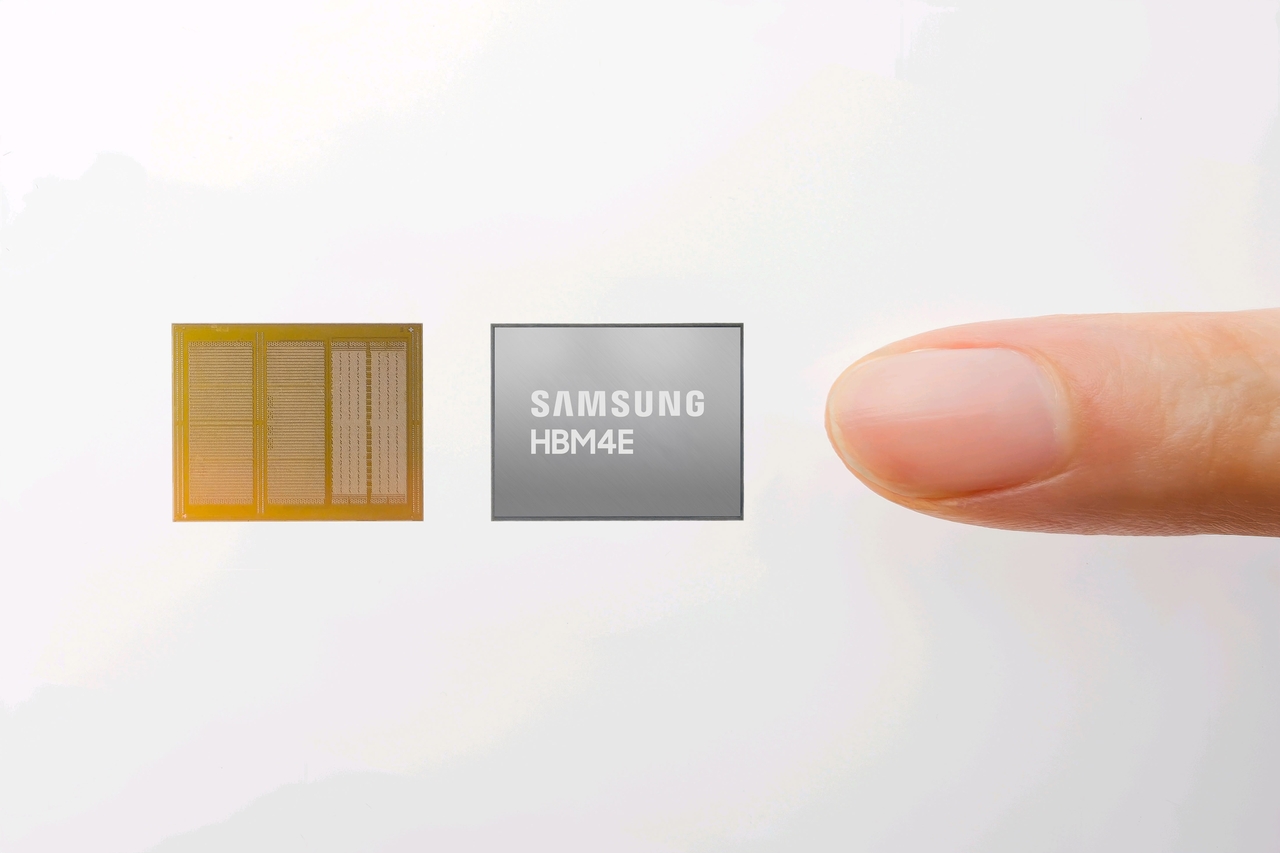
Samsung Electronics may have overtaken SK hynix in third-quarter high-bandwidth memory revenue, according to US equity research firm Bernstein, potentially challenging its smaller Korean rival's long-held leadership in the global AI memory market.
Bernstein estimated Samsung's HBM revenue at $8.7 billion for the July-September quarter, up 33 percent from the previous quarter, compared with $7.6 billion for SK hynix, an increase of 11 percent.
The estimated $1.1 billion lead follows more than a year of market-share gains by Samsung, which had struggled to match SK hynix in supplying advanced memory chips for AI accelerators, including those developed by Nvidia.
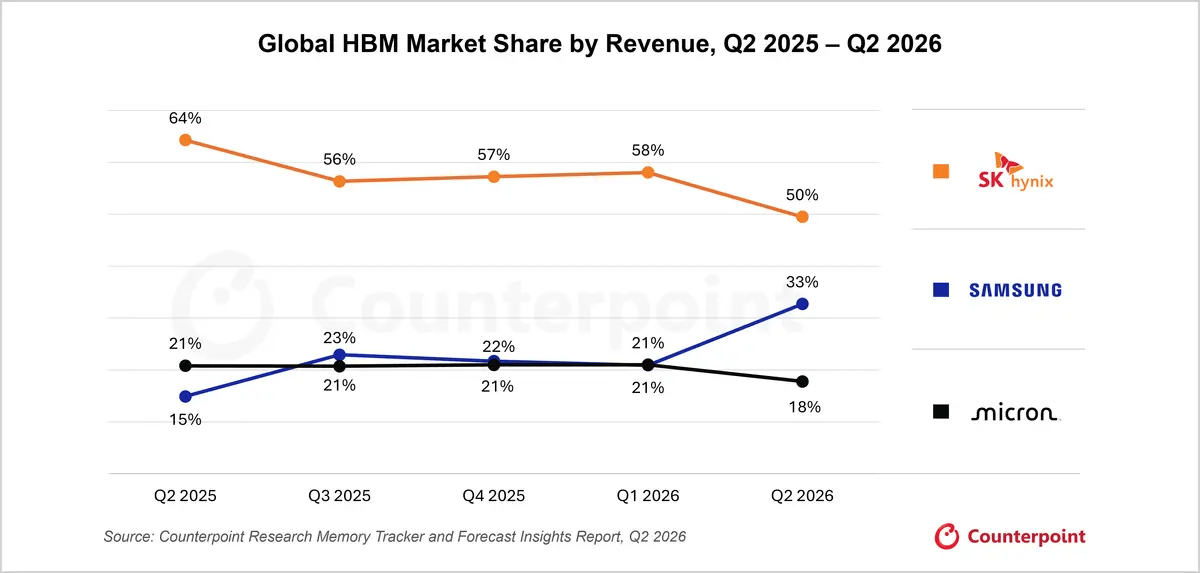
According to Counterpoint Research, SK hynix held 64 percent of global HBM revenue in the second quarter of 2025, more than four times Samsung's 15 percent share. A year later, SK hynix's share had fallen to 50 percent, while Samsung's had climbed to 33 percent, cutting the gap from 49 percentage points to 17.
Bernstein, a prominent Wall Street equity research firm, based its estimates on a regression analysis of semiconductor exports from South Korea's major chipmaking regions, where the two companies operate production facilities.
The analysis found that overall HBM exports jumped 45 percent month-on-month and 131 percent year-on-year in September, as demand for AI memory continued to grow.
Bernstein also examined export value per unit of weight as a proxy for pricing and product mix. Samsung's figure in September was more than twice its previous level and roughly four times that of SK hynix, suggesting a greater proportion of higher-value products. The measure, however, does not directly establish selling prices or technological superiority.
Samsung began commercial shipments of HBM4, the latest generation of the memory technology, in February, while SK hynix started large-scale shipments in the second quarter. Both are competing to supply Nvidia's next-generation Vera Rubin AI platform.
HBM4 offers higher bandwidth than its predecessor, HBM3E, which still accounted for most global HBM revenue in the second quarter, according to Counterpoint. The pace of HBM4 production expansion and customer deliveries is expected to be a key focus of the companies' upcoming earnings calls.
SK hynix is scheduled to report third-quarter results Wednesday, followed by Samsung on Thursday. Both are expected to post record profits, supported by strong AI memory demand and rising conventional DRAM prices.
Samsung has already projected operating profit of 107.4 trillion won ($81.2 billion), while analysts surveyed by FnGuide expect SK hynix to report approximately 77 trillion won.
Hana Securities on Monday estimated SK hynix's average DRAM selling price rose 21 percent from the previous quarter, potentially lifting earnings above market expectations. "Despite concerns over AI investment and macroeconomic uncertainty, actual memory prices and supply conditions tell a different story," said Kim Rok-ho, a semiconductor analyst at Hana Securities.
mjh@heraldcorp.com