Idol-made variety shows deepen fan loyalty, showcase idols’ personalities, create new intellectual property in crowded market

There was a time when getting to know a K-pop idol beyond the stage largely depended on catching them on television.
Groups would make the rounds of variety shows during promotions, showing off impressions, dancing to other artists’ songs or competing in games before disappearing from television until the next round of promotional cycles began.
Today, much of that work takes place on the idols’ own channels.
Self-produced idol content has evolved beyond behind-the-scenes footage and fan-oriented bonus videos to become a key K-pop branding tool, with some series now produced on a scale comparable to standalone variety or reality shows.
Keeping longtime fans, while drawing new ones
The foundation for today’s self-produced idol content was laid out years ago.
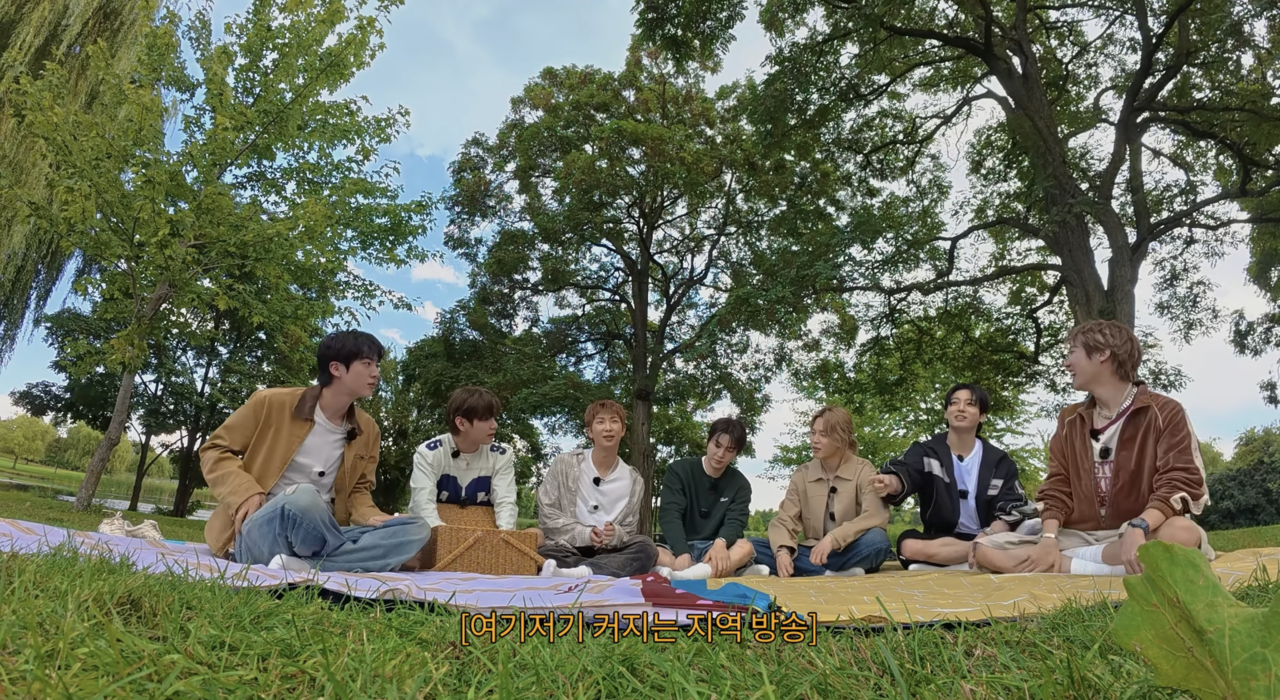
BTS’ long-running variety series “Run BTS,” launched in 2015, became one of the best known early examples of an idol group building its own entertainment ecosystem outside conventional broadcasters. The series shows the bandmates cooking, playing sports, completing missions and spending time together, giving audiences regular access to their personalities and chemistry outside of album promotions.
Speaking in 2023 on tvN’s “You Quiz on the Block,” BTS member V recalled that the group had experimented with various forms of YouTube content in its early days, including behind-the-scenes footage, at a time when such practices were “far less common in K-pop.”
The group’s early embrace of online content has since been cited as one factor behind the growth of its global fandom, with a former YouTube Korea marketing executive writing in a Harvard Business School case study that the platform played “a crucial role” in expanding BTS’ fan base.

Seventeen’s “Going Seventeen” pushed the format further.
First launched in 2017 and largely featuring behind-the-scenes footage, the series evolved into a full-fledged weekly variety program incorporating games, mockumentary sketches, debates, horror episodes and role-playing concepts.
Its popularity extended beyond Seventeen’s own fandom, Carat, with some viewers who watched the program regularly without following the group’s music identifying themselves as Cubics. The success of “Going Seventeen” also helped establish the members’ reputation as capable variety performers, with some carrying into collaborations with star reality TV producer Na Young-seok.

More recently, the process has begun working in reverse: viewers discover idol content first and the music later.
Rescene member Woni’s YouTube channel, “HelloIAmWoniNiceToMeetYou,” is one of the clearest recent examples. Clips featuring Woni and the other Rescene members generated recurring characters and jokes, including the viral “Geoje, yaho!” meme, which spread rapidly across social media and online communities. The phrase came from a March video in which Woni joked that Minami might be scolded for wearing a gyaru-inspired outfit in her hometown of Geoje, South Gyeongsang Province, prompting Minami to cheerfully reply, “Geoje, yaho!” — roughly, “Hi, Geoje!” in Japanese. The exchange spread quickly through short-form clips, bringing new viewers to Woni’s channel and later to Rescene itself.
The attention extended beyond the videos themselves, helping bring renewed interest to Rescene and its 2024 song “Love Attack.”
“The kind of exposure Rescene saw is significant for rookie groups or groups from lesser-known agencies,” an official from a midsize K-pop agency told The Korea Herald. “Unlike established acts, newer groups often have fewer opportunities to appear on major television shows or web variety programs. Self-produced content gives them repeated chances to introduce themselves without waiting for outside platforms to invite them.”

For established artists, the function can be different.
Ateez members San and Wooyoung’s YouTube channel 9teujjong, launched in July, centers on the pair’s long-established friendship and chemistry. The channel is also helping sustain the momentum Ateez gained domestically with its June release “Bad,” which brought the group a new wave of attention in Korea.
Since the first video was posted in July, the channel has garnered 730,000 subscribers, with each video drawing millions of views.
Self-produced content can also generate new intellectual property.
Girls’ Generation member Hyoyeon’s YouTube series “Hyo’s Level Up” helped turn the chemistry among Hyoyeon, Yuri and Sooyoung into a new project unit called HRS, which released its single “Skibidi” on Aug. 31.

A new form of branding infrastructure
As the role of self-produced content expands, entertainment agencies are hiring professional filming crews and building in-house production teams to handle everything from the concepts themselves to small details such as opening sequences, subtitle design and motion graphics.
Fans’ expectations have risen accordingly, making consistency and production quality part of how an idol’s overall brand is judged. As a result, agencies are no longer competing over whether they produce self-made content, but over how distinctive, polished and sustainable that content is.
“Self-produced content is no longer a bonus," an agency official said. "It has become a key platform for reinforcing an artist’s brand, maintaining close communication with fans and a necessary strategy for standing out in the highly competitive K-pop industry.”
Explaining why such content has become increasingly important, the official added that fan attachment often develops through an idol’s personality and offstage character as much as through music and performance.
“Good music and performances are important, but fans often become attached to idols after seeing their personalities, character and more candid sides,” the agency official said.
“Those qualities were traditionally shown through variety programs, but with so much content competing for attention today, agencies can no longer rely on television alone. Self-produced content has become an effective platform to show that an idol is not only talented onstage, but also entertaining and appealing as a person.”