

From new products to store layouts, retailers use virtual consumers to predict buying behavior, cut development costs
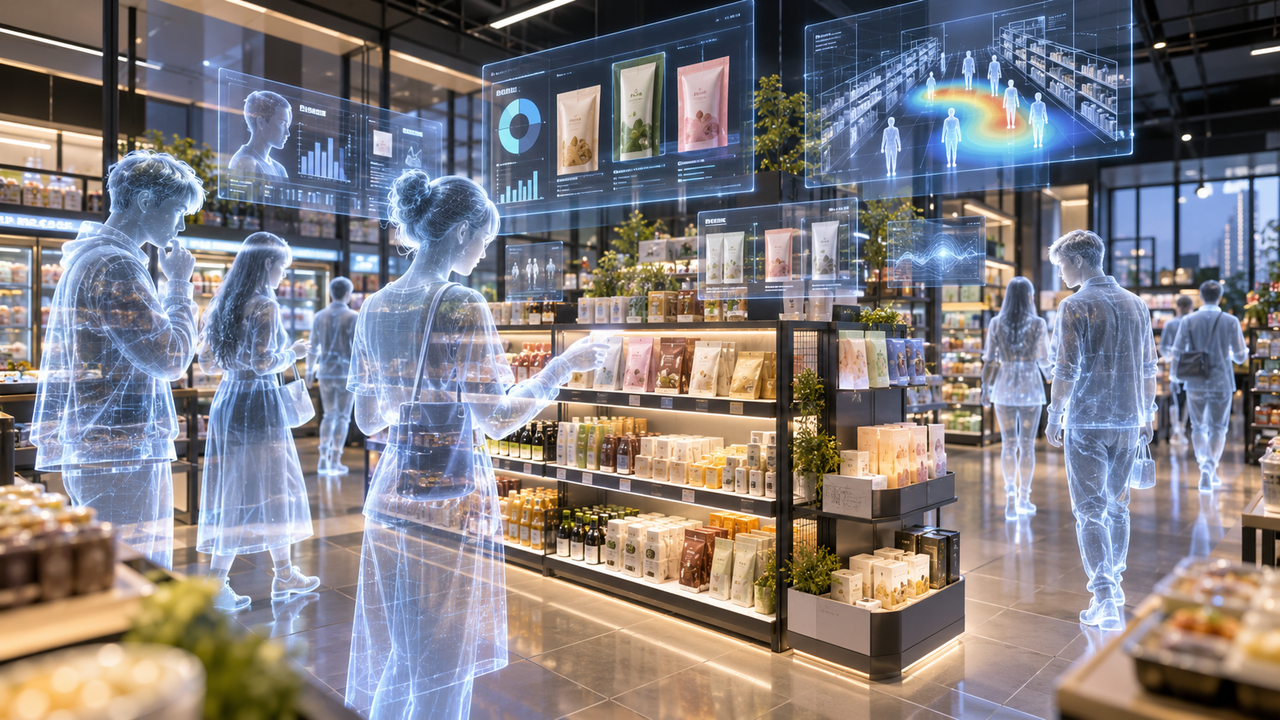
Korean retailers are testing products on artificial intelligence-generated shoppers before bringing them to real customers, using virtual consumers to predict buying decisions, fine-tune prices and identify potential flaws in shopping experiences.
Known as "synthetic consumers," these AI-powered shoppers are designed to mimic real purchasing behavior. Built using large language models and consumer data, they allow companies to test products, marketing campaigns and store layouts without the time and expense of conventional consumer surveys.
Lotte Members is taking the concept toward a more personalized model. The company began developing an AI Twin Consumer in July with local AI firms Vibe Co. and Zero to One Partners, combining purchasing data from some 45 million accumulated users of Lotte’s membership program L.Point with social media data to analyze not only what customers, buy but also the reasons and context behind their consumption.
The idea is to move beyond a conventional consumer persona, such as a woman in her 30s or a man in his 60s. An AI twin can incorporate a wider range of attributes, including purchasing behavior and preferences, to allow companies to interact with a virtual customer and test products or marketing ideas before launching them.
E-commerce platforms are taking a slightly different approach by using virtual consumers to examine the shopping journey itself.
Coupang and Naver have been experimenting with synthetic consumers for market research and user-experience testing. The technology can be used to simulate how customers navigate an online store, respond to product information or encounter friction during the shopping experience.
On top of all that, retailers are not just asking if a customer would buy a product, but also digging deeper by having the AI shopper go through a simulated purchasing journey and identify where customers might hesitate, lose interest or cancel the transaction altogether.
Convenience store CU operator BGF Retail is extending the concept into physical stores. After using synthetic consumers to evaluate new product concepts, the company is working on virtual store simulations that can test product displays, customer traffic and merchandise assortments before changes are introduced at actual stores.
The technology is spreading among various consumer goods producers. Food companies including CJ Group, Daesang, Maeil Dairies, Pulmuone and Sangmidang Holdings have participated in proof-of-concept projects with synthetic-consumer technology provider Intellicia. The company says it has completed 120 proof-of-concept projects with 50 companies.
According to Intellicia, its synthetic consumers are generated from real interviews, surveys, commerce reviews and social media data, rather than simply being assigned demographic characteristics. It claims a 91.2 percent correlation with a 500-person real consumer survey in its benchmark testing.
“For retailers that operate in a market where trends can emerge and disappear within weeks, AI-generated synthetic consumers can now offer them insights without having to recruit actual consumer panels to conduct surveys and analyzing responses every time a product idea changes,” said an official at a retail company.
“As technology advances, retailers are likely to rely more on AI to eliminate weaker concepts, refine products and simulate customer experiences before spending money on production, advertising or changes to physical stores … in the long term, companies may be able to make bigger decisions more swiftly based on a large group of virtual customers.”
hwkan@heraldcorp.com