
Mounjaro reportedly costs a fifth of its Korean price in Japan, reigniting debate over health insurance coverage

South Koreans are traveling to Japan to buy weight-loss drugs at a fraction of domestic prices, reigniting a debate over whether national health insurance should cover obesity treatment.
The growing practice of obtaining prescriptions online from Korea and collecting drugs such as Wegovy and Mounjaro in Japan has raised concerns over medical supervision. But it also highlights a wider problem: Access to obesity treatment in Korea increasingly depends on how much patients can afford to pay.
The Ministry of Health and Welfare said Tuesday it would expedite a review of whether glucagon-like peptide-1-based medications, commonly known as GLP-1 drugs, should be covered by national health insurance.
The review will examine who should qualify for coverage and under what conditions. The ministry stressed, however, that an expedited review does not mean bypassing standard approval procedures for insurance coverage.
Crossing borders for cheaper drugs
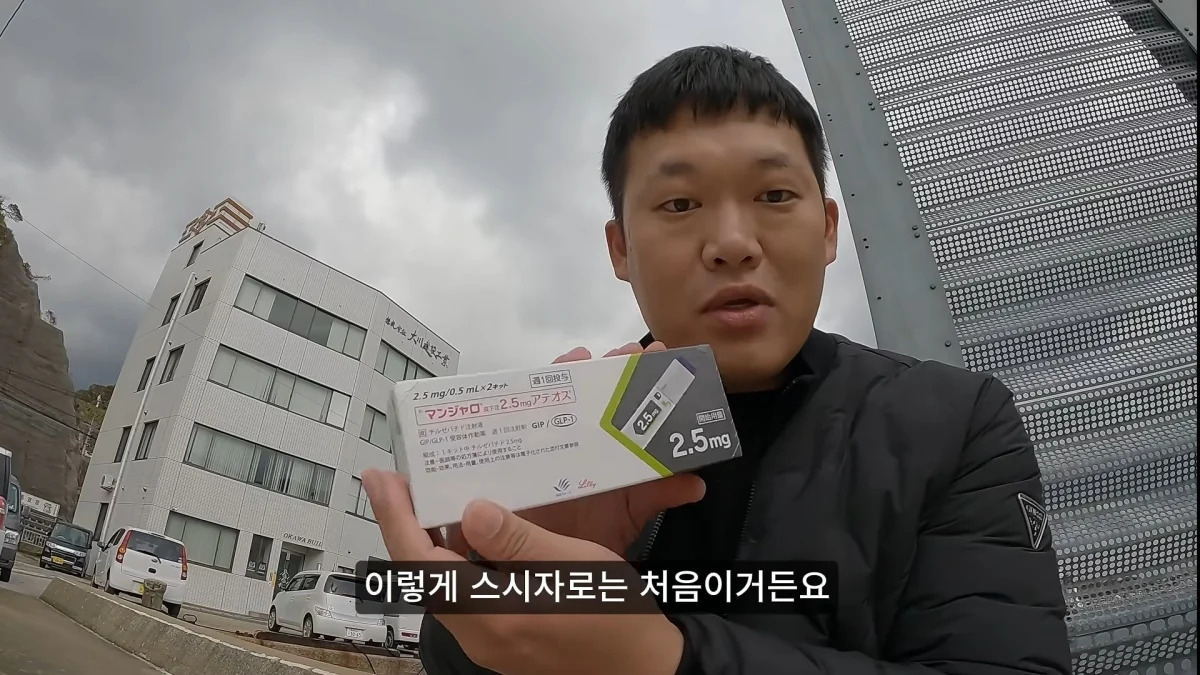
The announcement follows reports of South Koreans traveling to Tsushima, a Japanese island just a short ferry ride from Busan, to obtain cheaper weight-loss drugs.
A recent post on Threads showed people lining up outside a logistics office on the island, reportedly to collect medications ordered in advance. The practice has been dubbed “sushijaro,” a combination of sushi and Mounjaro.
The price difference is substantial.
In Korea, a four-week supply of Mounjaro at its lowest dose of 2.5 milligrams costs around 280,000 won ($209). In Japan, the same product is reportedly available for around 60,000 won, with its price regulated under the country's health insurance system for Type 2 diabetes treatment.
Recent changes to Korea’s personal import rules have also made it easier for travelers to bring medications into the country.
Since Nov. 12, travelers have been allowed to bring in prescription drugs approved overseas for personal treatment without submitting a separate import exemption request. They can carry up to a three-month supply, equivalent to 12 injections for drugs administered weekly.
However, obtaining medication through overseas prescriptions and suppliers raises concerns about adequate medical supervision, proper storage and access to follow-up care.
Patients who experience adverse reactions to personally imported drugs may also fall outside Korea’s drug injury compensation system, while domestic authorities have limited means to monitor distribution or respond to product recalls.
Who should pay for obesity treatment?
The cross-border purchases have brought renewed attention to a long-standing question: Should obesity treatment be covered by public health insurance, and where should the government draw the line between medical necessity and cosmetic weight loss?
“We recognize the need for coverage for patients with severe obesity or accompanying chronic diseases, but are reviewing the issue, including its financial implications,” Health Minister Jeong Eun-kyung told the National Assembly earlier this month.
The ministry said it was difficult to estimate the potential financial burden on the insurance system without first establishing eligibility criteria.
Experts, however, argue that the cost of leaving obesity untreated should also be factored into the debate.
According to the Korea Disease Control and Prevention Agency, 35.4 percent of Korean adults were obese in 2025. The figure exceeded 50 percent among men in their 30s and 40s.
The agency also found that the prevalence of Type 2 diabetes among people under 30 had nearly quadrupled between 2008 and 2021, from 73.3 to 270.4 per 100,000 people.
Experts warn that high drug prices could widen disparities in access to treatment, with overseas purchases offering little relief to patients who cannot afford to travel.
“Obesity-related treatments are generally not covered by health insurance. This inevitably creates a situation in which the government cannot exercise control over them,” said Park Jung-hwan, a professor of endocrinology and metabolism at Hanyang University.
“Some of these issues could be addressed by first extending coverage to patients with severe obesity or those in lower income brackets, then evaluating the effectiveness of the policy.”
forestjs@heraldcorp.com