
Case highlights enforcement challenges, child rights concerns in Korea's implementation of the Hague Convention

A Korean mother has been held in contempt by a US court for failing to return her son to his father in the US more than seven years after bringing the child to South Korea.
According to the JoongAng Ilbo on Wednesday, a court in King County, Washington state, ordered the mother, as part of its contempt ruling, to pay the child's father approximately $80,000 in unpaid child support, interest and attorney fees.
The court also ruled that if she fails to return the child to Washington state within 30 days of the ruling, she will face a daily fine of $100 for each day beyond that deadline.
The dispute dates back to June 2019, when the mother traveled to South Korea with her then-3-year-old son amid divorce proceedings in the US and remained there. Both the father and son are US citizens.
A US court order issued the following month required the mother to return the child, and the father was granted custody in December.
Courts in South Korea later issued multiple orders for the boy's return to the US, imposing fines and ordering the woman's detention after she repeatedly failed to comply.
The case illustrates what is known as international parental child abduction, which occurs when one parent wrongfully takes or retains a child abroad in violation of the other parent's custody rights, often amid divorce or custody disputes.
Efforts to combat the practice led to the creation of the Hague Convention on the Civil Aspects of International Child Abduction, which was concluded in 1980, establishing an international legal framework for the prompt return of abducted children.
As of this year, 103 countries are parties to the convention. South Korea joined the treaty in 2012, and it entered into force in the country the following year.
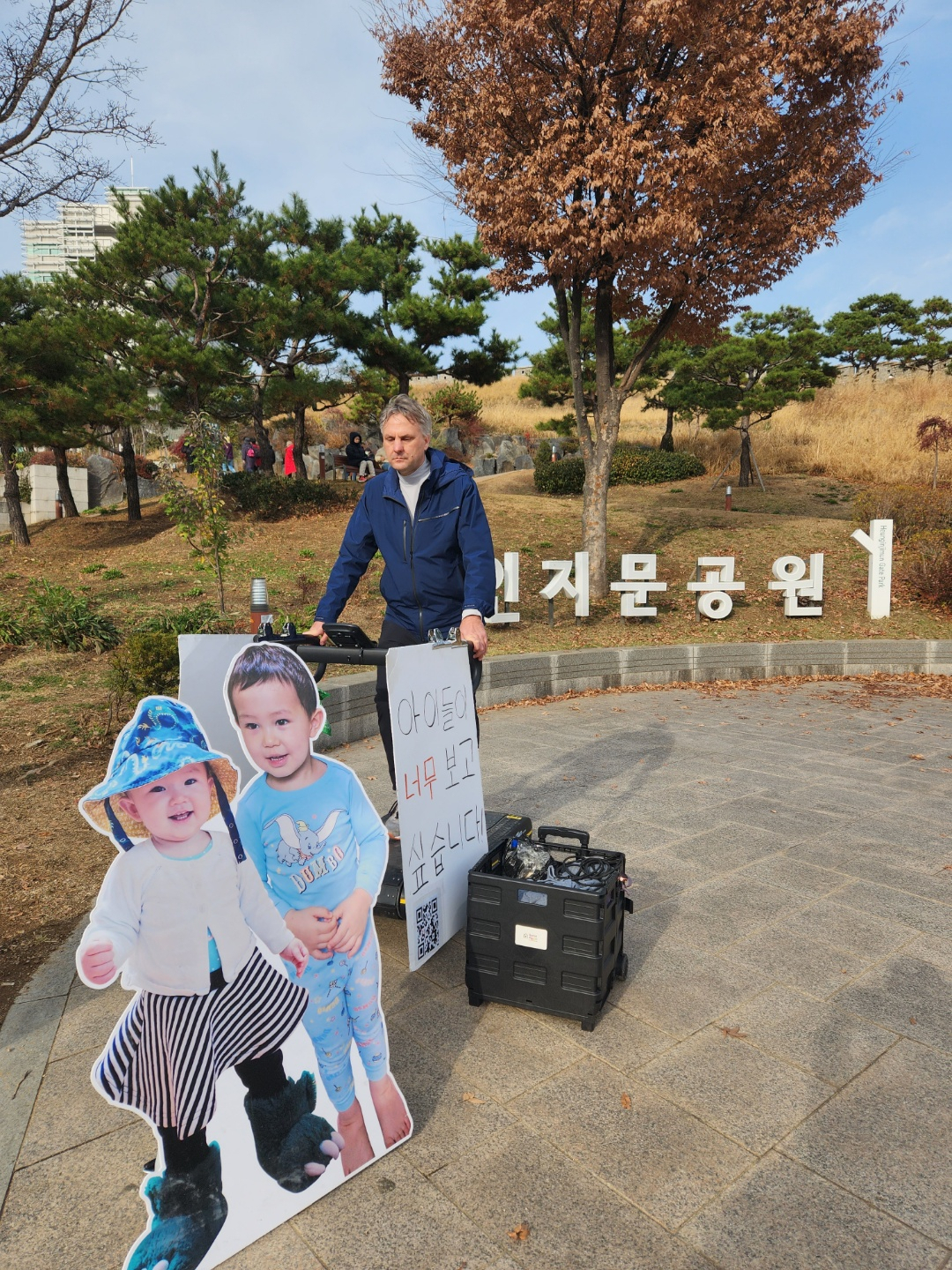
The issue gained widespread public attention here three years ago when John Sichi, an American father, staged treadmill protests across Seoul, saying his Korean wife had disappeared with their children. He was eventually reunited with his children in 2024.
Despite more than a decade of membership, the country continues to face criticism over its failure to effectively implement the treaty. In April, the US State Department cited South Korea for noncompliance with the convention for the fifth consecutive year.

A recent tragedy on Jeju Island highlighted the limitations of the existing system for enforcing child return orders. Last month, a man in his 40s who had disappeared with his 4-year-old daughter amid divorce proceedings in Australia was found dead alongside the girl on the island.
Although the mother secured a return order from the Seoul Family Court in March under the Hague Child Abduction Convention and obtained permission to enforce it, she was unable to locate her daughter. A subsequent missing person report to police also failed to prevent the tragic outcome.
Child return procedures under scrutiny
Beyond the difficulties of enforcing child return orders, concerns have emerged over how children are treated during the process.
In a recent case in Busan, for instance, a Korean woman brought her child to South Korea without the consent of her estranged American husband. The father took legal action to secure the child's return, and a Korean court ruled in his favor under the Hague Child Abduction Convention.

During the enforcement process, however, a court enforcement officer and three private contractors forcibly separated the child from the mother, despite the child crying and calling out for her.
The incident raised questions about whether the Hague Convention's provisions on child protection, voluntary return and safe repatriation were adequately observed.
Behind such forceful enforcement practices lies the absence of a legal framework specifically governing compulsory child handovers.
Authorities instead rely on Article 257 of the Civil Execution Act, which governs the delivery of movable property. Children are thus subject to procedures originally designed for the transfer of physical objects.
Calls are now growing for legal reforms that prioritize children's rights and emotional well-being throughout the process.
A bill introduced on Friday by Rep. Kim Nam-hee of the Democratic Party of Korea and 11 other lawmakers seeks to amend the Family Litigation Act to give family courts exclusive jurisdiction over child handovers.
It would require courts to consider the child's age, wishes, psychological state and caregiving environment before authorizing compulsory enforcement.
The bill also calls for voluntary handovers before compulsory enforcement, specifies officers' duties to protect children's rights and establishes procedures for challenging enforcement actions.
"South Korea joined the Hague (Child Abduction) Convention somewhat hastily, without sufficient institutional or cultural preparation. As a result, parents facing child return orders tend to put up strong resistance," Lee Hyun-gon, a lawyer and former family court judge, told a local news outlet.
"Similar cases are likely to recur, yet finding effective ways to improve the existing system remains a challenge."
cjh@heraldcorp.com