Gangnam investigation into businesses using 'Swedish massage' as a front for prostitution draws attention to a long-standing problem
Katerine Ugarte, a Swede who has lived in South Korea for more than four years, remembers seeing a sign advertising “Swedish massage” on a side street near Gangnam Station in 2014 or 2015. The term was unfamiliar to her. She had never encountered it in connection with massage services back home.
“I remember the sign had a picture of someone's bare back with warm stones on it,” Ugarte said. She also noticed that all the windows were covered, which she found “a bit strange,” though she did not give it much thought at the time.
When a massage is described as Swedish, it usually involves smooth, gliding strokes, kneading, muscle lifting and rhythmic tapping, all intended to promote physical and mental well-being.
But in South Korea, the term can carry a different connotation.
“If you only want a massage, they may give you just a massage,” Yoon Dae-hyun, secretary-general of the Korea Massage Association, which represents licensed massage practitioners, told The Korea Herald.
But some businesses advertising “Swedish massage” could offer additional services, he said.
“It's hard for customers to tell because these transactions happen so discreetly,” he said.
What 'Swedish massage' can mean in Korea
To get a better sense of what customers might encounter, The Korea Herald examined online promotions and listings from several massage businesses advertising services under the “Swedish” label.
One business in Seoul's Songpa-gu district presents itself much like a conventional spa, with glossy photographs of its interior. Its staff profiles, however, strike a different tone. One practitioner is described as petite and curvy, while another listing promotes a “sensual” treatment involving close bodily contact.
Customer reviews also place unusual emphasis on practitioners' appearance. One reviewer devoted much of a post to describing a practitioner's apparent age, complexion and figure, adding that the massage itself was “not bad.”
A review for a separate shop in Yongin, Gyeonggi Province, was more overtly suggestive, saying, "she had me worked up from start to finish." It continued, "She was so beautiful and had such a great personality that I couldn't understand why she was working at a place like this."
A search on Naver, South Korea's largest internet portal, and YouTube turned up a wealth of online content from law firms and lawyers advising people who may be questioned by police after visiting Swedish massage establishments.
One law firm posted a video titled: “How to respond to a police investigation on suspicion of prostitution at a Swedish massage parlor,” while another lawyer offered advice on what to do before and after being contacted by investigators.
In October, Gangnam police referred eight people to prosecutors in a case involving two businesses suspected of arranging prostitution under the guise of Swedish massage. The investigation, which began with a complaint filed in November 2025, revealed how the businesses used rented studio units to operate discreetly.
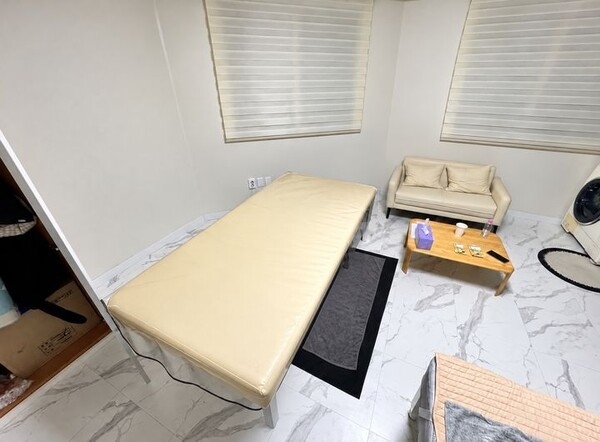
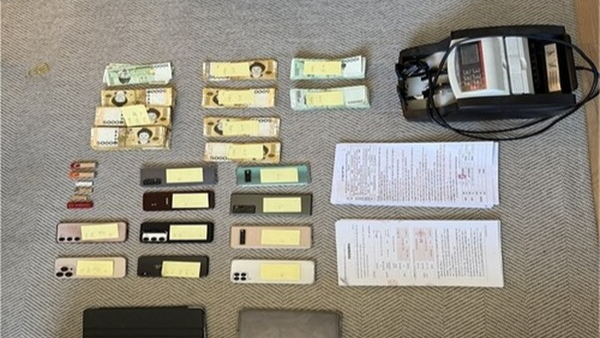
Police traced the businesses to 33 studio units in Nonhyeon-dong and Yeoksam-dong, rented under borrowed names. By examining security footage and call records and conducting surveillance, investigators estimated that the larger operation had arranged about 2,800 paid sexual encounters and generated roughly 575 million won ($427,000) in revenue over about 40 days.
A legal source familiar with criminal procedures said some businesses suspected of arranging prostitution keep their doors locked and use cameras to screen customers before letting them in. That makes it difficult for police to catch them red-handed.
"Many of these cases come to light when a dispute breaks out inside the shop or when someone who knows how the business operates reports it out of spite," the source said.
'Anma' vs 'massage'
Yoon, of the Korea Massage Association, said the Gangnam case exposes a wider gap in oversight of the massage industry and provides a glimpse into a problem that extends beyond one investigation.
He said legal massage businesses are vastly outnumbered by illegal establishments, some of which use massage as a front for sexual services. Shops advertising various types of massage, such as Swedish, Thai, Chinese and Vietnamese, often operate outside the legal framework, he said.
Under South Korea's Medical Service Act, only people with visual impairments can become licensed massage practitioners. And only shops run by these licensed massage practitioners are permitted to use the Korean terms “anma,” meaning massage, and “anma-won,” meaning massage clinic.
In effect, people without visual impairments are barred from becoming licensed massage practitioners. Repeated attempts to overturn the restriction have failed amid strong opposition from groups representing people with visual impairments, who argue that the profession remains one of the few viable livelihood options available to them.
Against this backdrop, some businesses circumvent the licensing restrictions by registering under other categories, such as cosmetics wholesale or retail, while offering massage services without obtaining licenses as massage clinics. They label their services with the English term “massage,” not the Korean word "anma."
Yoon's association, representing the licensed practitioners, has fewer than 10,000 registered members. By contrast, he estimated that roughly 300,000 people work in the unlicensed massage sector nationwide, though he acknowledged that the figure is difficult to verify.
“In terms of sheer numbers, we can't compete,” he said.
Many licensed practitioners run small clinics with limited advertising budgets, making it difficult to vie with businesses that invest more heavily in promotion, Yoon said. At the same time, legitimate clinics can find themselves viewed with suspicion because of the activities of other establishments.
“Our members' clinics are often misunderstood, too. It's also a matter of livelihood.”
Before 'Swedish massage,' there were 'Turkish baths'
Foreign labels being used as a cover for illicit services is not limited to Swedish massage.
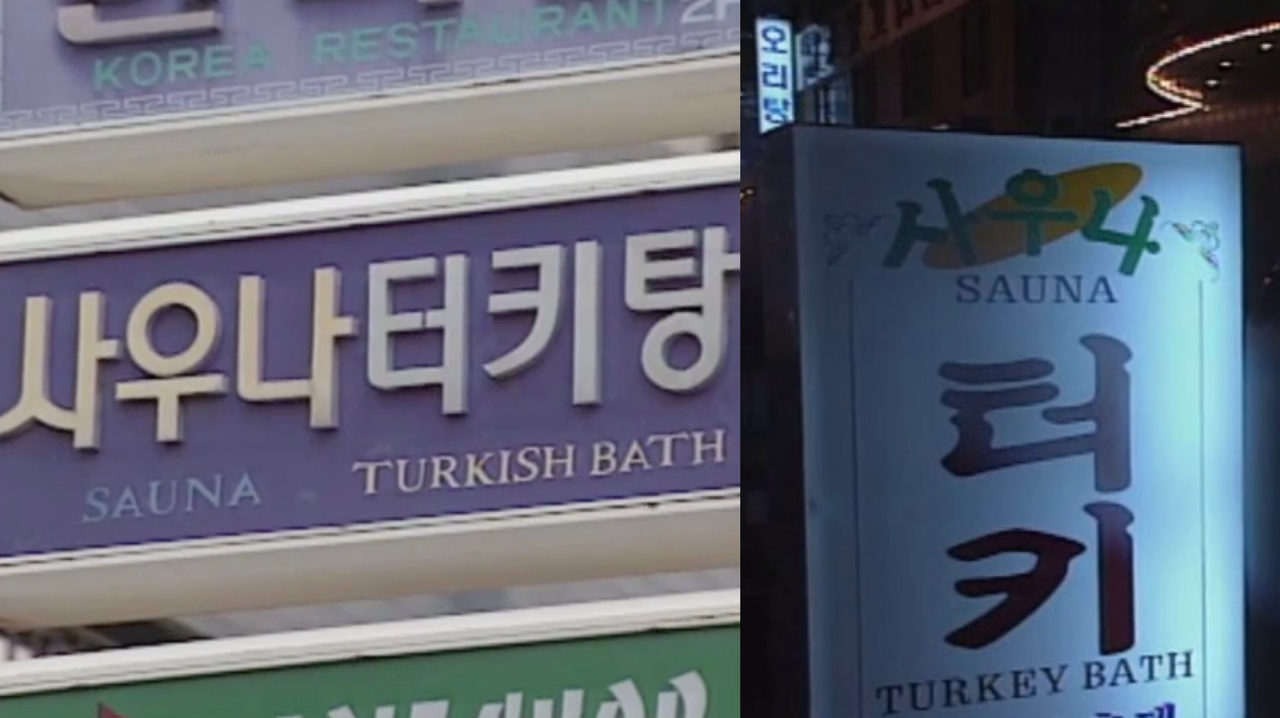
By the 1990s, "teokitang," the Korean term for "Turkish bath," had become associated with bathhouses where attendants of the opposite sex provided bathing assistance, often in settings linked to prostitution.
In 1996, Turkey's acting ambassador in Seoul argued that the establishments had no connection to Turkey's bathing tradition, prompting South Korea to replace the official term with "steam bath." This eventually led to a ban on opposite-sex attendants assisting bathers.
Prior to that, Japan had faced a similar dispute. In 1984, after objections from Turkey, the Japanese bathhouse industry adopted the name "soapland."
Yoon traced the spread of such labels partly to the growth of overseas travel. As more South Koreans traveled overseas, they tried different massage styles and returned home looking for treatments they had experienced overseas. Businesses responded to the demand, he said.
Yoon recalled seeing Chinese and Thai massage advertised first, followed by Vietnamese massage. He remembers seeing Swedish massage signs in Gangnam more than a decade ago, although he could not pinpoint when the term first entered the market.
Names such as "Thai massage" might evoke a treatment customers experienced on vacation. Swedish massage, he suggested, may have a different appeal.
“When you hear 'Swedish massage,' it has a certain European feel to it,” he said.
In a written response to The Korea Herald, the Swedish Embassy in Seoul said Swedish massage "is well established and relates to legitimate massage services." It pointed to Visit Sweden, the country's official tourism website, which describes Swedish massage as "perhaps the best-known massage treatment in the world."
"A Swedish massage does not imply sexual services or prostitution," the embassy said. Its response did not address whether it was concerned about the term's potentially sexually suggestive connotations in South Korea.
tammy@heraldcorp.com