Chip boom prompts central bank to reassess growth outlook for 2026 and 2027
The Bank of Korea is expected to raise its benchmark interest rate by 0.25 percentage point on Thursday, as resilient growth fueled by a semiconductor boom adds to inflationary pressures.
At its October meeting, the BOK kept the base rate unchanged at 3 percent, citing the need to assess the effects of its July and May rate hikes.
The market, however, expects the central bank to lift the benchmark rate at this week's meeting. If the rate is raised to 3.25 percent, it would be the highest since October 2024.
Korea's robust economic growth, fueled by a stronger-than-expected semiconductor export boom, strengthens the case for a BOK rate hike.
At a press conference following the previous rate-setting meeting, BOK Gov. Shin Hyun-song said the next rate decision would be based on third-quarter economic growth and October inflation data.
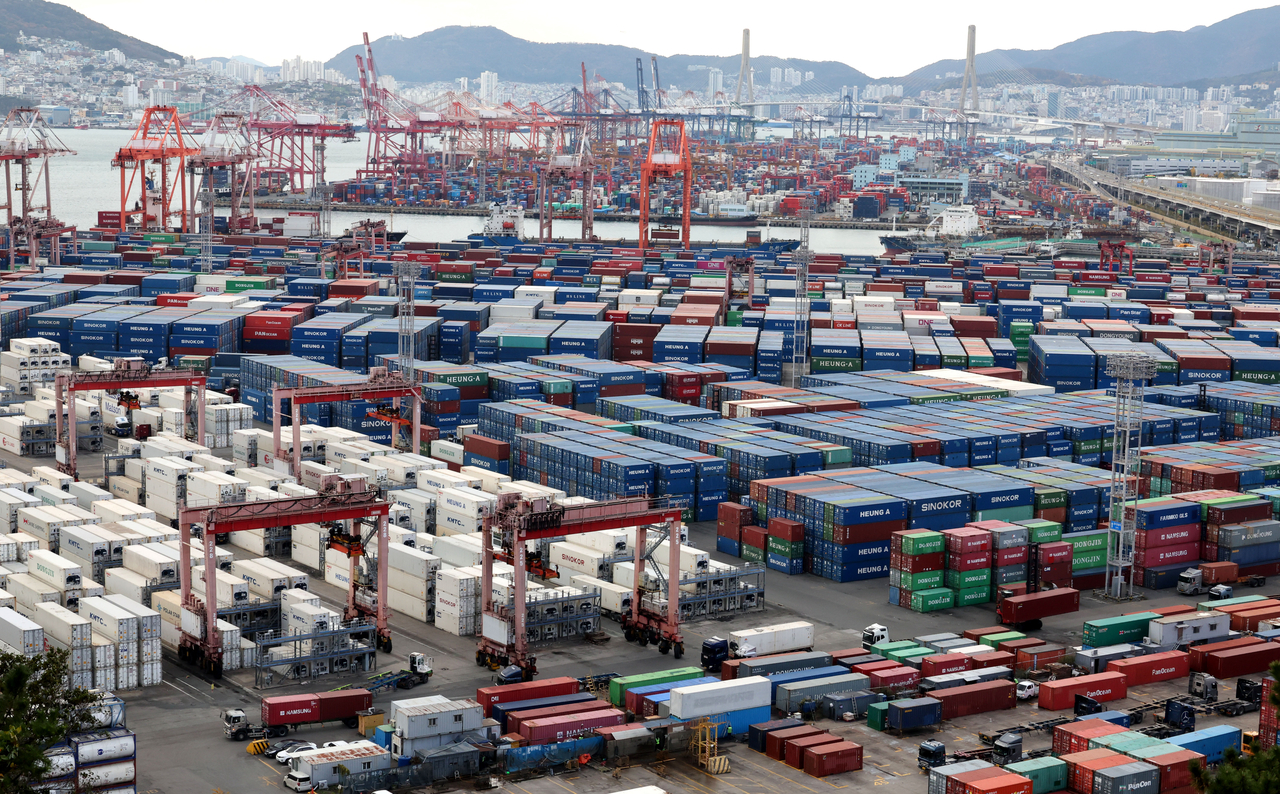
With booming chip exports, Korea's economy grew 3.4 percent year-on-year in the third quarter, significantly exceeding the central bank's forecast of 2.6 percent,
Consumer inflation edged down to 2.8 percent in October from 2.9 percent in September, but remained above the BOK's 2 percent target. Core inflation, which excludes food and energy, remained elevated at 2.8 percent.
"Exports and investment, led by the semiconductor sector, remain strong, while the domestic demand recovery is gaining traction, keeping economic growth stronger than expected," Ahn Ye-ha, analyst at Kiwoom Securities, said.
"With resilient growth also adding to demand-side inflationary pressures, the BOK is expected to raise the rate further."
The US Federal Reserve is also expected to raise its target rate by 0.25 percentage point at its December meeting, adding pressure on the BOK to tighten monetary policy.
Although the won has recently strengthened against the dollar, a widening of the interest rate gap could accelerate capital outflows and renew downward pressure on the Korean currency.
Meanwhile, the BOK is also expected to raise its growth forecast for 2026. Its previous projection stood at 3.3 percent, but annual growth would reach 3.6 percent even if the economy recorded zero growth in the fourth quarter, making an upward revision all but inevitable.
With the Korea Development Institute and the International Monetary Fund having already upgraded their projections for Korea to 3.8 percent and 3.9 percent, respectively, the central bank is expected to follow suit.
The BOK's 2027 outlook is drawing attention. While the central bank had previously forecast 2.9 percent growth, expectations have shifted as major institutions have raised their forecasts, despite earlier views that growth would slow after this year's exceptional semiconductor-driven expansion.
The KDI, in particular, raised its forecast for next year's growth to 3.9 percent, up 1.7 percentage points from its estimate three months earlier.
“Except in highly unusual circumstances, the gap between the KDI's and the BOK's growth forecasts has generally been within 0.1 percentage point. The BOK could also deliver a sizable upward revision to its 2027 outlook, in line with the KDI's projection,” said Kim Chan-hee, an analyst at Shinhan Securities.
silverstar@heraldcorp.com