European home appliance manufacturers are pressing the EU to impose carbon charges on imported refrigerators, washing machines and other household products, seeking to protect their factories from competition with Asian products that are not subject to the same environmental charges.
Industry association APPLiA on Wednesday urged the European Commission and member states to adopt an action plan by 2027, ahead of a meeting of EU competitiveness ministers on Dec. 3. The proposed changes could make appliances manufactured outside the EU more expensive to sell in Europe.
Asian-made appliances accounted for 28.2 percent of the European market in 2024, up from 15.3 percent a decade earlier, according to figures submitted by six EU governments. Over the same period, Europe's share of locally manufactured appliances fell from more than 80 percent to 71 percent, with over 20,000 manufacturing jobs lost in five years.
European manufacturers say existing carbon rules put their factories at a disadvantage.
Steel purchased to make a washing machine in Europe can carry carbon-related costs, but a finished machine imported from outside the EU can avoid equivalent charges.
APPLiA wants to close that gap by expanding the EU's Carbon Border Adjustment Mechanism, or CBAM, which imposes carbon-related charges on certain imported industrial materials.
The European Commission proposed extending CBAM to selected finished appliances, including washing machines, refrigerators and dryers, in December 2025, with implementation planned for 2028. APPLiA wants dishwashers, ovens and freezers added, alongside stricter customs checks and enforcement of environmental rules.
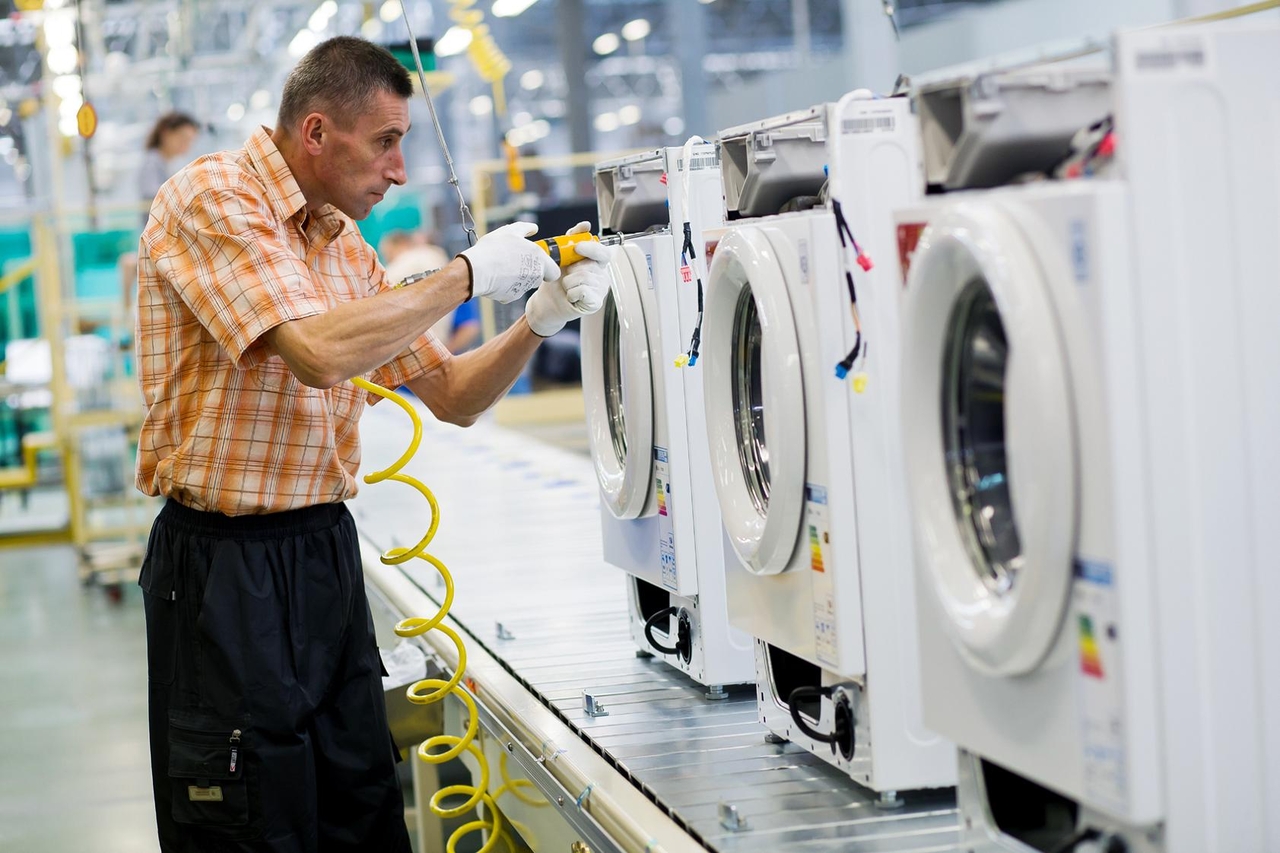
For Samsung and LG, the cost of selling appliances in Europe could depend on where they are made.
Both companies manufacture appliances in Poland, an EU member state. Products made there would avoid the proposed levy on imported finished appliances, while those shipped from factories outside the bloc could face additional costs.
Samsung makes refrigerators and washing machines ain Wronki, Poland, which it expanded in 2023 to increase local production.
LG makes washing machines near Wroclaw, Poland, but ended refrigerator production there in late 2025 under a restructuring plan expected to affect about 180 workers.
The industry's demands have support from six EU governments, including France and Germany, which jointly proposed an appliance industry action plan in September.
South Korea raised concerns at an Oct. 21 trade meeting, asking Brussels to limit the proposed CBAM expansion and give exporters sufficient time to comply.
It is as-yet unclear on which appliances would face charges.
mjh@heraldcorp.com