
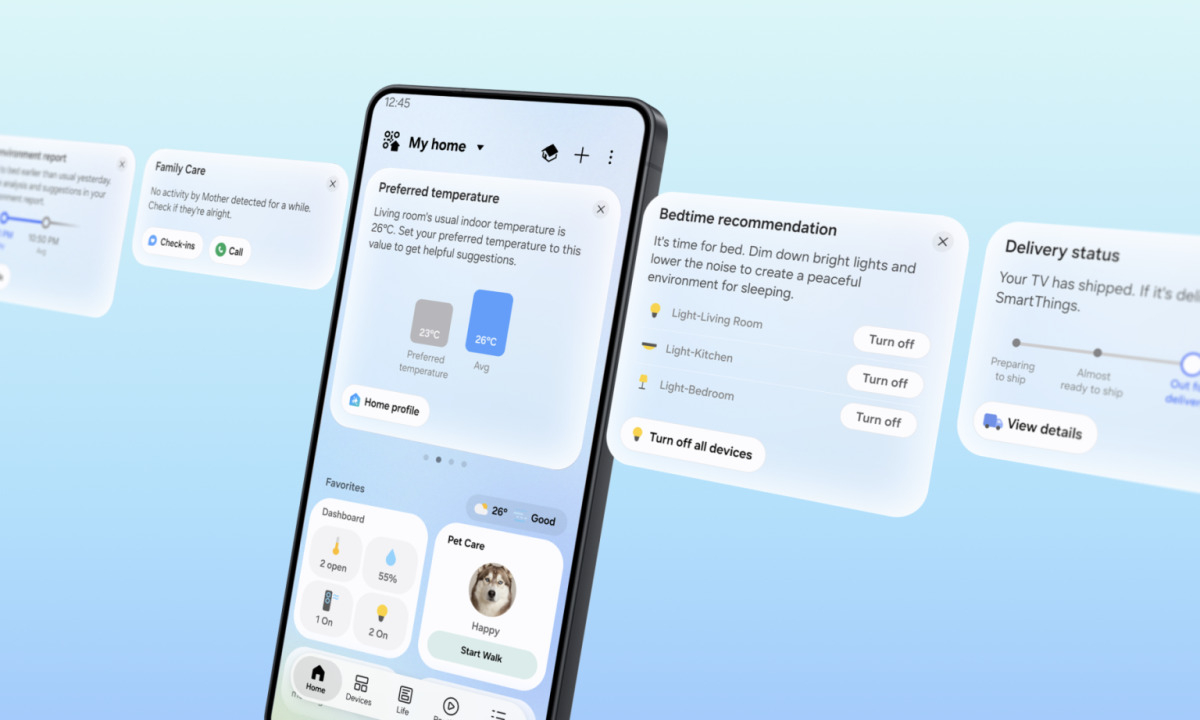
Samsung Electronics is letting ChatGPT users control their SmartThings-connected homes, joining LG Electronics and Google in opening smart home platforms to AI services beyond their own apps and voice assistants.
The experimental integration, announced earlier this month, means SmartThings users can ask ChatGPT to turn off the living room lights, switch on a TV or check whether they left an appliance running.
Users first need to link their Samsung accounts to ChatGPT and choose which home the chatbot can access. Once connected, they can also check recent device activity, run existing automation routines or switch their home to Away or Night mode.
There are limits. ChatGPT can tell users whether a smart lock is secured, for example, but cannot unlock the door. Some devices support status checks only, and Samsung warns that the chatbot can misunderstand commands. Connecting the services also means consenting to share SmartThings data with OpenAI.
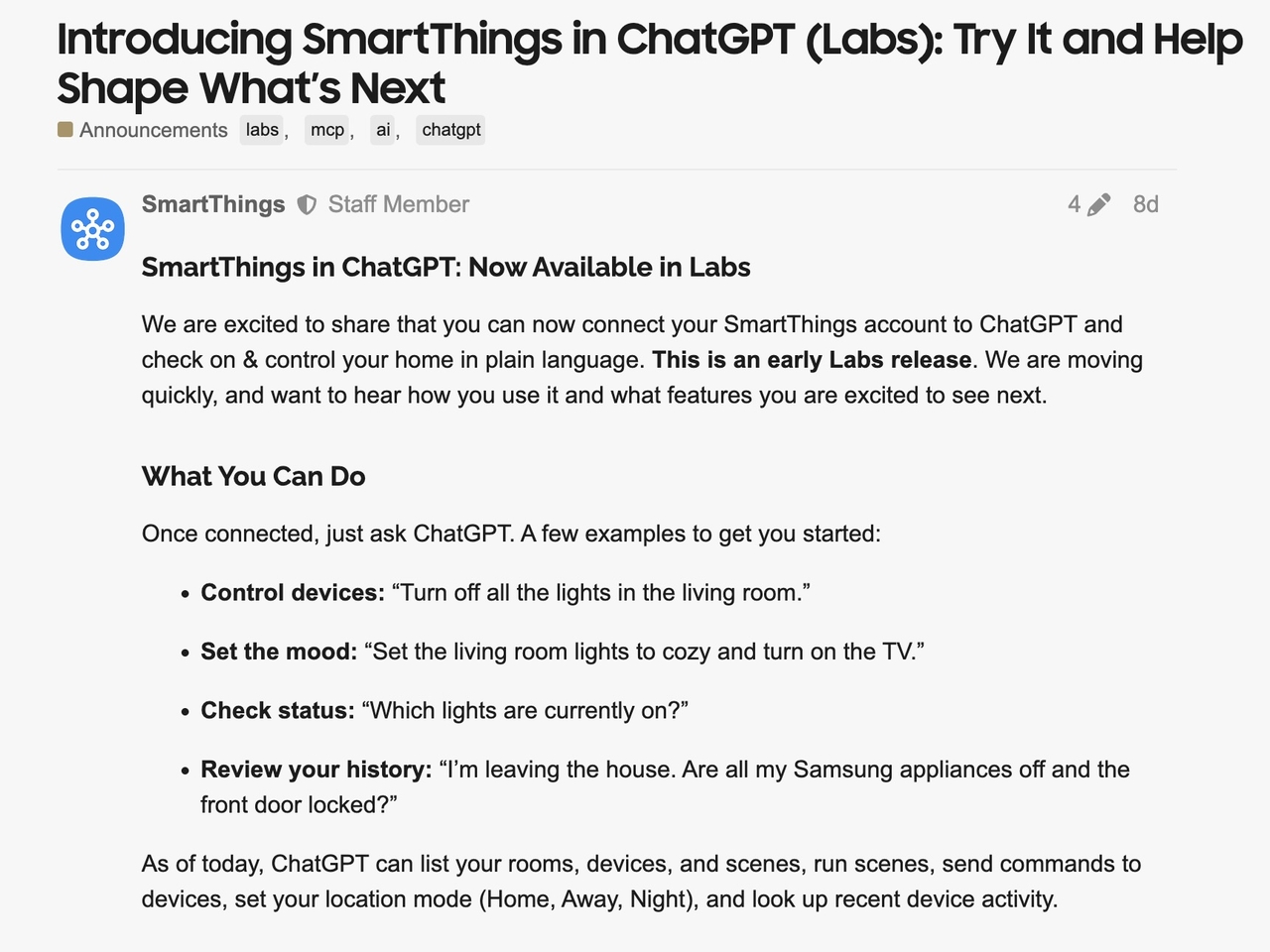
For Samsung, the experiment opens another route into SmartThings, a platform with 470 million registered users worldwide and more than 430 certified partner brands as of October.
It is also a notable choice for a company that has spent years developing Bixby, its own voice assistant, to control smartphones, TVs and household appliances.
Samsung has been open about working with other AI providers.
"We are developing our own AI system, which is on-device-based, but we're also working with outside partners," Park Hyoung-min, an executive director in Samsung's home appliance business, said during CES 2026 in January.
LG was ahead of Samsung in bringing ChatGPT into its smart home platform. Its ThinQ integration, introduced in August, allows users to check and control supported air conditioners and air purifiers.
Google took a different route in September, opening Google Home to outside AI agents through a developer protocol that allows them to interact with connected devices. Access remains limited.
LG is also testing ways for people to use its ThinQ Claw AI agent through familiar messaging apps, including KakaoTalk and Telegram.
"Rather than relying solely on apps, we're moving quickly to expand our interfaces to platforms people already use and spend much of their time on," Noh Beom-jun, an executive director overseeing AI home solutions business development at LG, told reporters at the IFA trade show in Berlin in September.
mjh@heraldcorp.com