SHENZHEN, China — South Korea has made progress toward easing China's unofficial restrictions on Korean entertainment following a breakthrough in bilateral free trade negotiations on services and investment, including cultural content and tourism, according to Cheong Wa Dae.
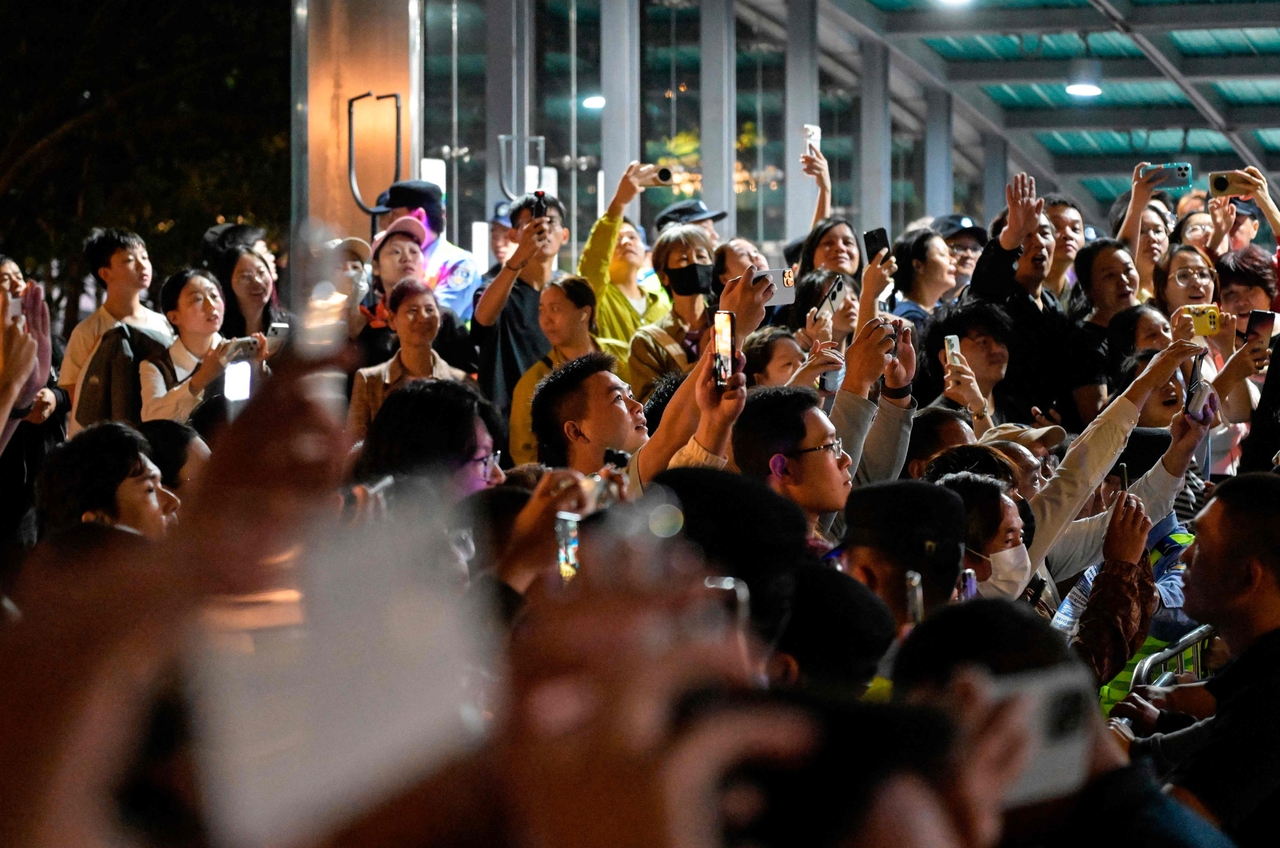
But the deal does not guarantee the return of K-pop concerts to China. Instead, it opens up more channels for Seoul to negotiate with Beijing to secure approval for such performances.
"Rather than meaning that concerts by Korean singers can now be held freely, it means more channels have opened up for us to continue seeking approval for such performances through discussions with China," a senior presidential official said Wednesday during a briefing on condition of anonymity.
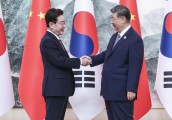
The remarks came after South Korea and China declared the substantial conclusion of follow-up negotiations on services and investment under their bilateral free trade agreement, following a summit between President Lee Jae Myung and Chinese President Xi Jinping on Wednesday.
The agreement is expected to ease barriers facing South Korean businesses in China across industries including film, gaming, tourism, retail, construction, legal services and finance, while strengthening investment protections and regulatory transparency.
The breakthrough has raised expectations of an easing of China's "Hallyu ban," a set of unofficial restrictions that have hindered South Korea's entertainment industry in the Chinese market for nearly a decade. The restrictions emerged in 2016 after Seoul decided to deploy a US Terminal High Altitude Area Defense, or THAAD, missile defense system, drawing strong opposition from Beijing.
Although China has never formally acknowledged imposing a ban, South Korean entertainers have faced barriers to staging concerts, appearing on Chinese television and distributing films and other cultural content in the country.
"The Hallyu ban cannot really be regarded as an official measure by China," the official said. "But there are certainly aspects that we perceive that way."
The official said the conclusion of negotiations on services and investment under the FTA marked progress in addressing those restrictions by securing most-favored-nation treatment for South Korean cultural content.
"The agreement confirmed that Korean content would not be treated less favorably than content from other countries," the official said. "In that sense, we can say there has been some progress in addressing what we perceive as the Hallyu ban."
Concerts, however, remain a separate matter.
"China has certain sensitivities when it comes to concerts," the official said. "The agreement does not contain a provision requiring either country to approve performances by singers from the other country."
The official suggested that China's cautious approach stems partly from the nature of live performances, which bring large groups of fans together.
"Much of this content is consumed individually at home. But concerts bring fans together in one place," the official said. "China appears to have a different approach to this kind of fan culture, and its authorities may view large-scale concerts differently than we do."
Despite the absence of an explicit commitment on concert approvals, the official said Seoul had gained more room to engage Beijing on the issue.
"Even so, we believe more channels have opened up for discussions," the official said. "We think we can explore various options, starting with those that China would find less burdensome."
While acknowledging that the lack of explicit provisions on concerts could be seen as a shortcoming, the official said the agreement represented "significant progress overall in expanding Korean culture's presence in China."
The agreement marks a breakthrough after years of negotiations stalled partly over China's reluctance to open its cultural market.
The two countries began follow-up negotiations on services and investment in 2018, following the entry into force of their original FTA in 2015.
"In previous negotiations, China had insisted on excluding the cultural sector from the talks," the official said. "That led to a prolonged suspension of formal negotiations."
Negotiations resumed around 2025, though difficulties persisted. The official pointed to a series of meetings between Lee and Xi, particularly their January summit, as a turning point in the talks.
"After the South Korea-China summit in January, China began presenting a somewhat improved position on areas of key interest to us, including culture and tourism," the official said. "That helped accelerate the negotiations."
Under the agreement, the two countries agreed to improve market access in sectors including cultural content, tourism and legal services, while introducing most-favored-nation treatment and strengthening investment protections and regulatory transparency. The agreement also provides for nondiscriminatory treatment in preliminary reviews of certain cultural products, including online games and films.
The negotiations have been substantially concluded, though some technical details remain to be finalized before the agreement can be formally signed and enter into force.
"The agreement will take effect once it is signed," the official said. "That could take several more months, but we will make every effort to expedite the signing so that it can enter into force as soon as possible."
dagyumji@heraldcorp.com