Government seeks tougher penalties, including expulsion and 10-year university entrance exam bans

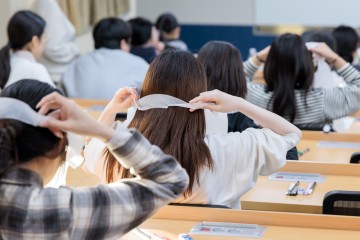
South Korea will deploy nearly 8,000 metal detectors to high schools and seek penalties ranging from expulsion to decadelong university entrance exam bans, as the AI-assisted cheating crisis spreads from national exams to classrooms.
The Education Ministry unveiled the measures Tuesday ahead of high school final exams, amid growing concerns that smart glasses and other sophisticated devices could undermine the integrity of school grades, a key factor in university admissions.
Some schools have already tightened security.
Baehwa Girls' High School in Seoul issued an emergency notice Sunday, a day before its senior students' final exams, introducing security measures comparable to those used during last week's College Scholastic Ability Test, or Suneung.
Students were ordered to surrender electronic devices and undergo inspections of their glasses and clothing, while proctors were instructed to monitor wireless signals. The school extended the measures Monday to first- and second-year students.
Three cases of cheating involving smart glasses have been detected in high school exams this year.
Metal detectors in every high school
The government plans to distribute 7,989 metal detectors to the country's 2,387 high schools, allocating three per school.
Students will undergo screening before or after exams, with additional checks following restroom visits. The ministry plans to obtain prior consent from students and parents to address potential human rights concerns over searches without an explicit legal basis.
Bags must be stored at least 50 meters from examination rooms, while proctors will inspect glasses and clothing for concealed devices.
Schools will disable campus Wi-Fi and monitor wireless signals. Suspicious activity could trigger metal detector screening of an entire examination room.
Students caught cheating with smart devices could receive zeros for all subjects examined that day, while schools will be encouraged to introduce disciplinary measures ranging from suspension to expulsion.
The stakes are particularly high given that more than 80 percent of university places for the 2027 academic year will be allocated through early admissions, in which school records play a major role.
10-year bans for exam cheats
Similar security measures will apply to university-administered entrance exams, including essay tests and interviews.
The ministry is pursuing amendments to the Higher Education Act to extend bans on entrance exam participation for serious cheating from one year to up to 10 years.
Other proposals include establishing legal grounds for metal detector inspections, introducing whistleblower rewards and imposing prison sentences of up to five years for serious violations.
The crackdown follows last week's Suneung, during which five test-takers were caught with smart glasses, miniature cameras or wireless earphones. All five have been referred for criminal investigation, the ministry said.
The government also plans to establish a legal basis for metal detector inspections at high schools and develop technological countermeasures in cooperation with the Science Ministry.
seungku99@heraldcorp.com