
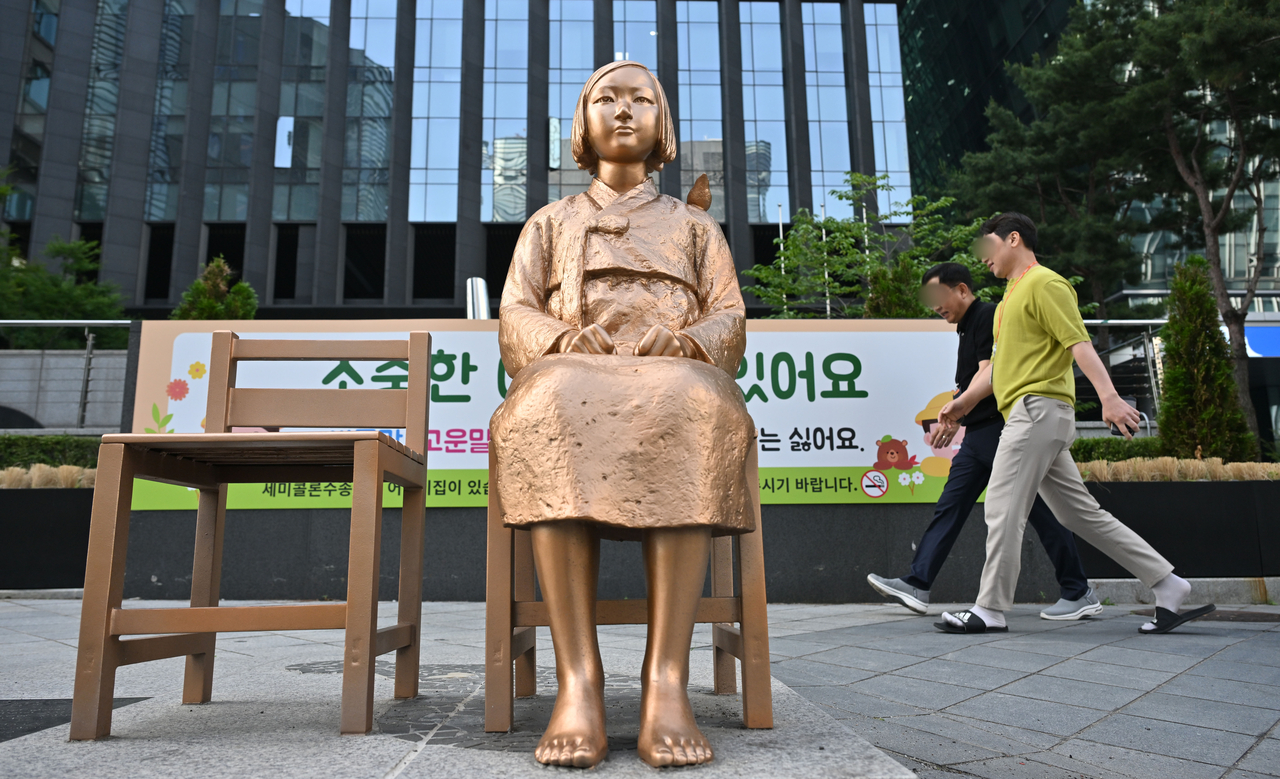
Africa's first Statue of Peace commemorating victims of Japan's wartime sexual slavery will be unveiled in Cape Town, South Africa, on Dec. 1, marking an expansion of the global movement for justice for survivors.
Unlike similar initiatives led by Korean communities overseas, the Cape Town project was spearheaded by South African women's rights activists and academics seeking to draw parallels between Japan's wartime atrocities and their own country's history of colonialism, racial discrimination and gender-based violence.
The statue will be unveiled at 4 p.m. at the Castle of Good Hope, South Africa's oldest surviving colonial-era building, according to local media reports Tuesday.
The site is near Grand Parade, the historic square where Nelson Mandela delivered his first public speech after his release from prison in 1990.
The installation comes despite the Japanese government's longstanding opposition to such monuments overseas and repeated demands for their removal.
Depicting a young girl seated on a chair, the Statue of Peace commemorates victims of Japan's wartime sexual slavery, often referred to as "comfort women," and serves as a broader symbol of the fight against conflict-related sexual violence.
Since the first statue was erected outside the Japanese Embassy in Seoul in 2011, similar monuments have been installed in countries including the United States, Germany, Canada and Australia. The Cape Town installation will bring the number of statues overseas to 17.
The project was led by 1,000 Women Trust, a South African organization combating gender-based violence and femicide, and Helen Scanlon, a professor at the University of Cape Town.
Scanlon first proposed the installation in 2024 to the Korean Council for Justice and Remembrance for the Issues of Military Sexual Slavery by Japan. The project received final approval for installation at the historic site in July.
The unveiling will be followed by a two-day symposium on gender and justice, bringing together African women's rights activists and researchers to explore how the movement for justice for victims of Japan's wartime sexual slavery can inform efforts to combat gender-based violence across the continent.
seungku99@heraldcorp.com