Boryeong transmission plant runs at 500,000-unit full capacity amid steady global demand for GM gas vehicles
BORYEONG, South Chungcheong Province — Above the factory floor at GM Korea’s Boryeong plant, valve bodies and gear packs glide along an overhead conveyor toward the main assembly line on a recent visit. A completed six-speed automatic transmission rolls off the line every 32 seconds on average.
The plant, which marks its 30th anniversary this year, is running at its annual capacity of 500,000 transmissions. Output was about 400,000 as recently as 2022, before export demand and orders from GM Korea’s own assembly plants helped fill the line.
The conveyor carries preassembled modules for the GF6 transmission from the subassembly bay to the main line.
The parts come from the machining line, and the assembly line turns out roughly 110 finished transmissions an hour. During the visit, the line kept moving without any visible buildup of inventory.
The plant has had the capacity to produce 500,000 transmissions a year since 2012. The turnaround began in 2023, driven first by demand for transmissions for GM vehicles bound for South America and later by orders from GM Korea’s assembly plants. The plant is logging 500,000 units annually for the third consecutive year since 2023.
The plant now produces third- and fourth-generation six-speed automatic transmissions for globally popular models such as the Chevrolet Trax Crossover, built in Changwon, South Gyeongsang Province, and the export-bound Buick Envista SUV, built in Bupyeong, Incheon.
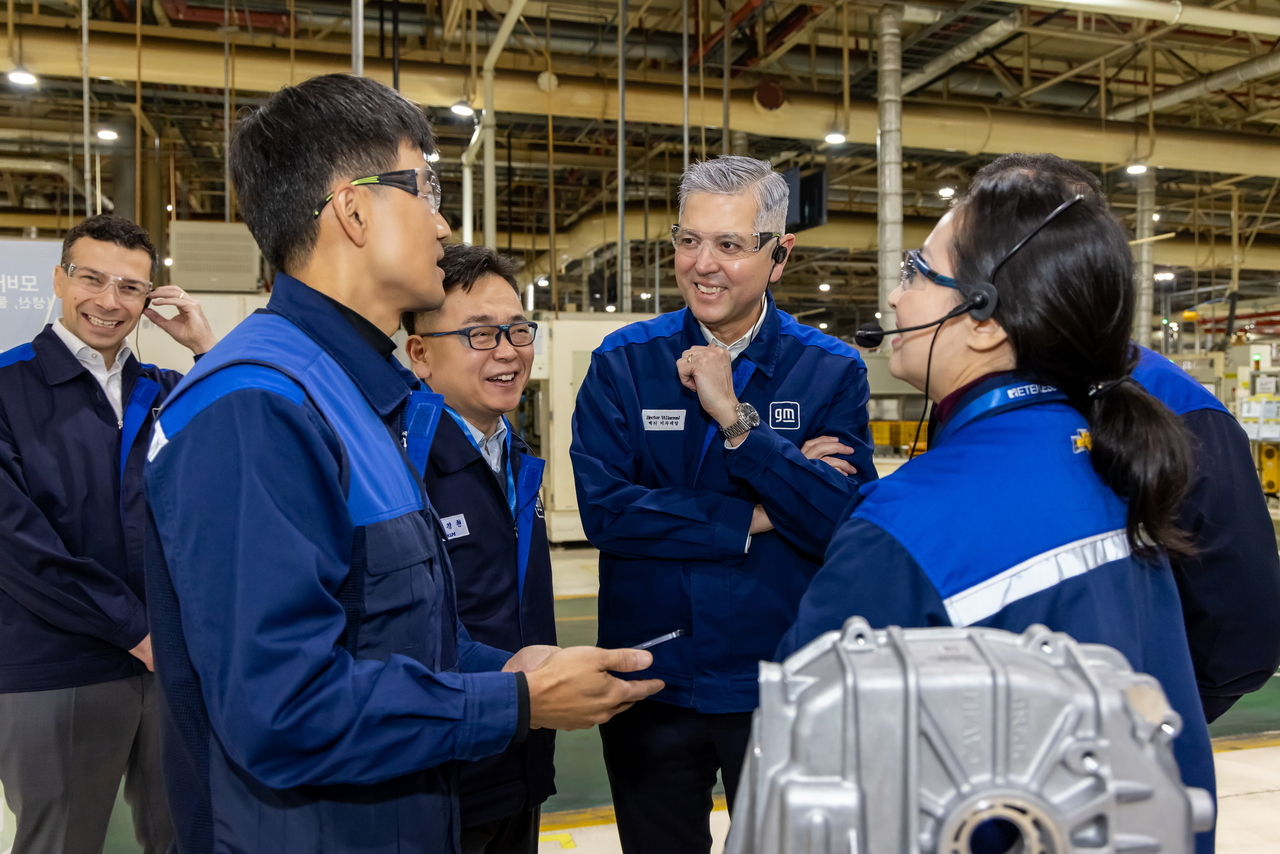
“The high-quality transmission they produce helps us deliver outstanding vehicles and great driving experiences to customers not only in Korea but around the world,” Hector Villarreal, president and managing director of GM Korea, said during a media briefing Monday at the Boryeong plant.
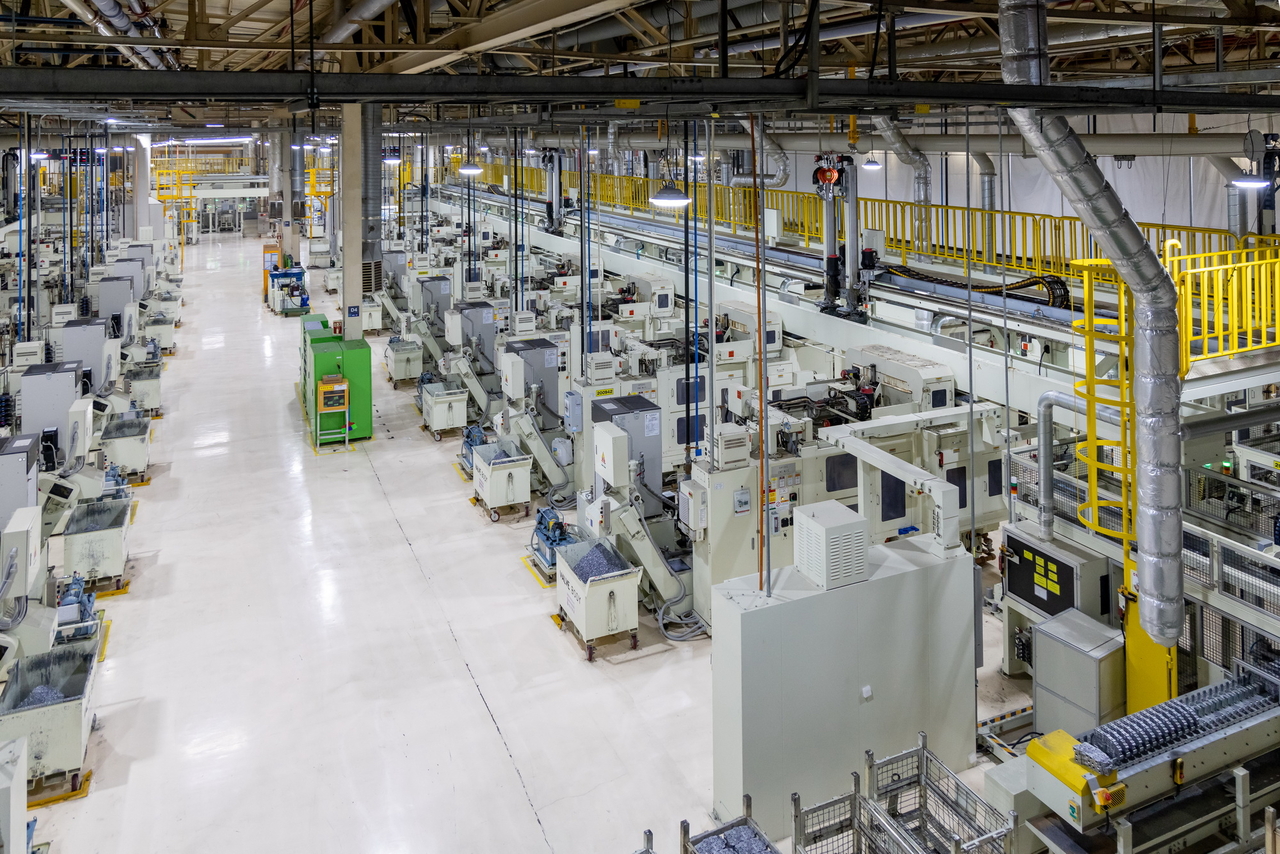
Walking the shop floor reveals how keeping production in-house can help the plant control costs. Many overseas powertrain plants outsource intermediate steps, while the Boryeong plant handles the entire production process under one roof.
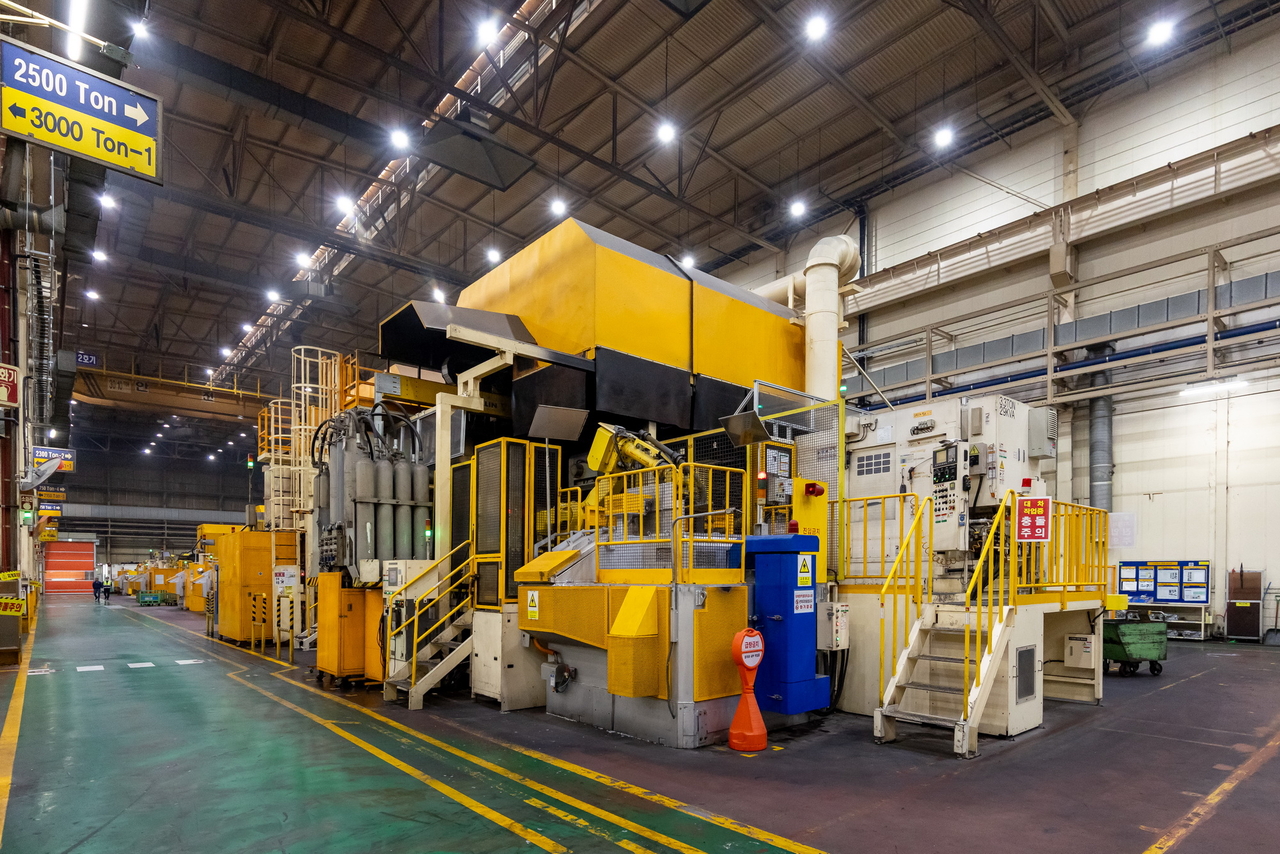
In the casting shop, molten aluminum is die-cast under high pressure into transmission cases and housings. Steel gears are pretreated, heat-treated and precision-finished on-site.
“Gear noise is one of the most persistent complaints in transmission engineering,” said Kim Kyung-hyun, who leads GM Korea’s Boryeong site. “Because we manage heat treatment and precision machining internally, we immediately correct thermal deformation rather than negotiating discrepancies with external suppliers. That traceability saves enormous warranty costs.”
With an 81 percent automation rate in precision machining, the Boryeong plant became the first GM facility to earn a bronze medal under GM’s Global Manufacturing System Next (GMS Next) last year. It earned the award again this year, becoming the only GM facility to win it twice.
Labor relations are another part of the plant’s operating record. In an industry that has seen its share of labor disputes, GM Korea says the Boryeong plant has lost no production to strikes in its 30-year history.
The plant employs more than 600 workers. Its union is affiliated with the Korean Metal Workers’ Union’s Chungnam chapter, while the union’s GM Korea branch has a separate affiliation within the same national union. Last year, the company converted 150 contract workers to full-time employees.
According to Yoon Ho-joong, vice president of manufacturing at GM Korea, the automaker has invested 90 billion won ($67 million) into modernizing the Boryeong facility since 2025. Additional capital will be allocated from GM headquarters’ broader $67 million in investment earmarked for its Korean operations.
As the global auto industry shifts toward electric vehicles, internal combustion powertrains remain important to automakers’ profits. GM Korea is targeting cumulative production of 8 million six-speed automatic transmissions by the first half of 2027, after reaching 7 million last year.
“Global demand for internal combustion vehicles is still very strong, which supports our strategy to operate at our full 500,000-unit capacity,” Kim said. “We expect our production target to remain solid for quite some time as long as combustion engines are in demand, and that continues to be our primary focus.”
hyejin2@heraldcorp.com