Fallen ginkgo leaves from Seoul’s Songpa-gu brighten Namiseom, a filming location for 'Winter Sonata,' saving district on incineration costs
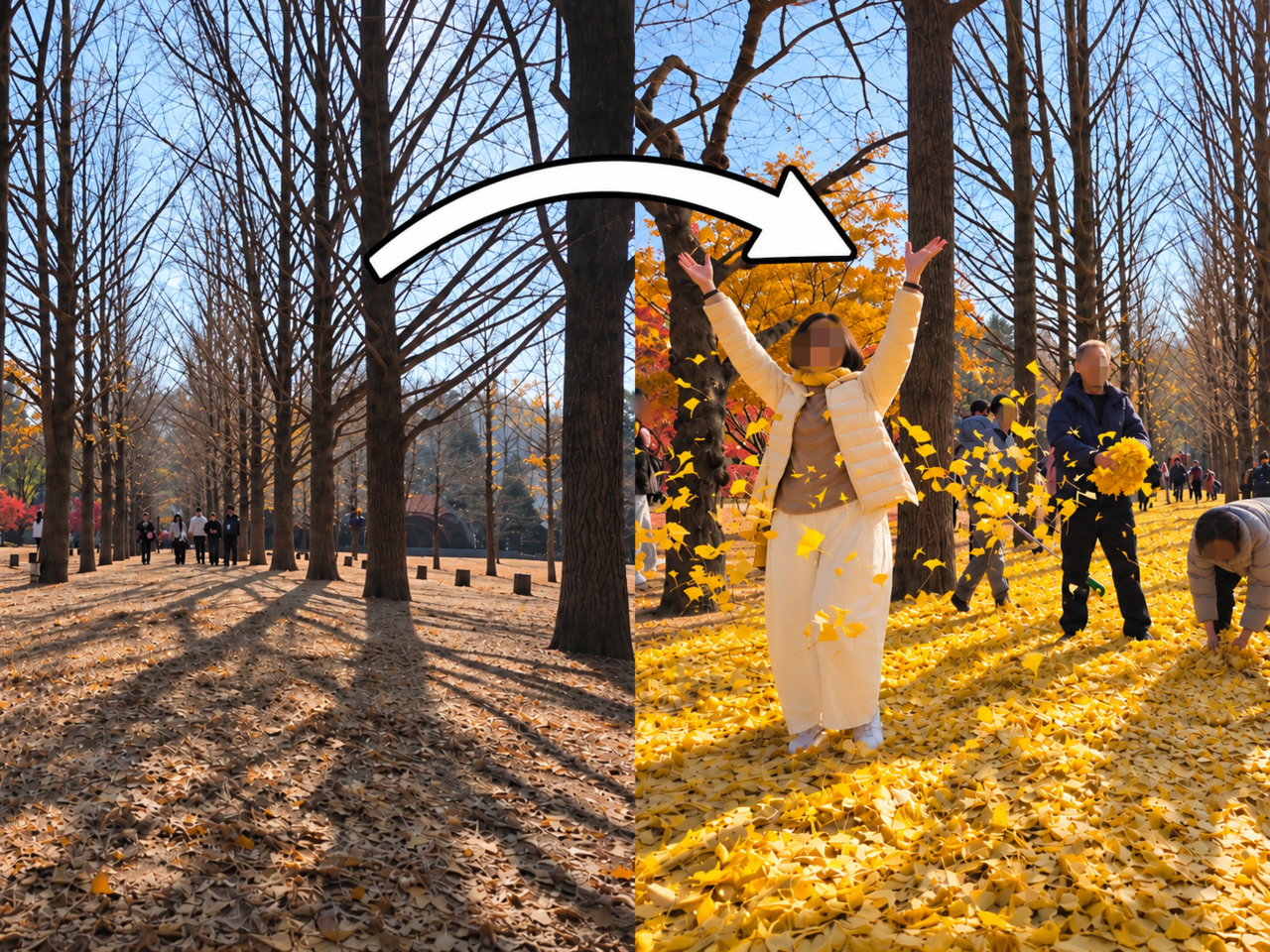
The leaves underfoot on Namiseom’s Songpa Ginkgo Tree Lane were dry and brown on Thursday. Then, around 2 p.m., two trucks arrived with 5 metric tons of bright yellow ginkgo leaves from Seoul.
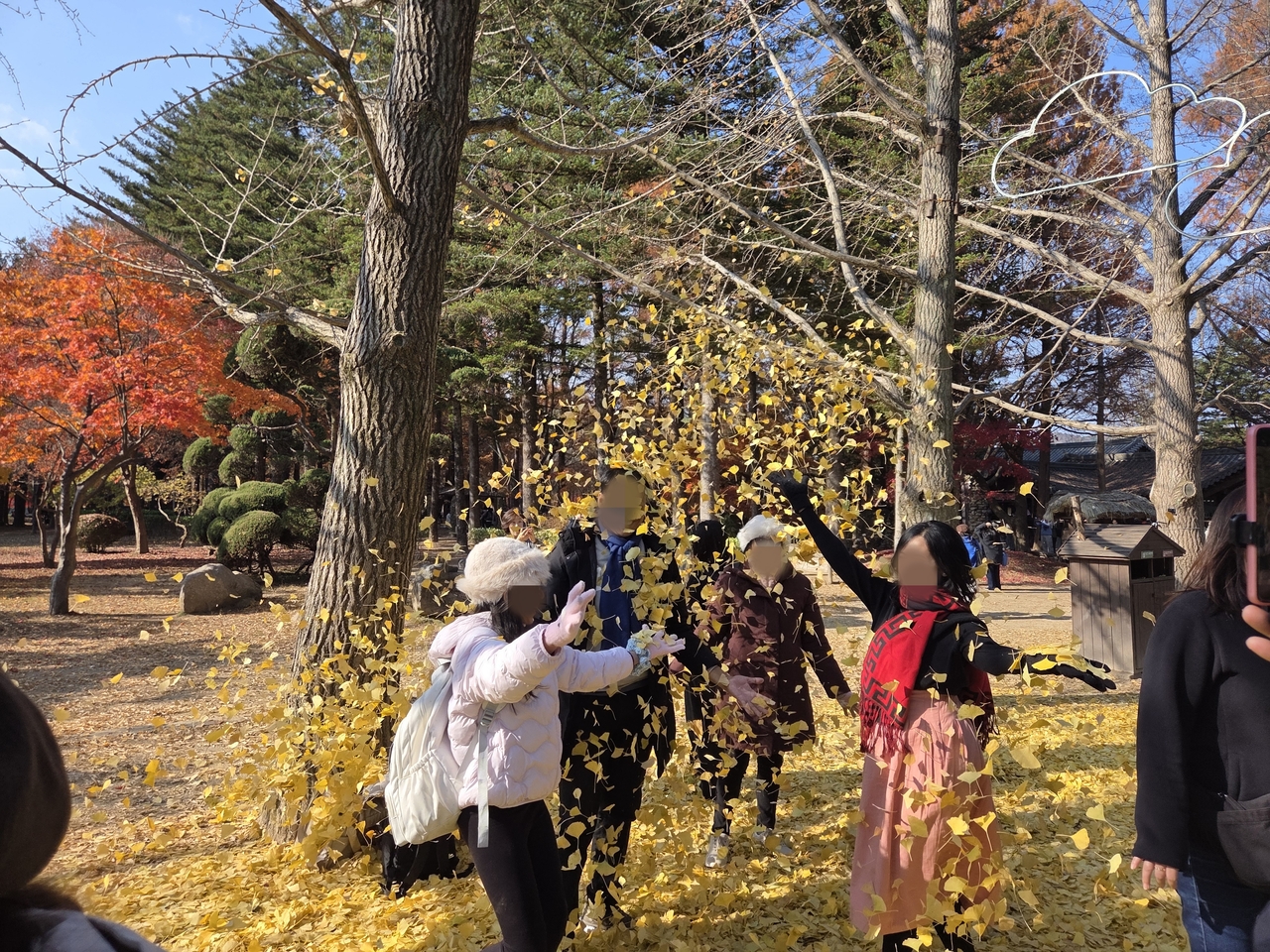
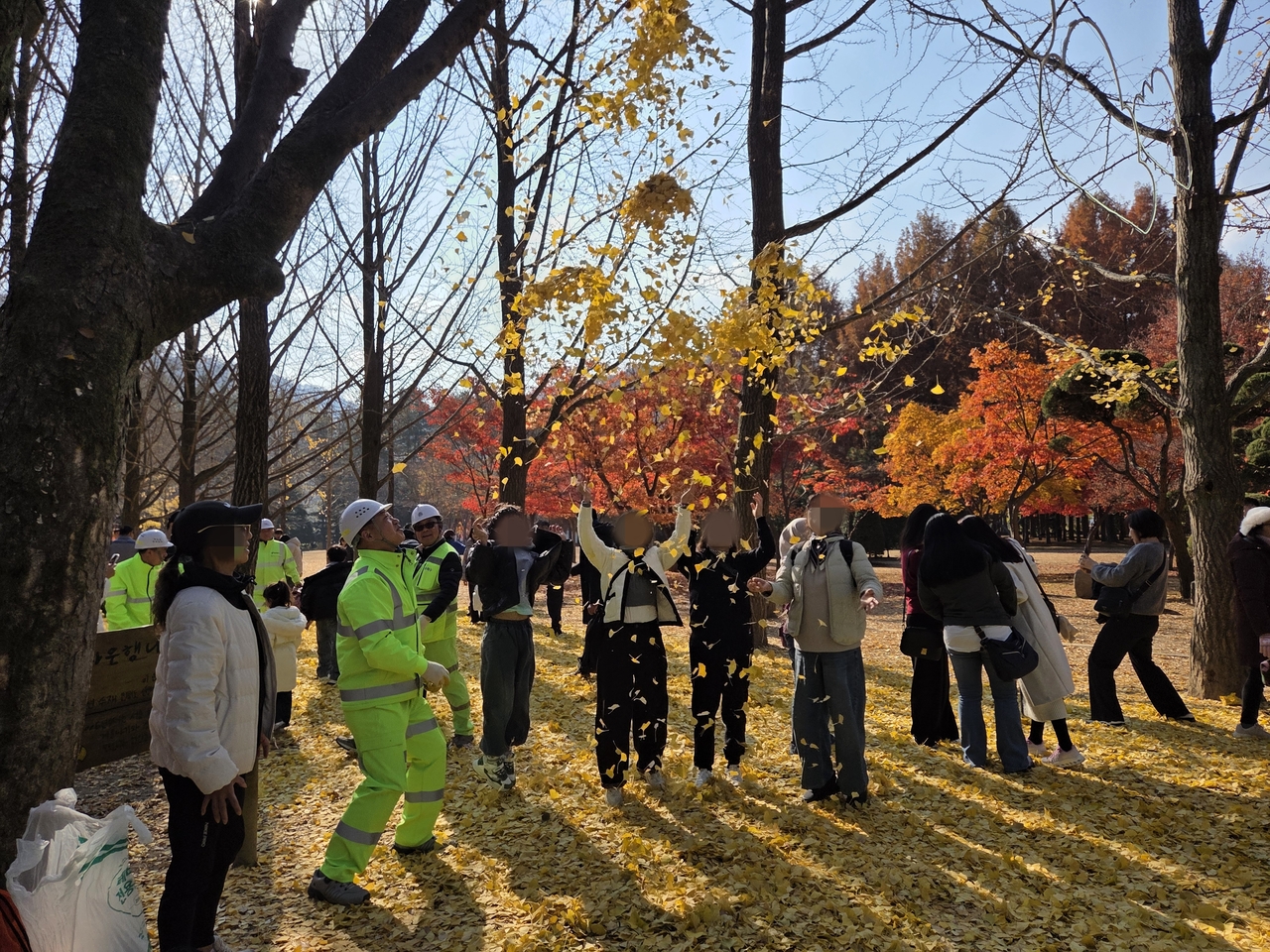
As workers raked the leaves across the 100-meter lane, visitors gathered on the once-quiet stretch. Soon they were laughing, scooping up handfuls of leaves and tossing them into the air.
“They came from Songpa-gu,” one voice called out. “So pretty,” said another.
The leaves had come from Seoul’s Songpa-gu as part of a project the district and Namiseom, in Chuncheon, Gangwon Province, have run every fall since 2006.
Now in its 21st year, the project gives fallen leaves from Seoul another use on the island, where the lane is now named after the district.
Songpa-gu had more street trees than any other Seoul district in 2025. A district official said it costs around 170,000 won ($128) to incinerate a metric ton of leaves.
Sending Thursday’s 5 tons to the island avoided an estimated 850,000 won in incineration fees.
The district also supplies around 600 metric tons of fallen leaves each year to farms in the Seoul metropolitan area, free of charge. Farmers use them as compost or as insulation to protect specialty crops from the cold.
Many visitors appeared to have stumbled upon the delivery.
A Singaporean visitor surnamed Tan, who was on the island with family, said the project was new to them and the scenery was beautiful.
For Ameerullah Sahudin, a tourist from Malaysia, it was his third visit to Namiseom. His first was inspired by “Winter Sonata,” the 2002 drama series that used the island as a major filming location.
He said he had not heard about the project before and welcomed the savings it brought.
From Seoul streets to island path
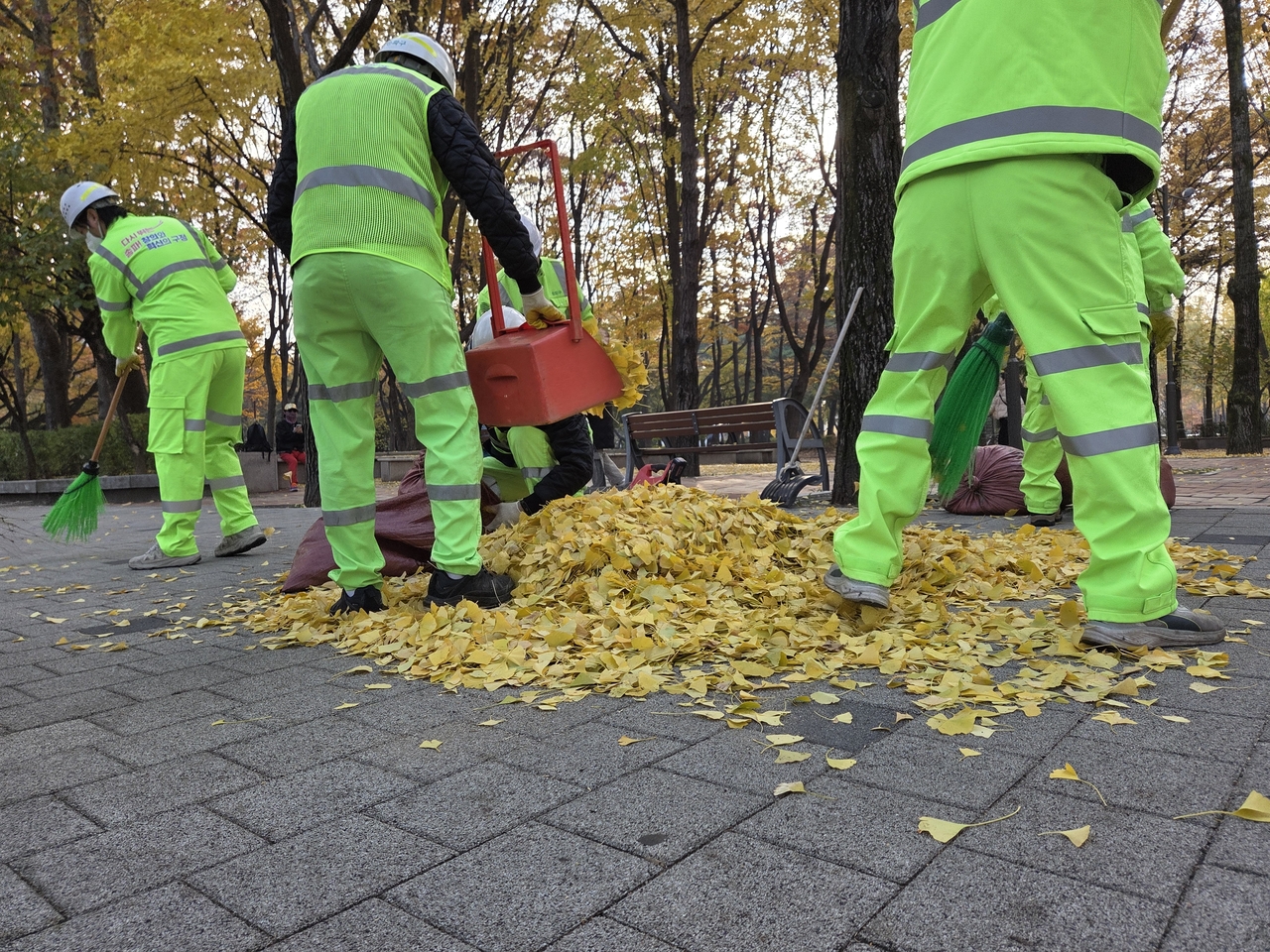
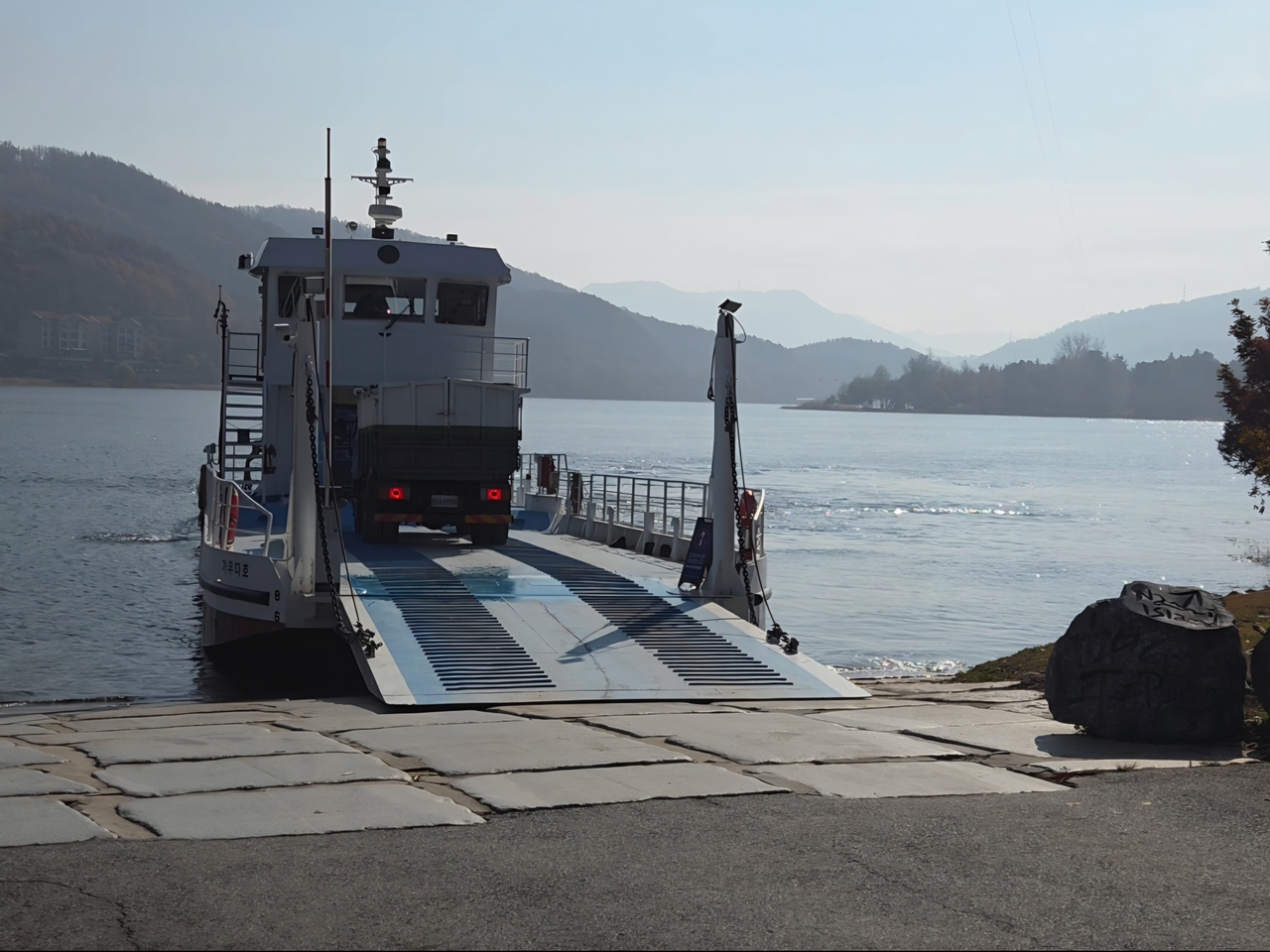
The leaves’ journey began on the streets of Songpa-gu, where workers gathered them in large sacks and loaded them onto trucks. The trucks drove to the dock serving Namiseom and boarded a cargo ferry for the final leg of the trip.
“It is wonderful that these leaves can be recycled and used again. The cost savings are another big benefit,” said Tark Soo-jung, a neighborhood representative in Jamsil 7-dong, at the collection site in Songpa-gu.
A Songpa resident for 35 years, Tark has followed the project since it began and welcomed the chance to put the district’s fallen leaves to another use.
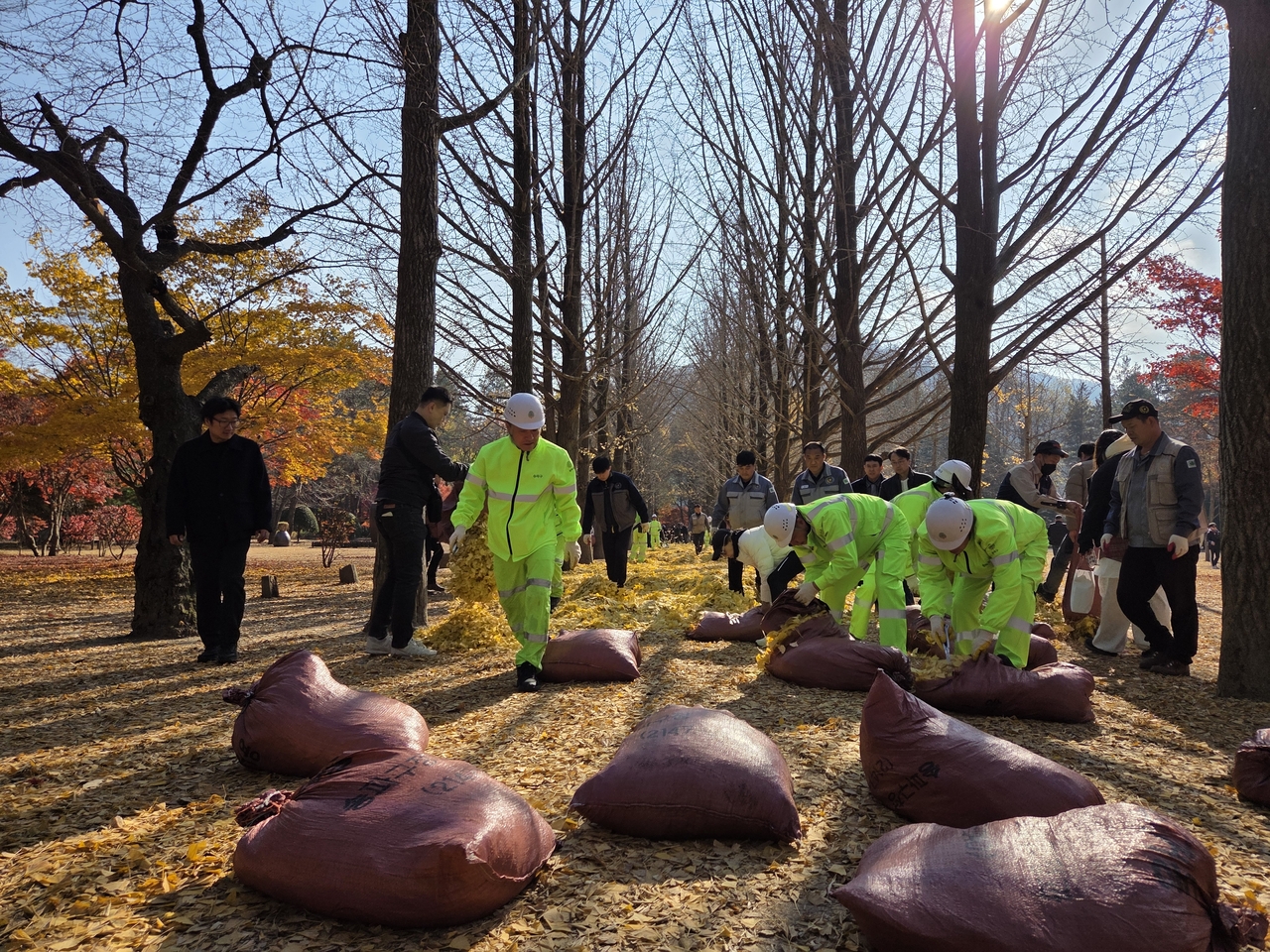
On the island, workers unloaded the sacks along the lane, cut them open and spread the leaves with rakes. This year’s leaves were especially yellow, a Songpa-gu official said. Last year, they fell later than expected and were still somewhat green.
Songpa-gu Mayor Seo Kang-seok said the partnership supports tourism and farms while reducing disposal costs.
“We will continue working to make Songpa-gu a leader in resource recycling through a range of projects,” he said.
The yellow leaves will stay on the lane for about a month. Then, the district official said, they will be collected once more and turned into compost for the island.
shwang9@heraldcorp.com