SK hynix-backed Trinity Fab aims to cut chip suppliers' evaluation times by at least 30%
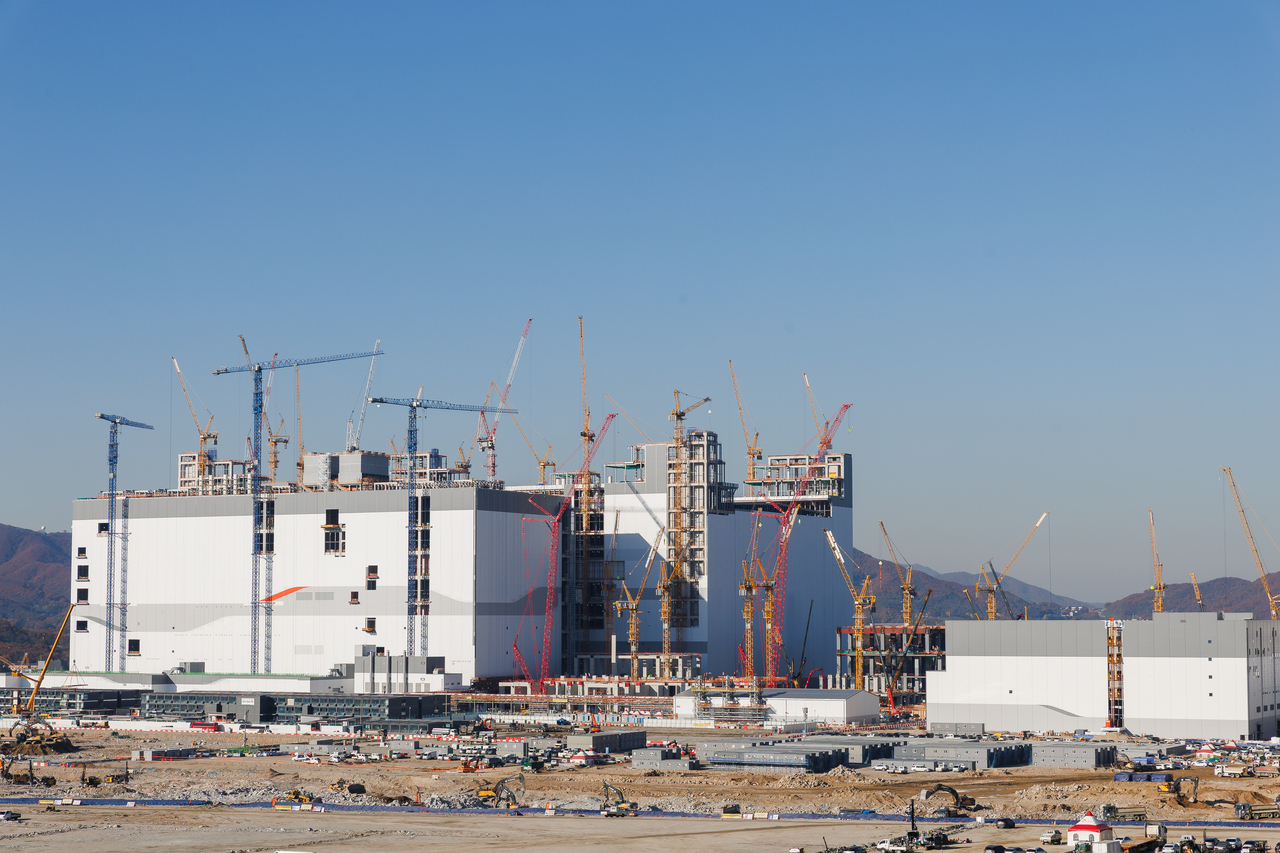
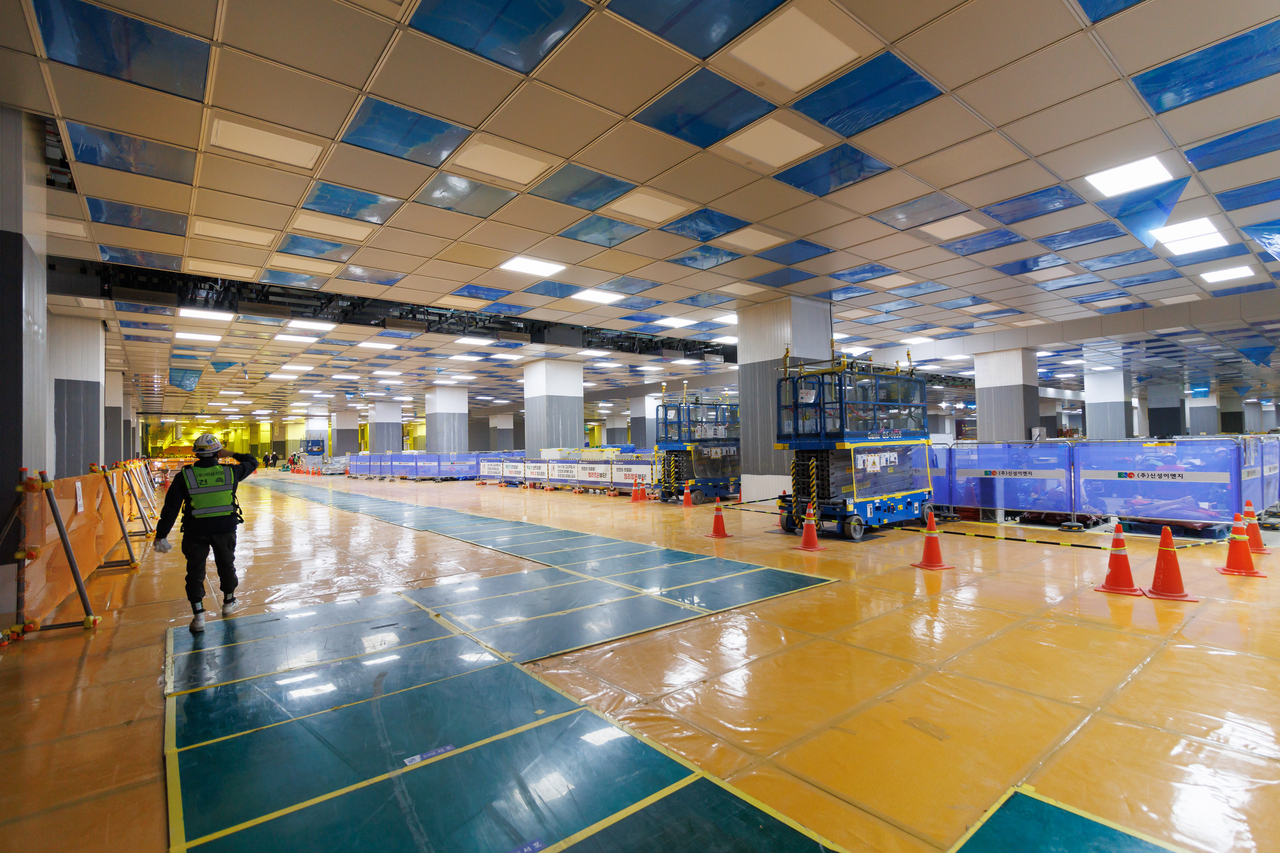
YONGIN, Gyeonggi Province — On an unfinished floor of SK hynix's new memory-chip plant, space is being set aside for companies struggling to get their equipment and materials approved for use in major semiconductor factories.
When reporters visited on Nov. 10, protective sheets covered the floor and construction lifts stood where equipment will arrive next year. A wall will separate the 3,300-square-meter facility, called Trinity Fab, from SK hynix's production area.
The project aims to tackle a contradiction: South Korea leads the world in memory chips, but still depends heavily on foreign equipment and materials. The domestic sourcing rate for semiconductor materials, parts and equipment is estimated at around 30 percent, according to Lee Ki-jung, who heads the foundation that operates Trinity Fab.
The problem is not always developing a new product. It is proving that the product will work in a factory already making chips. Many public research labs use smaller, 8-inch silicon wafers, while major chip factories use 12-inch wafers. Equipment that works in a laboratory can behave differently on a production line, forcing suppliers back to the drawing board.
Why a working prototype isn't enough
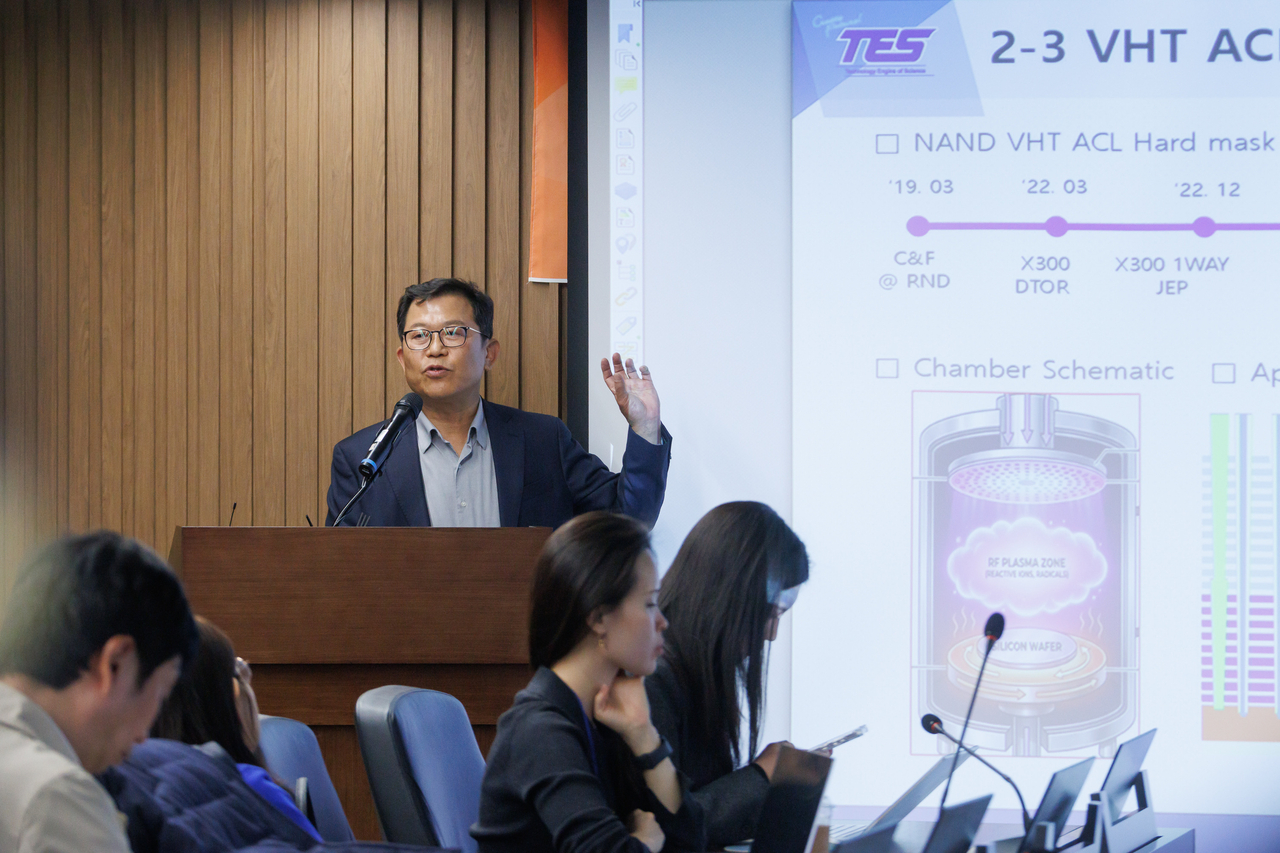
TES, a Korean chip-equipment maker, knows the problem firsthand. TES Vice Chairman Lee Jae-ho said its machines sometimes needed redesigning after performing differently at customers’ plants, where even ceiling height or the pumps connected to them could affect performance.
“We ended up having to develop them all over again,” Lee said.
Developing equipment and securing production approval can take five to six years. Lee estimates Trinity Fab could cut that by about a year.
Some precision measuring instruments cost 1 billion to 5 billion won ($748,000 to $3.7 million) each, before electricity, exhaust treatment and other operating costs. Lee said he might have spent less on TES’ new research center had he known Trinity Fab was coming.
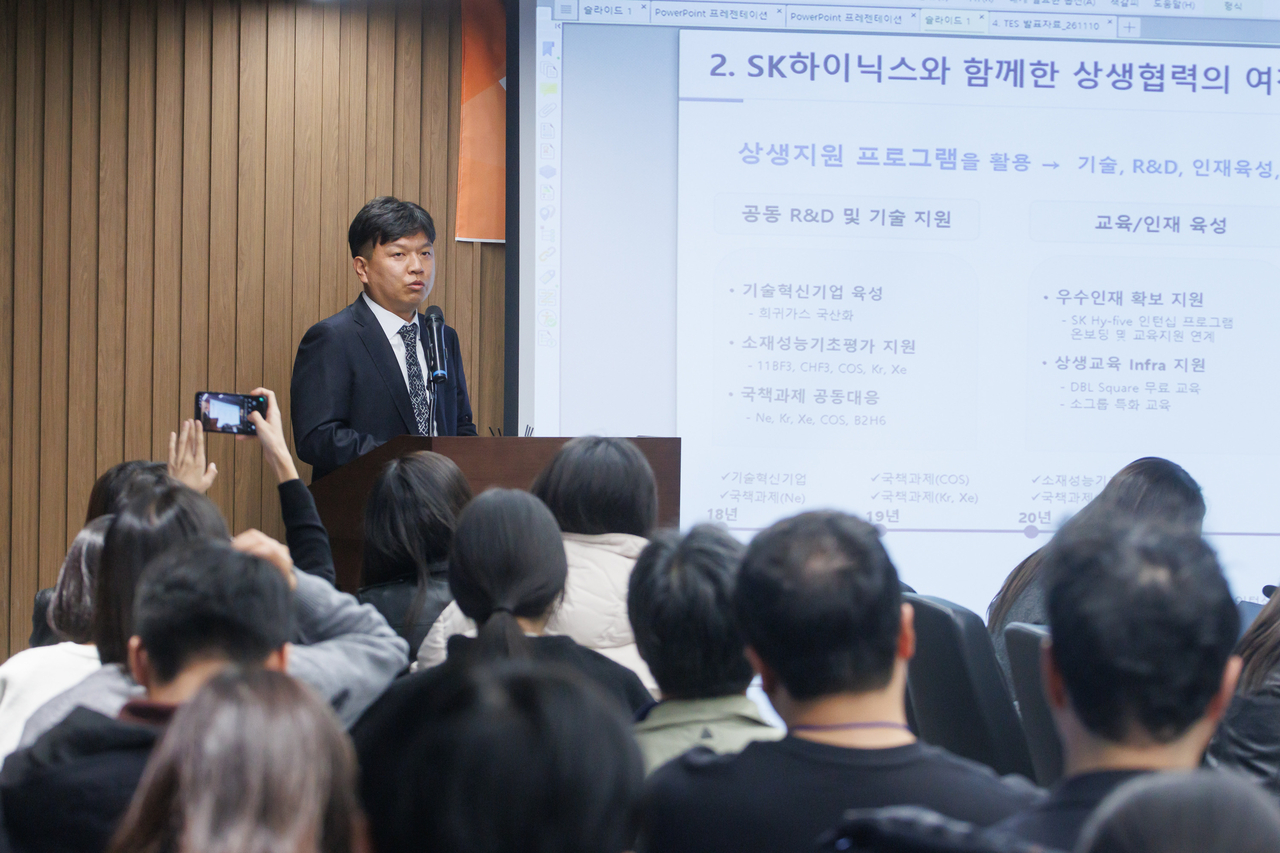
When Russia’s invasion of Ukraine disrupted neon supplies in 2022, SK hynix could turn to a local source for the gas used in chipmaking lasers. Three years earlier, specialty-gas maker TEMC and steelmaker POSCO had teamed up to produce neon from steelmaking byproducts.
By October 2022, domestic neon met 40 percent of SK hynix’s needs. TEMC CEO Yu Won-yang said the partnership saved the chipmaker 30 billion won in neon purchases that year.
The shortage showed why South Korean chipmakers need local suppliers whose materials are already qualified for production. Approval can take six months to two years, partly because chipmakers struggle to free up equipment for trials. A dedicated testing fab would let suppliers test materials under production conditions while commercial lines keep running.
“If the equipment has to keep producing, there’s no spare capacity,” Yu said.
A test lab inside a working chip factory
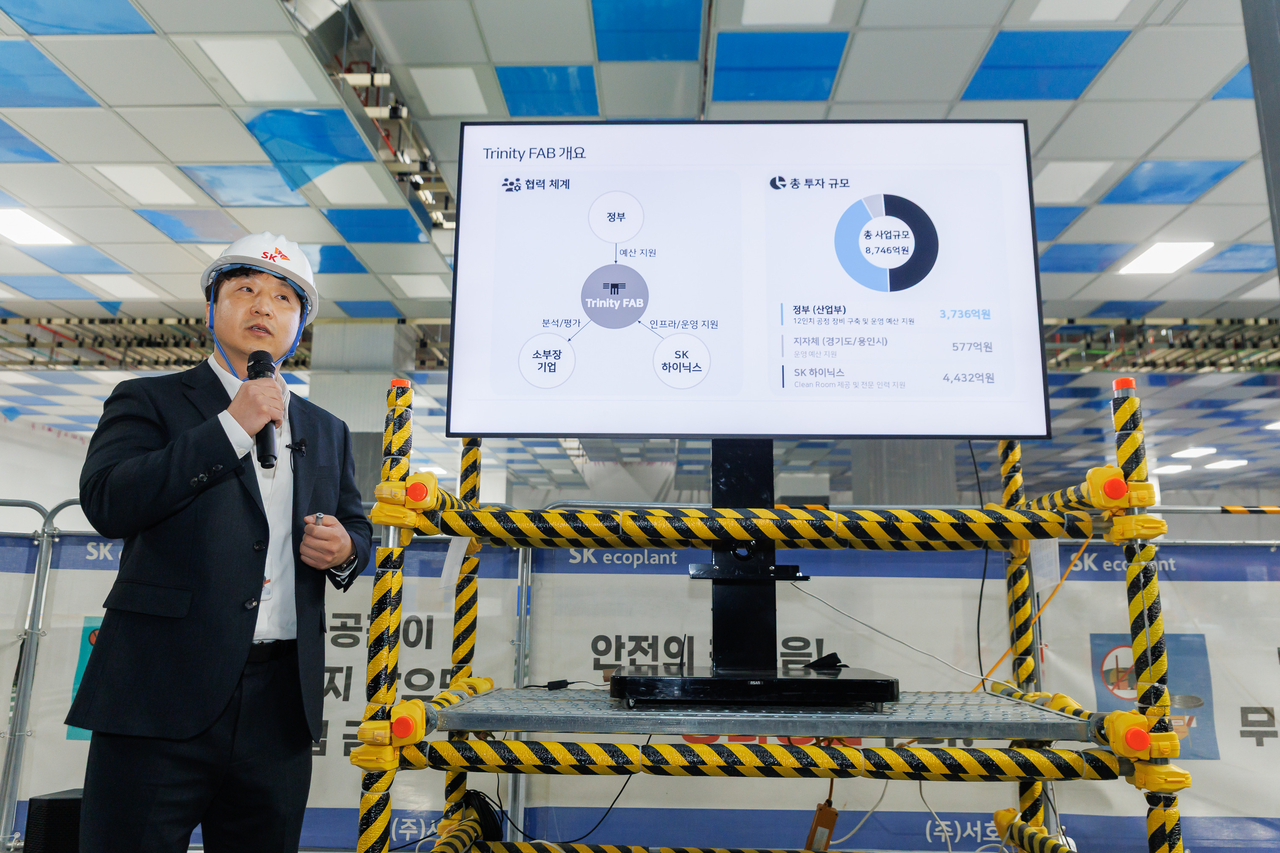
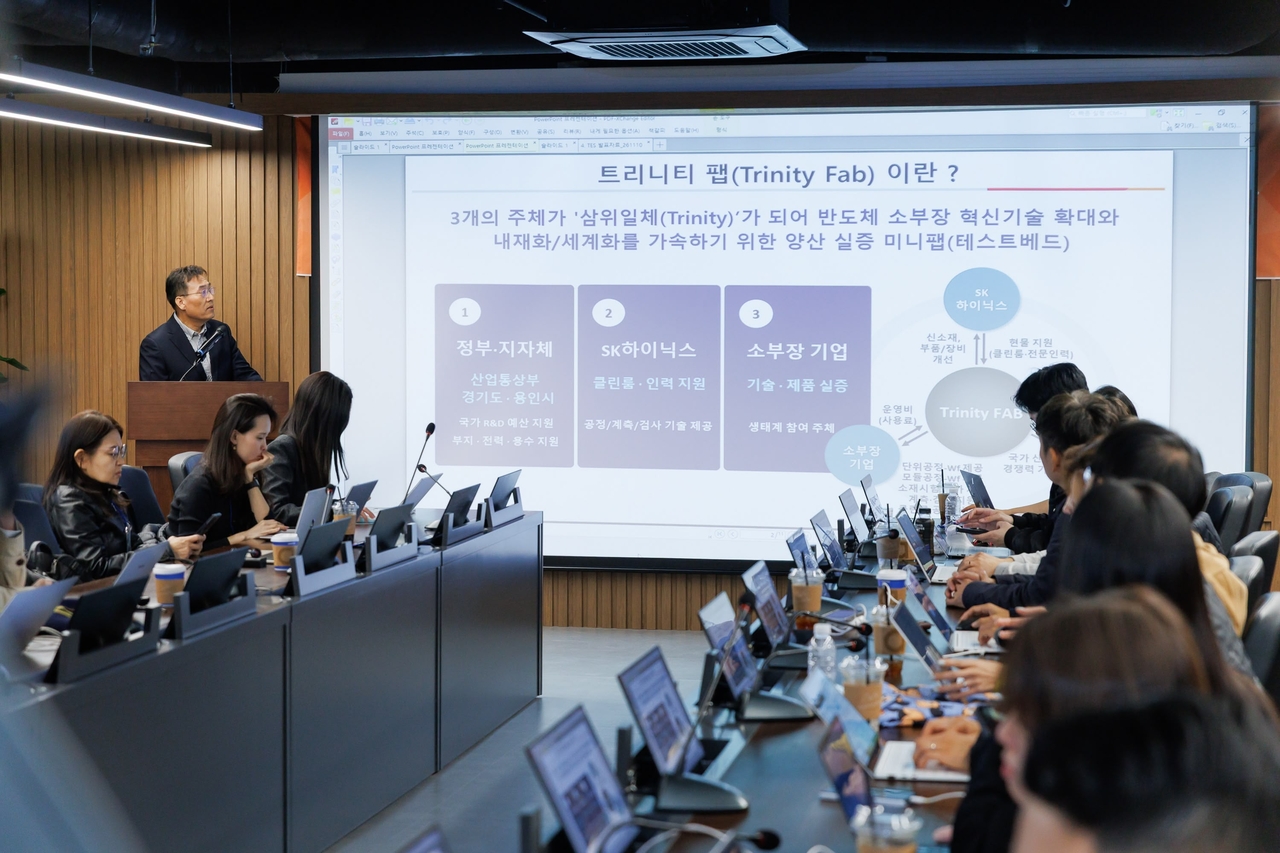
Trinity Fab aims to ease that bottleneck by letting suppliers test their products under conditions similar to those of a commercial chip factory, without interrupting SK hynix's production. The facility will have 51 machines for testing materials and components and 15 rooms where suppliers can install their own equipment.
"We separated the space with a wall for security," said Yang Ji-dong of SK hynix's Yongin planning team. "Beyond it is the cleanroom where we'll make memory chips."
Trinity Fab will lack extreme ultraviolet lithography machines, so products for those processes will still need testing on SK hynix’s lines.
The project costs about 875 billion won. Central and local governments will provide 431.3 billion won, and SK hynix will contribute 443.2 billion won in space, staff and other support.
A nonprofit foundation will run the facility and charge suppliers fees that have yet to be set. It will eventually have to cover its costs as government funding winds down in 2031.
The cleanroom is due to open in May 2027, with regular testing expected in the fourth quarter. A committee representing government, SK hynix and industry will review applications for testing rooms. Testing periods are still undecided.
A test passed is not an order won
SK hynix may require suppliers to sell certain jointly developed technologies exclusively to the chipmaker for a limited time. The restriction can apply to joint projects or technologies covered by joint patent applications, said procurement strategy chief Lee Hyun-chul. The duration will depend on the project and technology, he said.
"Suppliers need to be able to do business with companies other than SK hynix," Lee said, explaining the exclusivity arrangements are not permanent.
Passing a test offers no guarantee of an SK hynix order. Samsung Electronics and Micron have their own qualification requirements. The foundation aims to cut the time it takes suppliers to bring new technologies into commercial production by at least 30 percent.
“This is the first time we’re doing this in Korea,” foundation CEO Lee Ki-jung said. “It’s difficult to predict the results in numbers.”
mjh@heraldcorp.com