New Hongcheon facility brings production under one roof as Samsung's medical device arm targets annual output of 40,000 scanners by 2030
HONGCHEON, Gangwon Province — Eight high-speed machines were mounting electronic components barely visible to the naked eye onto circuit boards at Samsung Medison's newly expanded factory Friday, offering a glimpse of the automation behind the medical device maker's 50 billion won ($37.4 million) push to break into the world's top three ultrasound equipment manufacturers.
Inside the cleanroom, the machines worked around the clock, placing components as small as 0.1 to 0.2 millimeters onto circuit boards that serve as the brains of ultrasound scanners. Each scanner contains 15,000 to 20,000 electronic components, with the surface-mount device line operating 24 hours a day in rotating shifts.
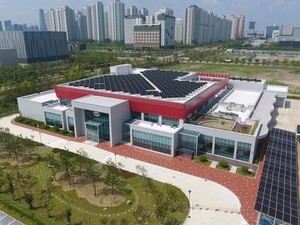
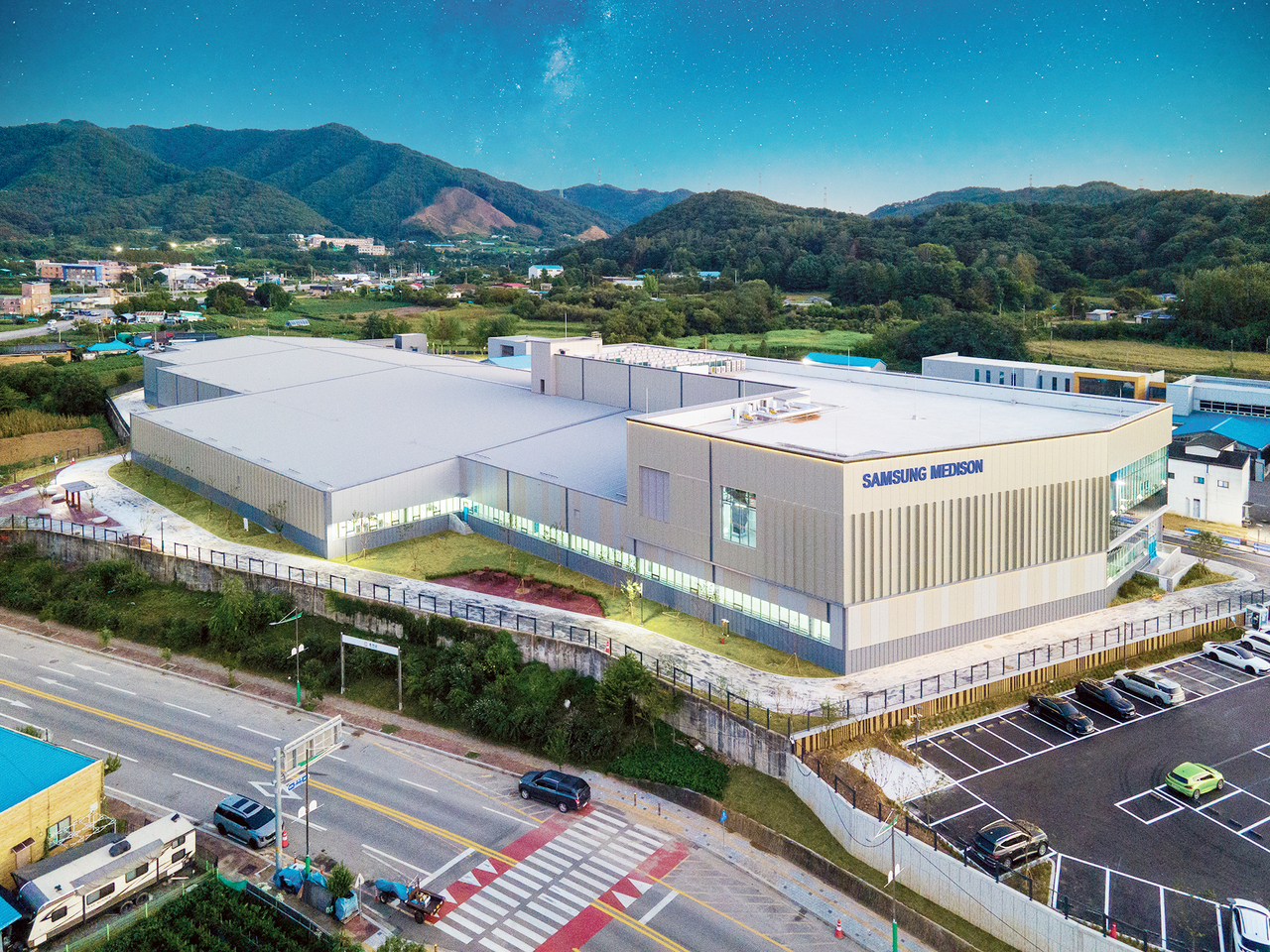
Samsung Medison, a subsidiary of Samsung Electronics, officially opened the new manufacturing building at its Hongcheon complex on Friday, marking its largest production facility expansion since joining Samsung in 2011.
The two-story building spans 14,548 square meters and forms part of a plan to increase annual ultrasound production from around 24,000 units this year to as many as 40,000 by 2030.
The investment comes as Samsung Medison looks to capitalize on rising demand for premium ultrasound systems and strengthen its position in a market where its sales have grown faster than the global average.
But the biggest change at the Hongcheon plant is not simply more production space.
Manufacturing processes previously scattered across several buildings have been moved under one roof, connecting circuit board production, assembly, testing, packaging and finished-product storage in a single production flow.
"We've eliminated shipping delays caused by bad weather and the risks associated with outdoor work," said Son Hyun-soo, head of the manufacturing team at Samsung Medison, during a tour of the new facility.
The consolidated layout cuts the distance materials must travel between production stages while leaving space for additional automation equipment as demand increases.
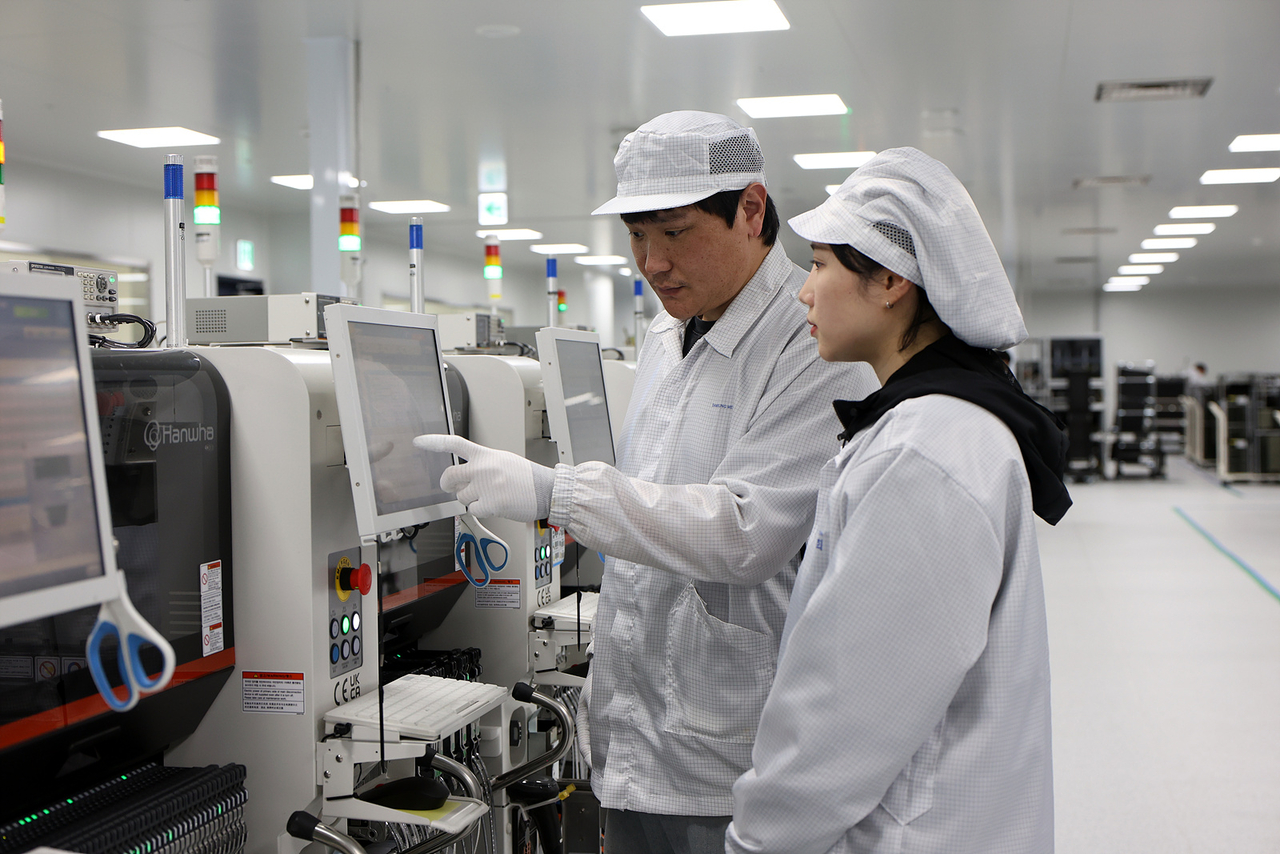
"The SMD line used to be semi-automated, but we've introduced new automated equipment with this expansion," Son said. "We've also replaced what used to be basic finished-product testing with an automated system."
The company's emphasis on automation was particularly evident in its inspection process.
Once electronic components are mounted onto circuit boards, a three-dimensional optical inspection system checks every board for soldering defects. The boards then undergo 48 hours of testing at 40 degrees Celsius, with their power repeatedly switched on and off to identify potential early-stage failures.
Fully assembled scanners are put through another 24 hours of testing under similar conditions before shipment.
"Ultrasound equipment is typically used for five to 10 years after purchase. That's why we put it through such extensive testing," Son said.
The results are stored on a central server, allowing the company to trace each product's inspection history even after delivery. An in-house manufacturing execution system also checks whether installed components match customer orders and automatically conducts electrical safety tests.
"People can make mistakes, but machines don't," Son said, explaining the company's approach to minimizing defects through automation.
Still, the final assembly process remains in human hands. Skilled workers with 10 to 15 years of experience each assemble a scanner from start to finish.
Actual assembly takes about 30 minutes, according to Son, while most of the remaining production time is devoted to testing. A scanner that passes inspection can be shipped within roughly two days of final assembly.
The new building has also been designed to accommodate future expansion.
Higher ceilings and additional floor space will allow Samsung Medison to install more SMD lines, testing equipment, industrial robots and automated material transport systems without major structural changes.
"The significance of this expansion is that we've secured the infrastructure to add production lines and introduce large-scale automation equipment, robots and uncrewed transport systems as volumes increase," Son said.
The existing equipment can already support annual production of approximately 27,000 to 28,000 scanners, with additional investments planned to raise capacity to 40,000 by 2030. Rather than adding all the equipment at once, Samsung Medison plans to expand in stages as demand grows.
The Hongcheon complex is the company's main global manufacturing hub, producing premium ultrasound systems including the R20 and HERA Z20 for export to more than 110 territories. Higher-end models currently account for roughly 30 to 40 percent of production.
Samsung Medison has also increased annual production capacity at its Gumi plant in North Gyeongsang Province, which specializes in ultrasound probes, by about 17 percent through improvements to its production layout.
The Hongcheon facility incorporates Samsung Electronics' b.IoT building management platform, an energy management system and high-efficiency temperature and humidity controls aimed at reducing energy consumption while maintaining stable manufacturing conditions.
The factory expansion follows several years of strong growth for Samsung Medison.
Last year, the company's revenue rose 16.2 percent, well ahead of the global ultrasound equipment market's 3.7 percent growth. The company expects another year of double-digit sales growth in 2026, with revenue nearly tripling since Samsung's acquisition in 2011.
Samsung Medison has moved further into the premium segment, launching the HERA Z20 for obstetrics and gynecology in 2024, the R20 for radiology in 2025 and the Z10 for obstetrics and gynecology this year.
The company is also expanding its AI-powered diagnostic software offerings and exploring opportunities in new clinical areas and treatment-related technologies.
Speaking at Friday's opening ceremony, Samsung Medison CEO Yoo Kyu-tae, who also heads Samsung Electronics' medical device business, described the expansion as a strategic investment to stay ahead of rising global demand.
"This expansion of the Hongcheon plant is a strategic investment to proactively respond to growing global demand and the expansion of our business," Yoo said.
"We've earned recognition for our technology in the global ultrasound market, and we're now within reach of breaking into the top three."
Yoo also pledged to pursue defect-free manufacturing through advanced automation and secure a stable supply chain by producing key components in-house.
yeeun@heraldcorp.com