

Record 290-fold gap in owner-occupied housing wealth highlights divisions between rich and poor, Seoul and the provinces
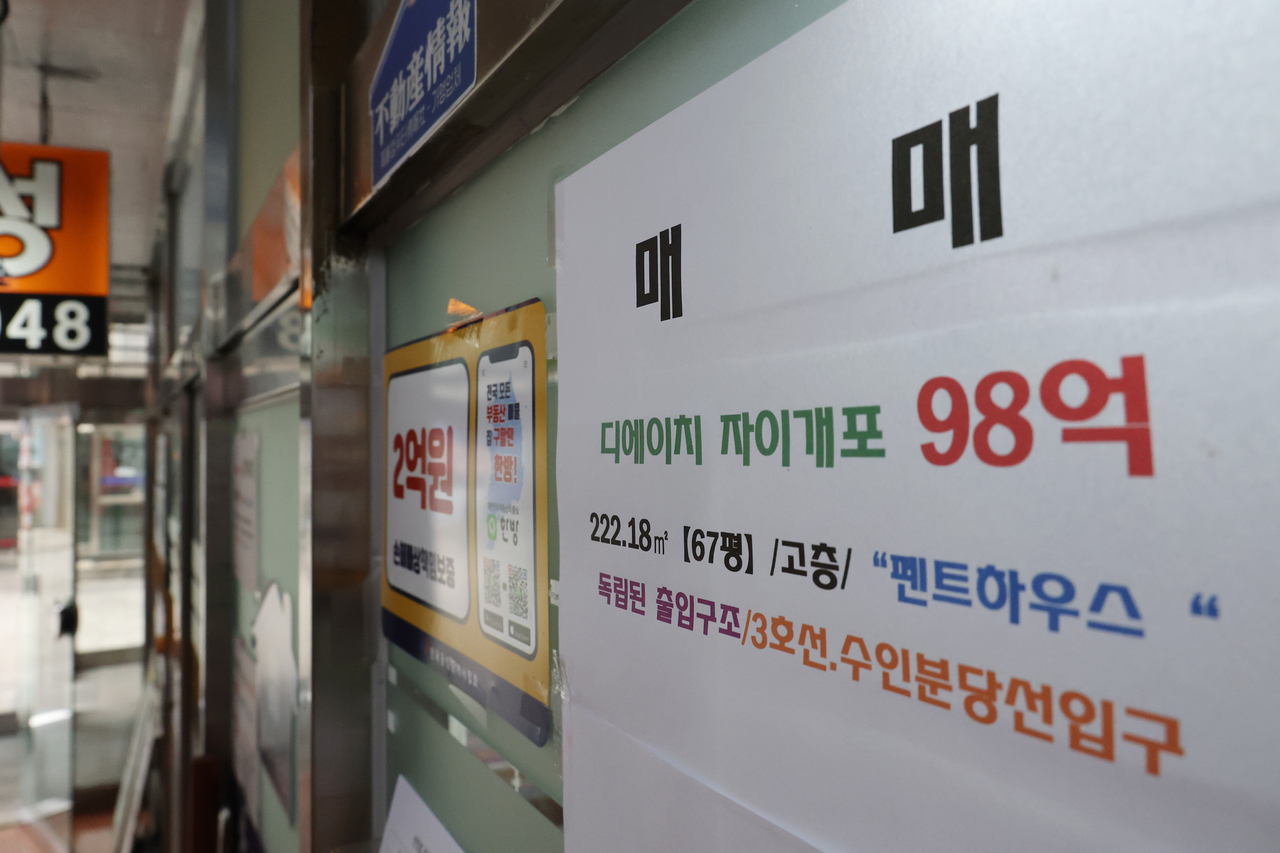
The gap in housing wealth between Korea’s richest and poorest 20 percent of households reached 290-fold in 2025, the widest since records began in 2017, highlighting deepening housing inequality.
The ratio rose from 244.9 a year earlier, based on the average value of homes each group both owned and lived in.
Kim Hyun-soo, a professor of architectural engineering at Dankook University, pointed to rising property prices in Seoul as a major factor widening the gap.
He urged the government to prioritize homes available for immediate occupancy over its longer-term goal of starting construction on 1.35 million homes in the greater Seoul area by 2030.
“What matters more than a target of 1.35 million homes is securing 100,000 homes that people can move into as early as next year,” Kim said.
According to Korean Statistical Information Service data, the wealthiest 20 percent of households by assets averaged 693.4 million won ($525,000) in owner-occupied housing in 2025, up 7.7 percent from a year earlier. The poorest 20 percent averaged 2.39 million won, down 9.1 percent.
Only 6.6 percent of households in the poorest group owned the homes they lived in, compared with 82.5 percent in the wealthiest group. Households that did not own their current residences were assigned a value of zero, even if they owned housing elsewhere.
The figures therefore reflect differences in both homeownership rates and the value of the homes each group lived in.
The gap stood at about 146-fold in 2017 and 2018 before widening to 245.5-fold in 2022. It narrowed to 215.1-fold in 2023, then increased for two consecutive years to reach 290.1-fold in 2025.
Yoo Seon-jong, a real estate professor at Konkuk University, also identified widening disparities between Seoul and provincial housing markets as a key factor driving the divide.
Yoo suggested that expensive homes were concentrated in Seoul, while lower-value properties held by households in the poorest group were more likely to be in provincial regions.
He said excessive government intervention was contributing to distortions in the housing market.
In affluent districts such as Gangnam, Yoo said, restrictions have reduced transaction volumes. Owners with no pressing need to sell are holding onto their properties, limiting the number of homes available for purchase.
Those who are forced to sell often lower their asking prices, but this does not necessarily indicate a broader decline in housing values, he added.
Buyers worried about being priced out of Seoul, meanwhile, are turning to the city’s relatively affordable districts, Yoo said.
He argued that lending restrictions were reinforcing this shift, as buyers of less expensive homes can qualify for larger mortgages than those purchasing high-priced properties.
Yoo pointed to the mortgage cap of 600 million won for homes priced at 1.5 billion won or less. He said the rules were directing demand toward lower-priced districts such as Nowon and Dobong, putting upward pressure on prices there.
Provincial housing markets face different pressures. Weaker demand and growing inventories of unsold homes are making it harder for sellers to find buyers, Yoo said.
Unlike Seoul, where demand remains concentrated despite tighter regulations, many provincial areas already struggle with excess housing supply.
Additional homes entering these markets, including properties sold by owners facing tighter regulations on multiple-home ownership, could intensify competition among sellers and push prices down further, he added.
“If the current policies remain in place, Seoul housing prices will continue to rise and the gap will widen further,” Yoo said.
Kim, cautioned that increasing housing supply alone would not stabilize the market.
Housing development should be accompanied by efforts to decentralize economic and urban functions currently concentrated in the capital, he said.
As one possible measure, Kim proposed developing housing for young people within a 30-minute commute of major employment centers. He suggested focusing on areas around transfer stations along metropolitan rail networks, citing GTX, the Shinbundang Line and the Sinansan Line as examples.
shwang9@heraldcorp.com