Nearly decade into acting, Son puts characters before himself

South Korean television is built on a familiar leading-man template: boyish, soft-spoken and classically handsome. Son Suk-ku built an A-list career by bucking every part of it.
Built on sharp angles with a rugged, lived-in screen presence, his appeal tapped into an underserved corner of Korean entertainment, establishing him as a singular sort of heartthrob.
That distinct persona has been backed by a steady run of high-profile credits. After a rare mid-30s breakout in a market where top stars typically emerge much younger, Son has built momentum across contrasting genres, moving fluidly between human dramas and cold-blooded noir thrillers in popular titles such as "D.P.," "My Liberation Notes," "The Roundup," "Big Bet," "A Killer Paradox" and "Heavenly Ever After."
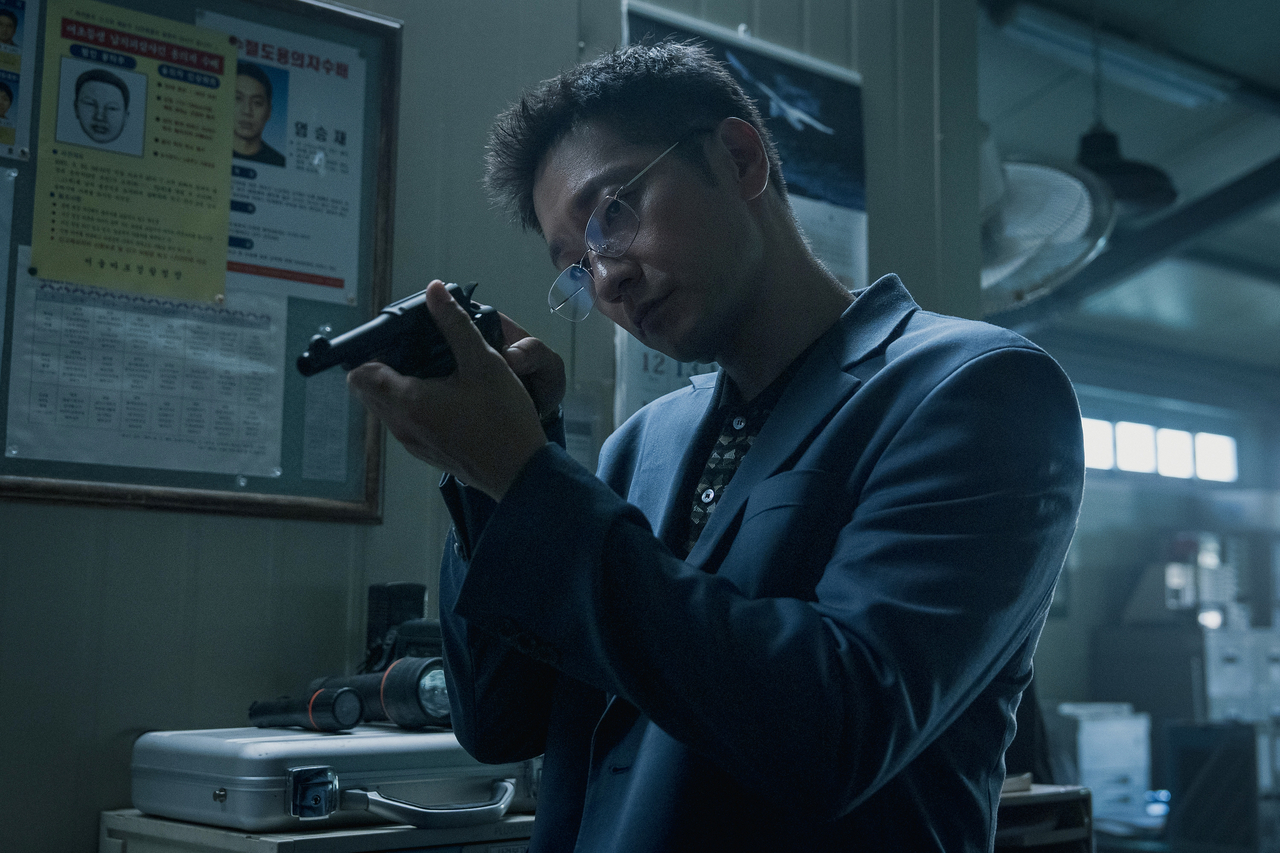
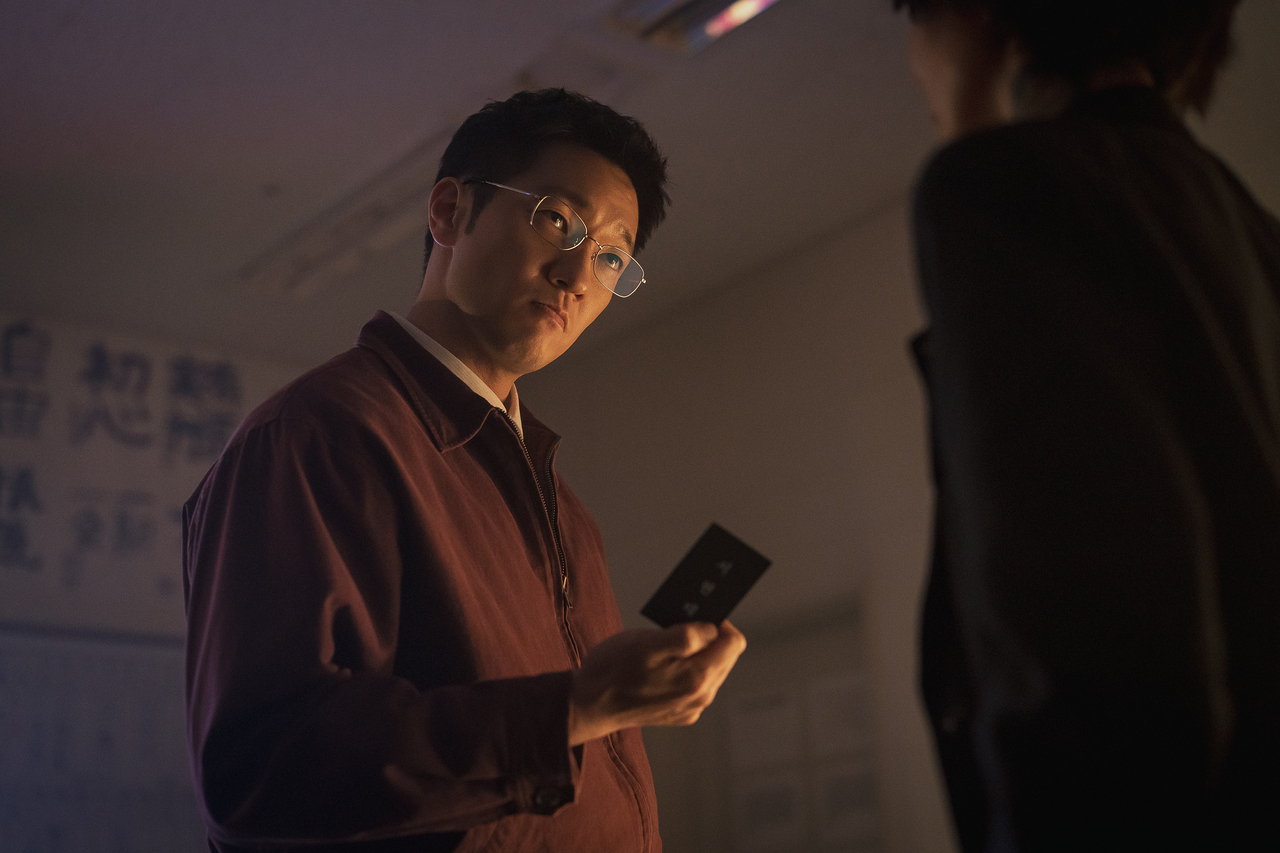
For his latest project, Son leads Netflix Korea's "The Blue Road" as South Korean detective Kim Seok, opposite Eita Nagayama's Japanese detective Inose, as the two investigate a series of international murders at a time when the two countries jointly hosted the 2002 World Cup.
Nearly 10 years after making his full-fledged debut as an actor, Son said he took on the role of Kim Seok at a point when he was ready to move beyond his established screen persona.
"For a rookie actor, the most compelling approach is to show audiences who they are, but that can't last forever. At some point, there has to be a period of transformation," he said.
"As an actor, I felt it was time to move closer to my characters rather than rely on myself. Kim Seok was ideal for that because much of his backstory is left unexplained, giving me room for my own interpretation."
As an actor, I felt it was time to move closer to my characters rather than rely on myself. Kim Seok was ideal for that because much of his backstory is left unexplained, giving me room for my own interpretation.
Kim is an enigmatic detective who has fallen out of favor with those around him and seems unusually preoccupied with a particular case. The early episodes reveal little about his past, gradually filling in the gaps through a series of twists.
Son said he used that ambiguity to his advantage, building intrigue through seemingly minor details in Kim's appearance and mannerisms.
“I wanted viewers to wonder about Kim’s oversized clothes and unusual way of speaking. Even if they don't know why, I think the character works if they want to learn more about him,” he said, adding that the wardrobe choice reflected his own interpretation of the detective as someone who had lost weight as he became increasingly consumed by the case and could not afford to buy new clothes.
The role also reflects Son's broader understanding of an actor's function in storytelling: While directors shape the narrative, actors bring its emotional dimension to life.
"If communicating the precise details of a story is the director's job, then mine as an actor is to express what it feels like to be the person living within that story," said Son.
"I think actors work in the realm of feeling, and that's what I aimed to convey in my portrayal of Kim Seok," he added.
That philosophy extends to the series' action sequences, which Son sees as more than physical spectacle. He views them as another vehicle for developing character relationships and bringing the story's underlying themes to the surface.
Reflecting on fight scenes between Kim and Inose, Son said they were designed to reflect the evolving relationship between the two men, rather than serve simply as physical confrontations.
"Their first fight is essentially a time for them to feel each other out. By the time they fight again later in the story, it becomes another expression of their friendship," he said.
"I think the themes are all woven into the action."

"I don't have a specific idea of how far I can go or how far I want to go. What's important is that I've made the effort."
Son, 43, remains conscious of how much there is left to learn.
He sees observation as increasingly important to his craft, particularly as the demands of working on film and television sets leave less room for the everyday experiences that once informed his performances.
"An actor keeps drawing from what's inside their vessel, but eventually you start to see the bottom. What remains after that is observation. That's when the time comes to really prove yourself through acting, and I think that is now," he said.
Son has no fixed ambitions for where that growth should take him. Instead, he sets his own challenges, measuring progress less by career milestones than by the effort he puts in.
"I don't think I'm a particularly good actor. I'm not someone who is especially diligent or passionate by nature. I need to set a goal and declare it to myself before I make an attempt. Otherwise, I'm quite lazy," he said.
"I don't have a specific idea of how far I can go or how far I want to go. What's important is that I've made the effort."

yoonseo.3348@heraldcorp.com