After five straight nights of Rachmaninoff’s 'Third' in Korea, the pioneering conductor says she would 'play the telephone book' with him and hopes to return with young musicians
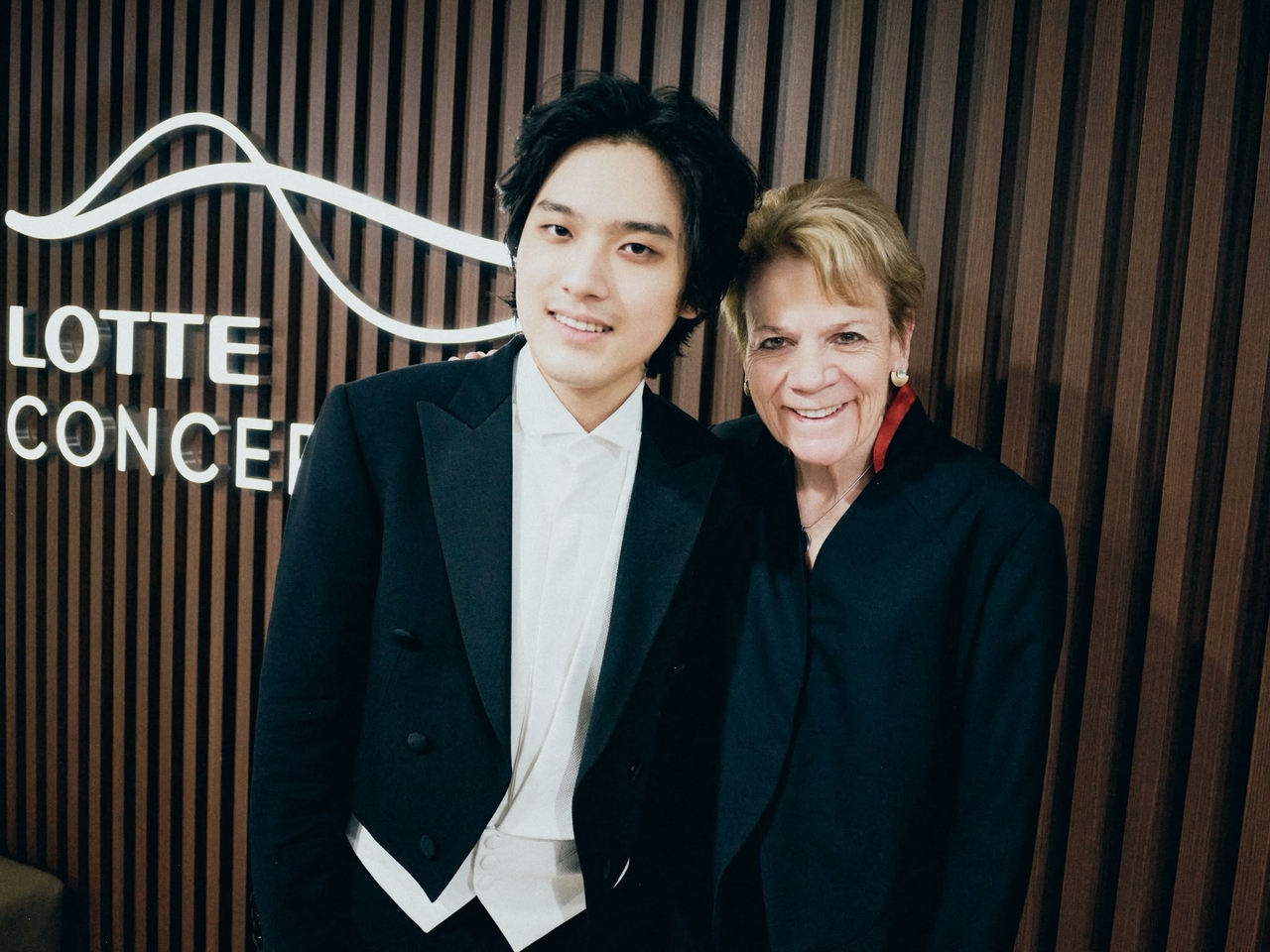
“I think it’s important to remember that our careers are only one part of who we are,” conductor Marin Alsop said of Lim Yunchan, the 22-year-old pianist she has accompanied from the final round of the 2022 Van Cliburn International Piano Competition to a five-night run of Rachmaninoff’s Piano Concerto No. 3 in Korea this month.
“Yunchan has an extraordinary gift, and I hope he continues to share it with the world, but I also hope he has the freedom to discover who he is outside of music,” the American conductor told The Korea Herald in a written interview after wrapping up the Korean leg of the Philadelphia Orchestra’s Asia tour on Monday. “I want him to have meaningful relationships, experiences, and a life filled with joy.”
It is good advice from someone who has spent a lifetime trying to strike that balance herself. Asked whether she, too, lives a happy life, Alsop said yes.
“I feel very fortunate to have a happy life myself,” she said. “Music has given me incredible opportunities, but the relationships I’ve built and the people I’ve met along the way are what make it truly meaningful. Finding balance is always a challenge but we must try!”
Her remarks come after a run that drew both standing ovations and some concern.
Never twice
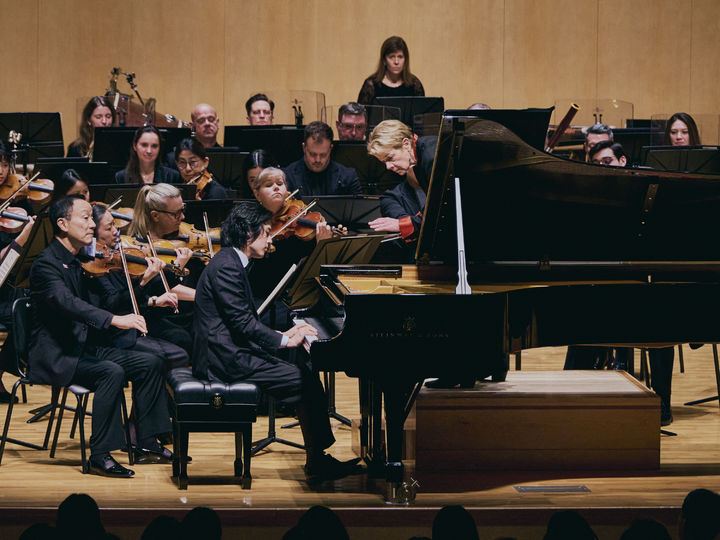
Alsop led the Philadelphia Orchestra as its principal guest conductor on the ensemble’s 10th visit to Korea, and its first since 2019, with Lim playing the concerto five days in a row, from Nov. 5 to 9, at Arts Center Incheon, the Seoul Arts Center and Lotte Concert Hall, right after three performances of the same work in the US.
Even the one program originally planned without him was changed two weeks before the tour to include the concerto, a move the presenter attributed to audience demand. Some fans protested that the pianist was being overworked.
Lim responded on Instagram that he, the conductor and the orchestra had made the decision gladly, and that just as Cezanne painted Mont Sainte-Victoire again and again in different light, he would approach the piece anew each night.
It was a whirlwind week for Alsop as well. Not only was it her first visit to Korea, on the afternoon of Nov. 8, she met audiences at a screening of “The Conductor,” a documentary on her life that opens in Korean theaters this week under the title “Marin Alsop.”
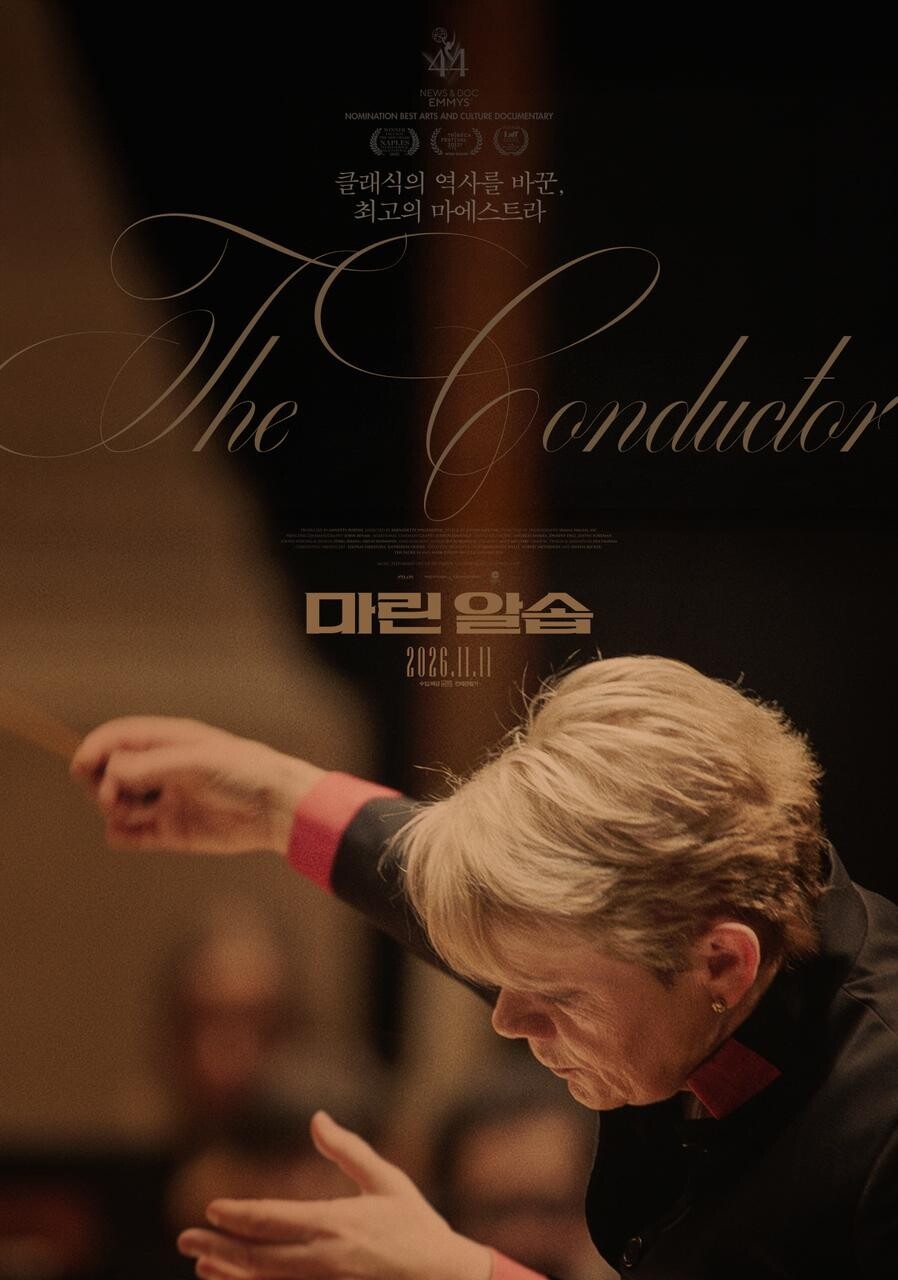
The film follows her from two rejections by The Juilliard School and four applications to the Tanglewood Music Center to becoming the first woman to lead a major American orchestra.
As for how the musicians sustained their intensity night after night, Alsop said the answer lay in refusing to repeat themselves.
“I think the key is that every performance is a new experience. We never approach a concert as something to simply reproduce. There is always something to discover, something to explore, and something to respond to in the moment,” she said. “Yunchan also inspires us to listen and respond in new ways each evening.”
Lim’s encores bore that out. In Incheon, he replayed the closing pages of the concerto’s finale. On the following two nights came the slow movement of Mozart’s Piano Sonata No. 8, and on Sunday, Elgar’s “Salut d’amour.” For the final concert on Monday, he offered two pieces: the adagio from Mozart’s Piano Sonata No. 12 and, once more, “Salut d’amour.”
Alsop said things changed from one night to the next.
“What I find so fascinating about Yunchan is that he never gives the same performance twice. His interpretation is constantly evolving, and he brings a remarkable imagination to the music,” she said. “The changes aren’t necessarily about tempo; they’re about color, phrasing, spontaneity and the emotional perspective he brings to each movement. He is much more than a wonderful pianist: He is a true poet.”
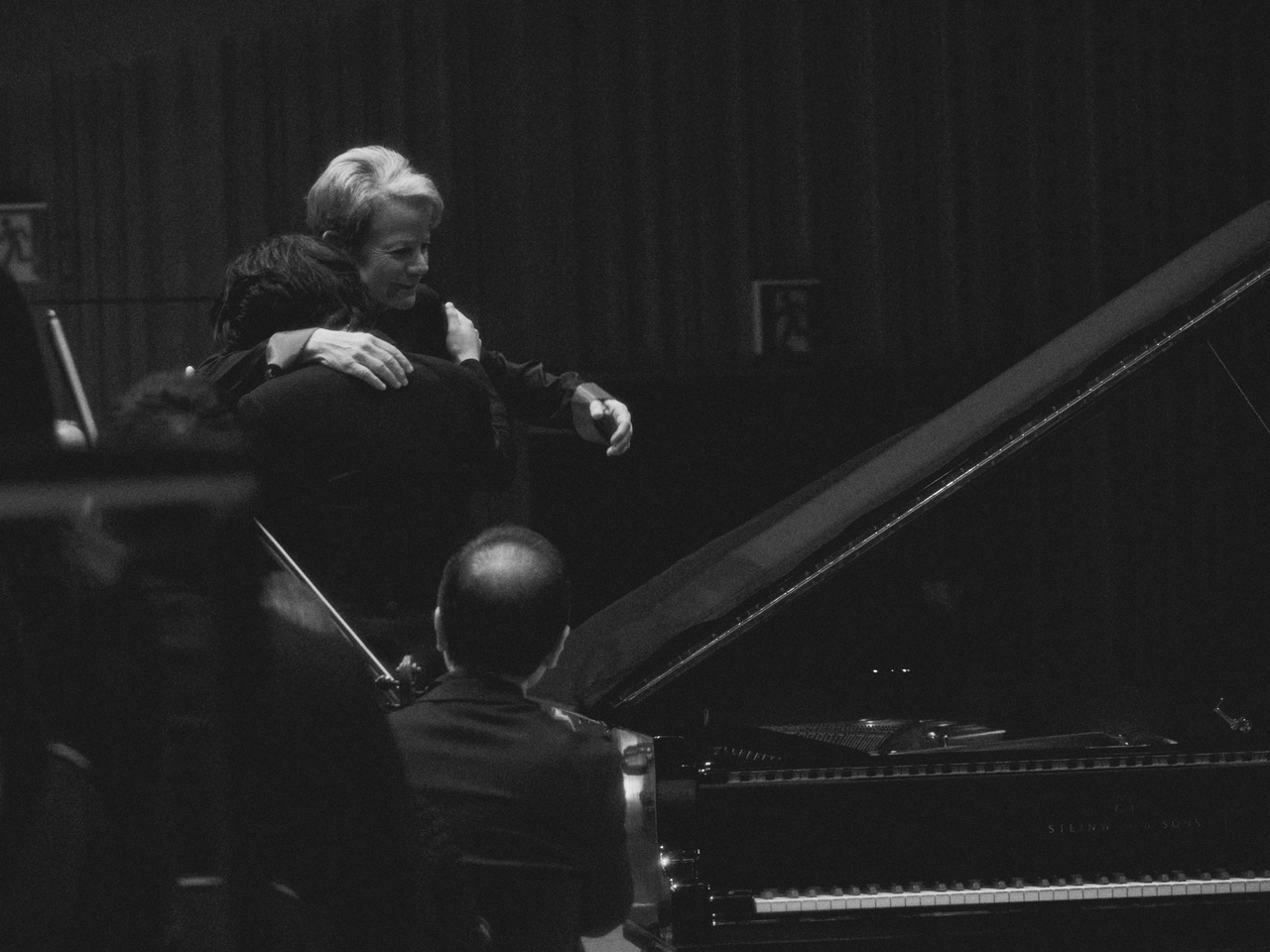
Since the Cliburn, the pair have performed Rachmaninoff’s "Second" in Baltimore, Bartok’s "Third" in Philadelphia and Ravel’s Piano Concerto in G major at the Ravinia Festival this summer.
For Korea, however, Rachmaninoff’s "Third" was all but inevitable: It is the piece that won Lim the Cliburn, and the video of their performance has been viewed more than 20 million times on YouTube.
Asked what she would have chosen had it not been Rachmaninoff’s "Third," Alsop named Beethoven or Chopin, but said she would gladly play almost anything with Lim.
“There is so much repertoire we haven’t yet had the opportunity to discover together,” she said. “I’d be happy to play the telephone book with him,” she added, borrowing an old cliche for a performer so compelling that the material hardly matters. “What I enjoy most about working with him is the element of surprise, so I would be excited to approach almost anything together.”
Next generation
Alsop has worked with a remarkably wide range of ensembles, from the Baltimore Symphony Orchestra, where she served as music director for 14 years, to the ORF Vienna Radio Symphony Orchestra, where she was the first woman to serve as chief conductor of a Vienna orchestra and led an ensemble drawn from some 20 countries. Onstage in Seoul, the Philadelphia Orchestra also reflected a wide range of backgrounds. Asked how much an orchestra’s makeup matters, she was emphatic.
“An orchestra’s makeup matters enormously. Every musician brings a unique background, perspective and musical experience to the ensemble, and that diversity enriches the collective sound and interpretation,” she said. “Ultimately, our differences make us better listeners, collaborators and musicians.”
She also led the Sao Paulo Symphony Orchestra to the BBC Proms, the Edinburgh International Festival and Carnegie Hall. Asked why Korea, which produces a remarkable number of world-class soloists, has yet to see its orchestras gain similar visibility abroad, she said the two are fundamentally different tasks.
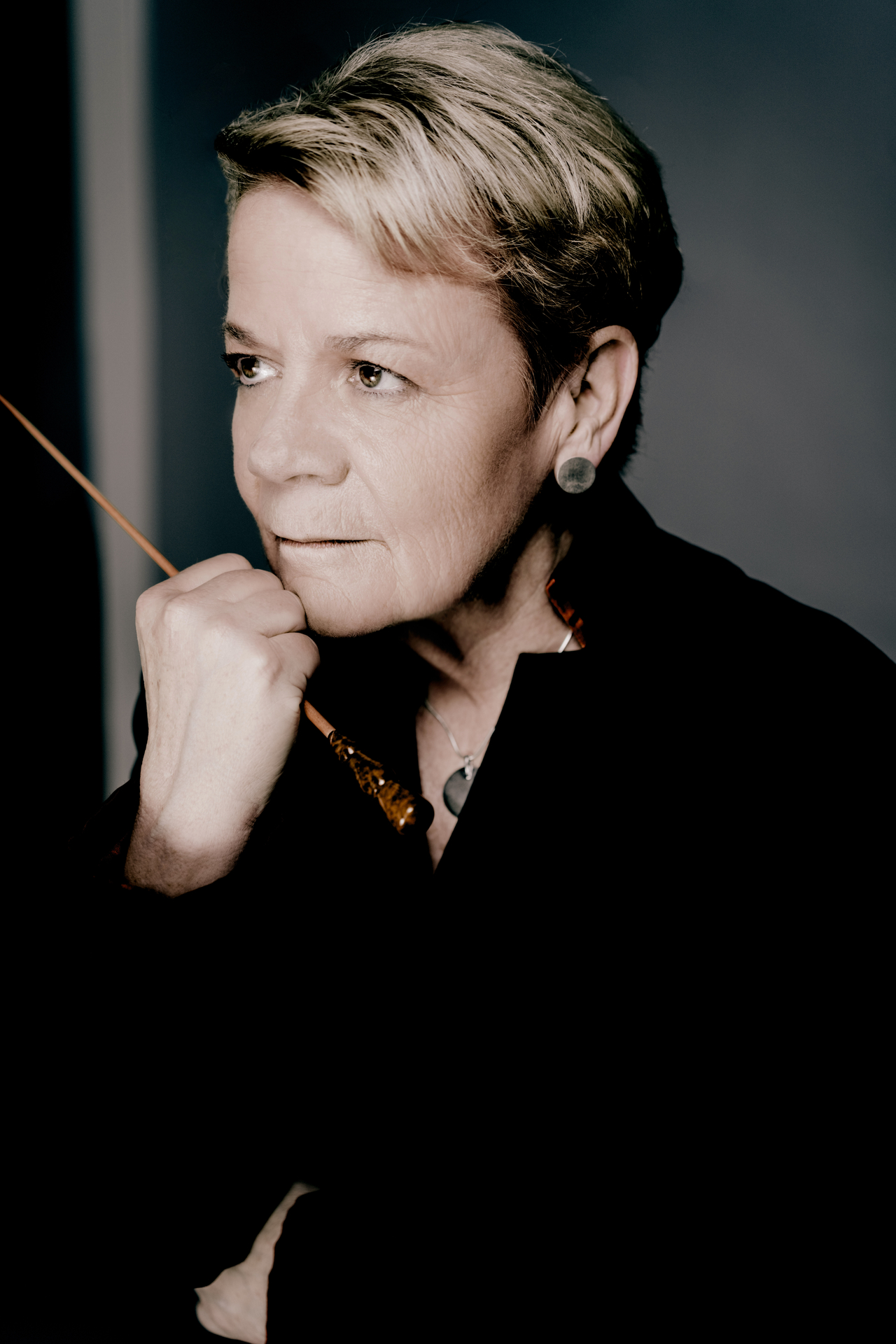
“Building an internationally recognized orchestra is a very different undertaking from developing individual soloists. It requires a long-term vision, consistent investment in the musicians, strong institutional leadership and a commitment to artistic excellence,” she said. “International visibility followed from that sustained work. Korea already has extraordinary musical talent and a strong foundation of musical education.”
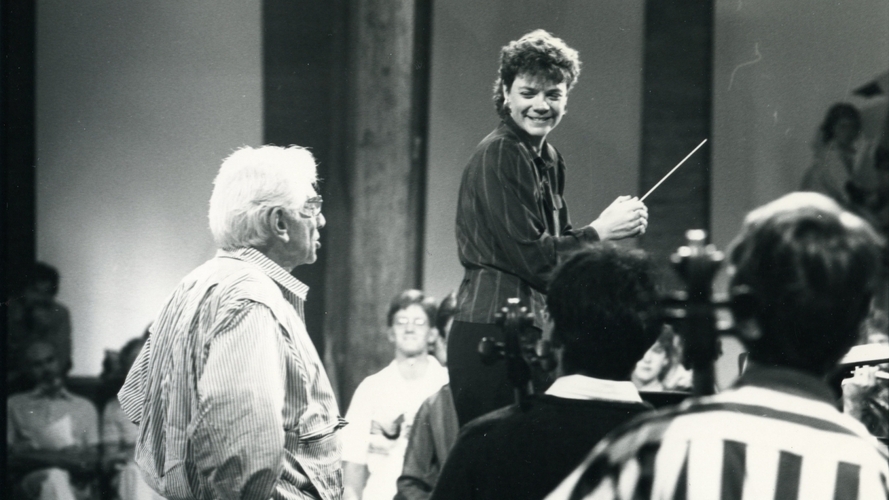
Her next visit, she hopes, will put that belief into practice for a younger generation. It is a cause rooted in her own beginnings. A violinist by training, she decided to become a conductor at age 9, when her father took her to one of Leonard Bernstein’s Young People’s Concerts with the New York Philharmonic.
“He was so filled with joy and fun, and I was always getting in trouble in the orchestra for moving around and smiling,” she recalled at the screening. “But when I saw him I realized I could be the conductor and not get into trouble.”
Turned away by Juilliard’s conducting program, she worked as a freelance violinist and founded her own ensembles, including the Concordia Orchestra, before winning a conducting fellowship at the Tanglewood Music Center. There she studied with Bernstein, who remained her mentor, and in 1989 became the first woman to win its Koussevitzky Conducting Prize.
“I would love to return to Korea anytime and with any orchestra. It might be fun to come with an emerging ensemble composed of young musicians and students,” she said. “One of the things I care deeply about is creating opportunities for young musicians to experience the world, connect with different cultures and imagine possibilities beyond what they may have thought possible. Bringing a new generation of musicians to Korea would be a wonderful way to share music while broadening their horizons.”
gypark@heraldcorp.com