Busch urges gradual adoption for smaller manufacturers, seeks deeper Korean partnerships
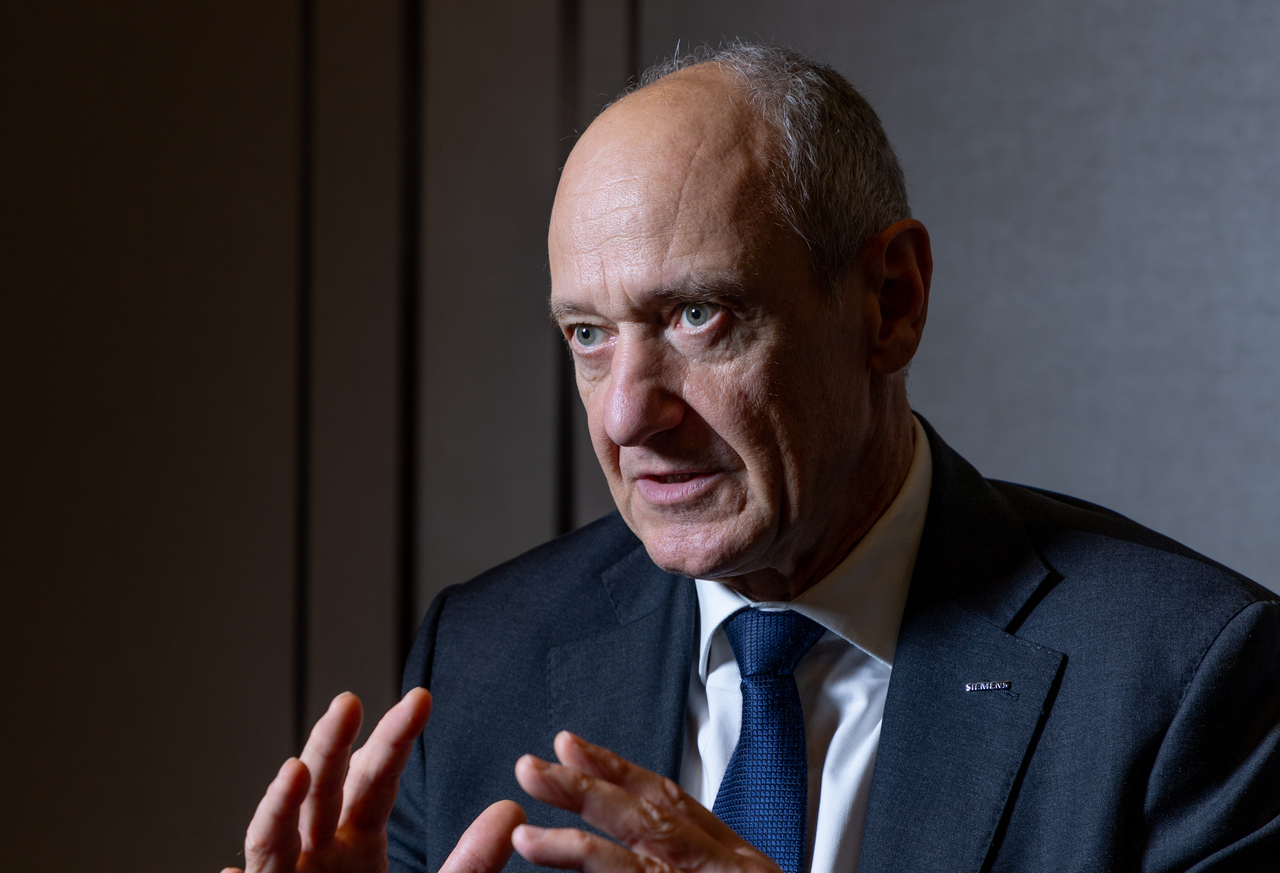
While artificial intelligence is fueling predictions of sweeping industrial change, turning that promise into practical gains on factory floors -- and bringing those benefits to smaller manufacturers -- remains a work in progress.
Meeting these challenges requires models trained on industrial knowledge and data, alongside an adoption strategy suited to businesses with limited resources, said Roland Busch, president and CEO of Siemens, the German industrial tech company that supplies factory automation equipment and industrial software.
In an interview with The Korea Herald on the sidelines of the Asia-Pacific Conference of German Business 2026 in Seoul on Friday, Busch outlined a step-by-step path for small and medium-sized manufacturers, many of which still operate with little or no automation.
Small steps, upfront costs
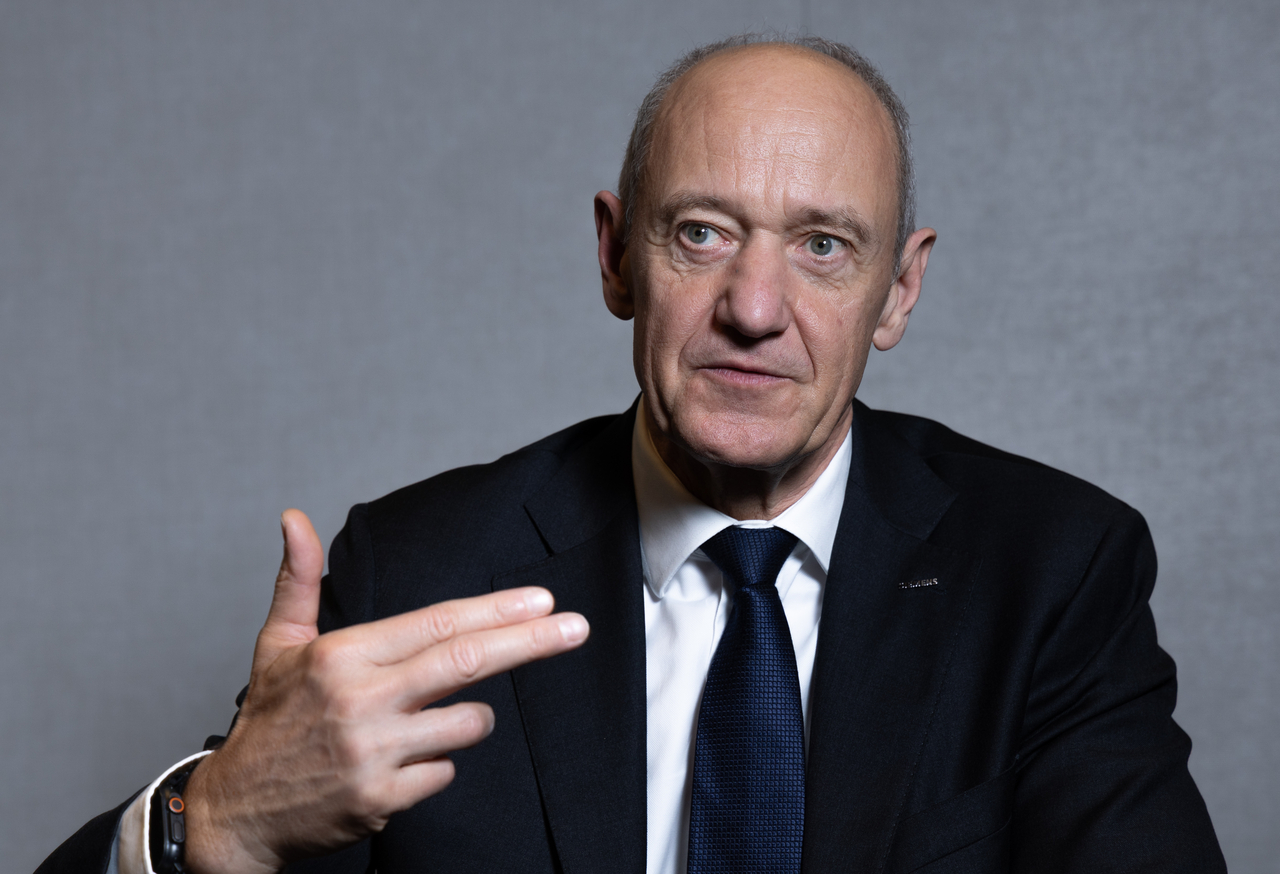
"These challenges are everywhere," Busch said, from Korea and Germany to the US and China. Showing a small manufacturer a highly digitalized factory demonstrates what is possible, but offers little guidance on how to get there.
“It’s still a big gap between the technology which we have, which we deploy, and what small companies can do,” he said.
Each company should first define what digitalization means for its business and chart a path from its current capabilities to achievable goals over six months, a year and beyond, Busch said.
While smaller manufacturers with limited capital are often under pressure to see quick returns, they must also be prepared to invest in basics that may offer no immediate payoff. Many have yet to establish systematic ways to manage their design tools and store their data, he said.
“You have to have a little bit of guts to invest in your data structure, in basic tools, before you can start your journey,” Busch said.
That groundwork enables companies to use digital technologies to improve productivity and stay competitive, he said.
Siemens is developing digital training and can offer financing support in some cases. Potential benefits include faster product development and detecting equipment faults before breakdowns halt production. The commitment to begin, however, must come from company leaders.
Industrial know-how and Korean partnerships
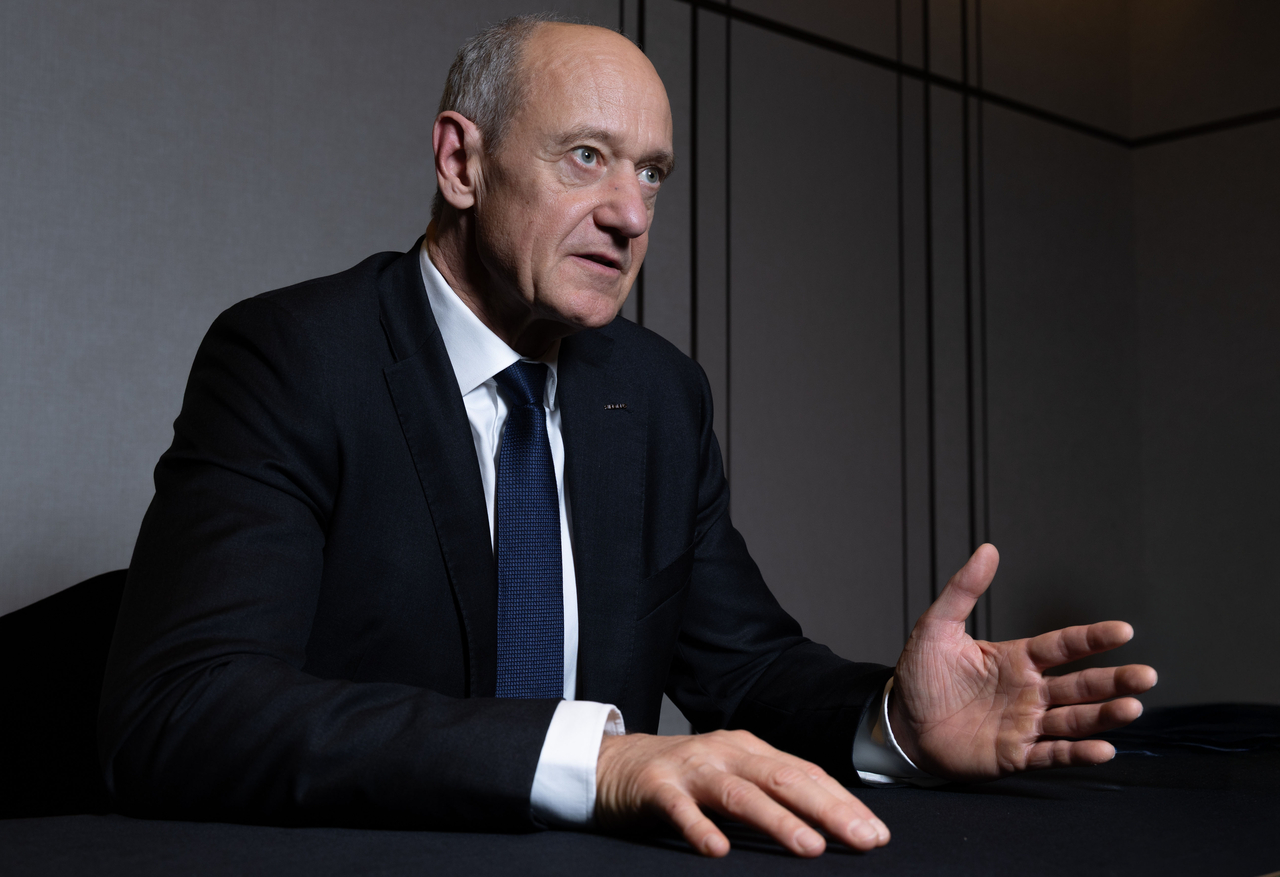
As general-purpose AI models gain wider use, applying them to manufacturing requires specialized training on industrial knowledge and data, Busch said. The appealing images they generate do not necessarily translate into designs that can actually be manufactured.
"If you ask them, 'Design me a new chair, a new car, a new bumper,' they come up with a nice drawing, but it doesn’t work. You cannot manufacture it," he said. "For that, you need industrial knowhow. You need to train models on industrial data."
Busch welcomed the Korean Industry Ministry’s M.AX manufacturing AI transition initiative, saying its focus on industrial applications plays to Korea’s strengths.
Rather than spending heavily to compete with the US and China on leading general purpose foundation models, Korea can make better use of its industrial expertise by adapting available models to manufacturing needs, he said.
Siemens is seeking to expand its Korean customer base and deepen partnerships. Busch cited work with Samsung across electronics, batteries and semiconductors, SK hynix in semiconductors, and HD Hyundai and Hyundai Motor, among others.
Beyond supplying technology, Siemens sees opportunities to combine its capabilities with those of Korean partners, whose engineering expertise and readiness to adopt technology Busch praised.
Its work with HD Hyundai illustrates the approach. Digital twins -- virtual representations of products and facilities -- include models of ships containing millions of parts and the shipyards where they are built. AI can accelerate design and simulation, helping engineers identify problems before construction.
Beyond the AI investment boom
AI computing facilities are also driving demand for Siemens’ electrical infrastructure and control systems, which help manage rapid swings in power demand and their impact on the grid.
The company is working with Nvidia on next-generation power systems designed to respond faster and reduce energy consumption, Busch said.
Addressing concerns about an AI investment bubble, Busch said he would not call it one, citing major technology companies’ financial resources, though he questioned whether every announced project would be built.
Growth will eventually moderate, but Siemens does not currently see demand declining through 2030. Longer-term momentum depends partly on how quickly AI moves from model training to practical applications, and whether those applications require GPUs or less expensive chips, Busch added.
The spread of AI will also reshape work, reducing repetitive, rules-based jobs while creating new roles, Busch said. Preparing people for that shift requires changes to school and university curricula, alongside training within companies.
“I believe that people are not replaced by AI, but by people who use AI,” he said.
Human judgment will remain important even as AI takes on more tasks, he added, pointing to doctors who must assess AI-assisted medical findings. The challenge is to equip workers with the skills to take on those responsibilities.
“This transformation of the labor market requires investment,” Busch said.
herim@heraldcorp.com