Amid overwork debate, the pianist takes on five consecutive nights of concerts, winning standing ovations along the way
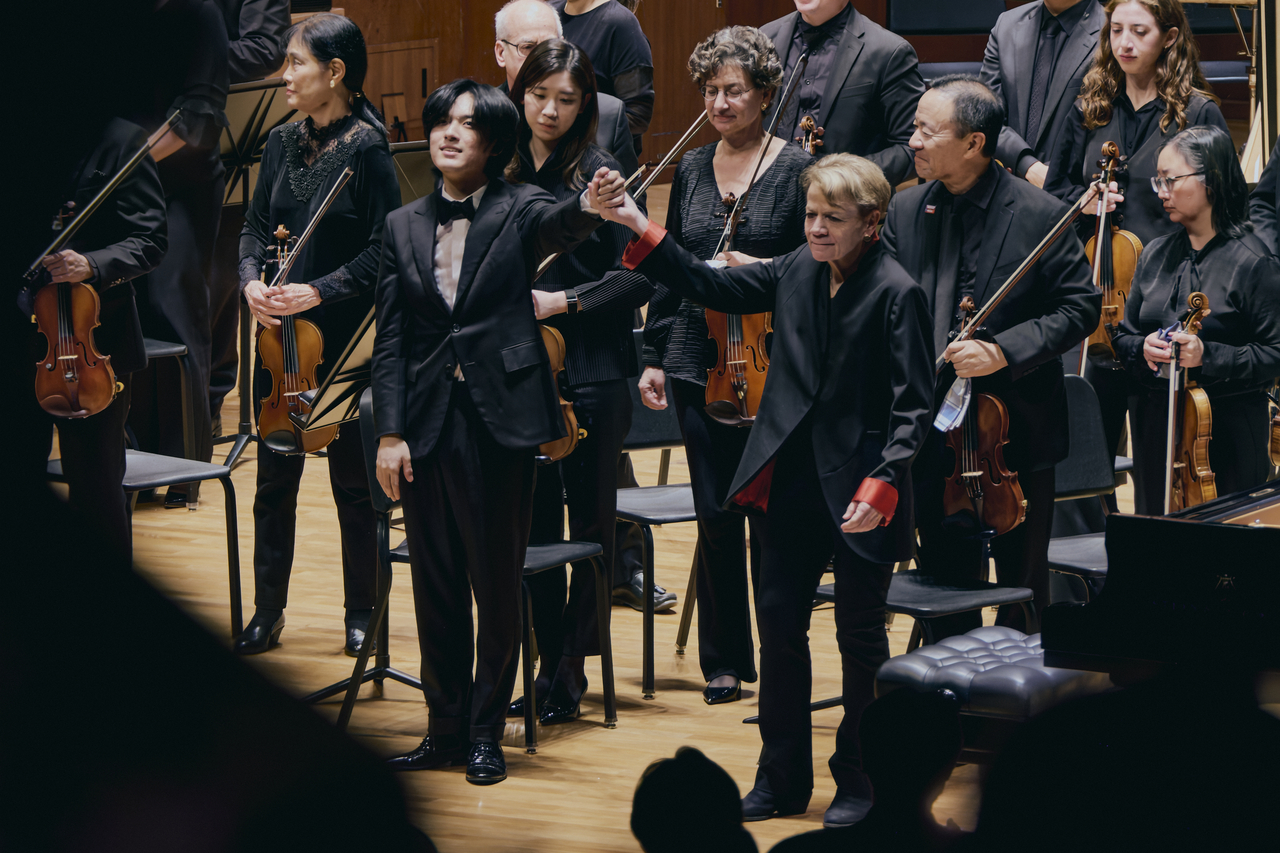
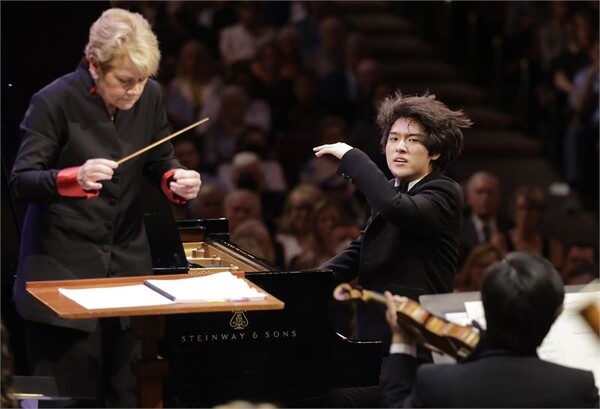
Four years ago in Fort Worth, Texas, Marin Alsop was seen wiping away tears as an 18-year-old Lim Yunchan finished Rachmaninoff’s Piano Concerto No. 3 in the final round of the Van Cliburn International Piano Competition.
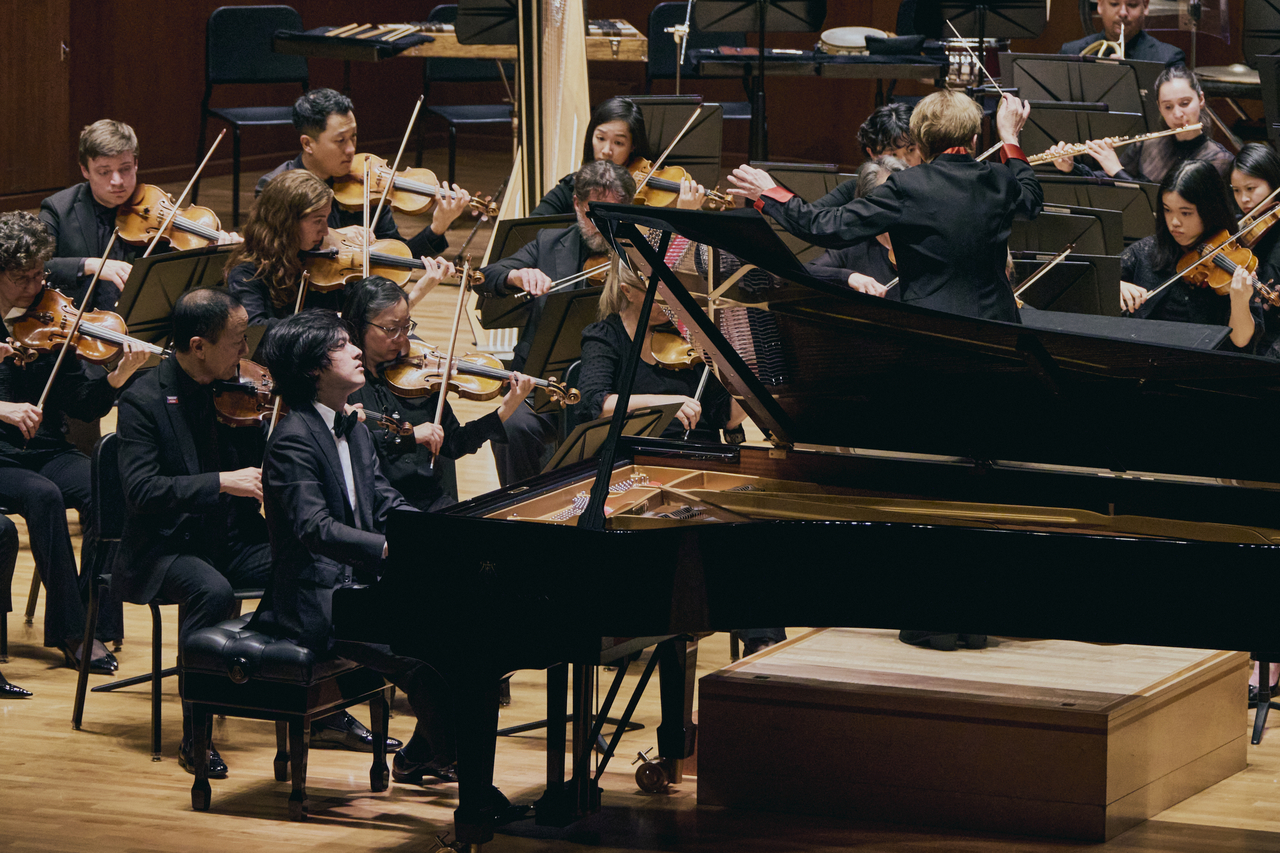
On Sunday at the Seoul Arts Center, the two returned to the same concerto, this time with the Philadelphia Orchestra, and the audience rose to its feet, drawing an encore of Elgar’s “Salut d’amour” from Lim.
Korean poet Chung Hyun-jong once wrote that when a person comes to you, their entire life comes with them: their past, their present and their future. Alsop, 70, on her first visit to Korea, arrived carrying two histories: One is the decadeslong climb that made her the first woman to lead a major American orchestra, chronicled in the documentary “The Conductor,” which was screened in Seoul hours before the concert.
The other began in Fort Worth in 2022, when she first encountered Lim.
Korean audiences had been waiting for this reunion. Since the Cliburn, the two have performed together in the US, from Rachmaninoff’s Second in Baltimore to Bartok’s Third in Philadelphia and Ravel’s G major at Ravinia this summer. But the video of their Cliburn performance has been viewed more than 20 million times on YouTube, making it the most-watched rendition of the concerto on the platform. For many in the hall, Sunday’s performance brought to life a musical encounter they had known for years through a screen.
The schedule itself reflects the demand. Five concerts in five days is an unusually long run in one city for a visiting orchestra. Even the one program originally planned without Lim was changed to include him two weeks before the tour, a move the presenter attributed to audience demand.
Some fans protested, warning that playing such a demanding concerto five days in a row, right after three performances of the same work in the US, amounted to overwork. Lim responded on Instagram, saying the decision had been made gladly by himself, the conductor and the orchestra. Just as Cezanne painted Mont Sainte-Victoire again and again from different angles and in different light, he wrote, so would he.
Alsop’s account suggests he kept his word. Speaking at the screening of “The Conductor,” which opens in local theaters Wednesday under the title “Marin Alsop,” the conductor said Lim has “a phenomenal technique” but is “also a poet,” something she rarely finds in an 18-year-old. He has since “gained maturity,” she said. At the Cliburn, everything “tended to be very on the fast side,” while now she hears a calm in his playing. Each of their first three concerts in Korea had been “completely different,” each “a different viewpoint.” “He lives in that moment,” she said.
His encores told the same story. In Incheon, he replayed the closing pages of the concerto’s finale. In Seoul, he followed with the slow movement of Mozart’s Piano Sonata No. 8, on Thursday and Friday, and on Sunday, Elgar’s “Salut d’amour.”
For all the strain the schedule put on soloist, conductor and orchestra alike, what stood out most on Sunday was the energy. Playing the fourth of five concerts in five days, they never lost their drive, from the concerto through the second half to the final encore.
The orchestra brought a history of its own. Rachmaninoff, exiled from Russia for the last quarter century of his life, called it “the finest orchestra the world has ever heard” and wrote with its sound in mind. On Sunday, his most formidable concerto returned to the orchestra he loved, in the hands of a Korean pianist.
The ovation was not reserved for the star soloist. In the second half, the orchestra, now without Lim, played Barber’s Symphony No. 1 and Stravinsky’s 1919 suite from “The Firebird,” whose blazing finale brought the audience to its feet again. It rose once more after the orchestra’s own encore, Dvorak’s Slavonic Dance No. 1 in C major.
The concert was part of the Philadelphia Orchestra’s 10th visit to Korea, and the opening leg of its 2026 Asia tour. The orchestra had come nine times before, between 1978 and 2019, under five music directors. This time it was led by Alsop, its principal guest conductor.
From Seoul, the orchestra heads to China for concerts in Haikou and Beijing with pianist Haochen Zhang, followed by residency activities in Shenzhen and Shanghai.
If a visitor brings a past, present and future, Alsop has already offered a hint of the last. “This is my first trip to Korea, and I hope I’ll be back very soon,” she told the audience at the screening. “That’s how much I like it.”
gypark@heraldcorp.com