Daniel Kim says Korea's large crypto market needs services that keep investors at home
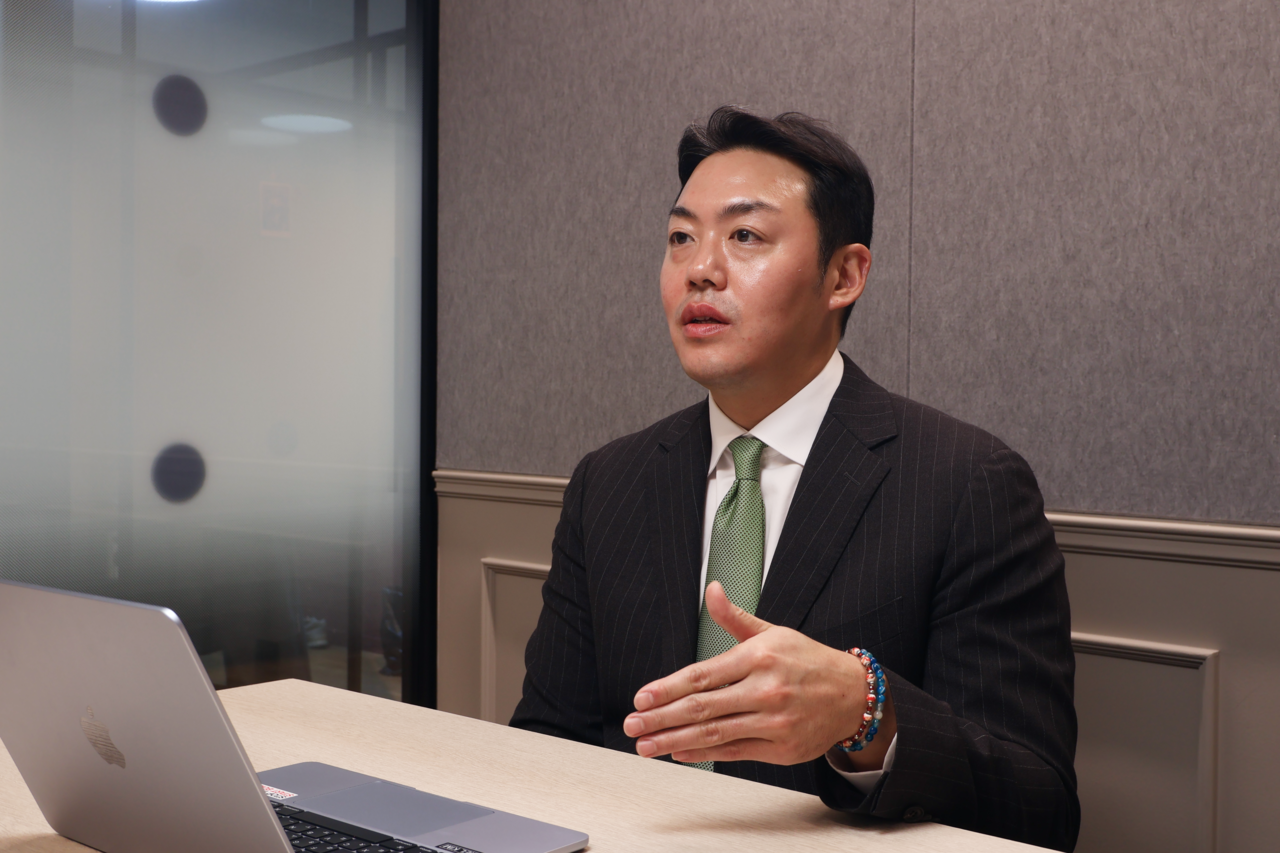
South Korea could turn one of the world's largest retail cryptocurrency markets into an Asian financial hub if new rules let domestic companies offer services investors now seek overseas, Tiger Research CEO Daniel Kim said.
"Digital assets could play a major role in making Korea the Asian financial hub it has long sought to become," Kim said Tuesday in an interview with The Korea Herald in Seoul.
That retail investor base has made Korea a priority for global blockchain projects, while banks and other companies are exploring uses beyond cryptocurrency trading. Kim also cited institutional interest, blockchain developers and local service providers as elements that support Korea's potential.
Hong Kong and Singapore have moved faster to set rules for digital-asset businesses, but Korea offers a larger pool of potential users. "Market size matters," he said.
From trading to infrastructure
Kim's view comes from work on both sides of that market. He worked at Microsoft and Amazon Web Services during the rise of cloud computing, then analyzed technology companies at a hedge fund. When he turned to blockchain, he found abundant public data but little reliable analysis.
"There were no research reports like the ones securities analysts write. People were investing in the dark, relying on hunches or falling for scams," he said. He began publishing reports on his own before building Tiger Research into a firm that provides research, on-chain data and consulting services to companies and institutions.
As the firm grows, its client mix has shifted. Last year, over 80 percent of its clients were based overseas, but this year domestic clients have accounted for about 55 percent.
"At the most basic level, Korean banks are asking what they should do in digital assets," Kim said. "They want to know whether to run custody businesses themselves or outsource them, and what role they would play in a stablecoin consortium."
He added that banks are weighing whom to partner with for cross-border services, whether to build their own blockchains and which wallet and anti-money-laundering providers to use.
That work is picking up even as token prices and exchange trading weaken. Bitcoin has fallen about 30 percent this year and was trading around $60,000 on Thursday. "For blockchain infrastructure, this is the busiest season I've ever experienced. The coin market, on the other hand, is dead," Kim said.
Korea has yet to meet much of its investors' demand for digital-asset services. Tiger Research estimates that digital assets worth a cumulative 700 trillion won ($521.1 billion) were transferred from domestic exchanges overseas between 2021 and 2026. The figure measures transfers, not net outflows.
Kim cited derivatives trading, staking, crypto cards and prediction markets among the services Korean investors use overseas. Domestic exchanges, meanwhile, remain heavily reliant on spot-trading fees.
Opening the market
Kim welcomed the government's proposed digital asset law but questioned its plan to cap exchange ownership.
Unveiled Tuesday, the proposal would create separate licensing or registration frameworks for digital asset dealing, brokerage, custody and management. It would also allow domestic token offerings, subject to disclosure requirements, and initially permit won-backed stablecoins issued by consortia in which banks hold a combined majority stake. It still needs to pass the National Assembly.
"For the past 10 years, the government's stance was essentially, 'It's dangerous, so don't do it.' Now it is moving toward a conditional opening," Kim said.
The plan would generally limit a single shareholder's stake in an exchange to 20 percent, or 34 percent with regulatory approval.
While acknowledging regulators' concern that exchanges combine functions kept separate in traditional finance, he argued that restricting Korean platforms could weaken the trading liquidity needed to support other digital-asset businesses, even as foreign exchanges offer a broader range of products.
"I worry that government action could end up shrinking domestic exchanges," he said.
Kim was also cautious on the commercial case for a won stablecoin. Cards and payment apps already work well, he said, leaving consumers little reason to switch.
"Even so, we have to do it. It is a defensive measure," he said, warning that widespread use of dollar-backed tokens could gradually dollarize Korea's financial market.
To build demand, he suggested converting incoming stablecoins into won tokens or using them for trading on local exchanges. "A won stablecoin is still just a coin pegged to the won. At its core, it is the won," he said.
Kim sees the opportunities beyond spot trading as tokenized products and other financial services move on-chain. For Korea, long reliant on manufacturing, he said the shift could help it build a stronger position in global finance.
"I think the financial industry is being replicated on-chain, almost like a mirror image," Kim said. "If Korea wants to become an advanced financial-services economy, digital assets are an industry it has to develop."
jwc@heraldcorp.com