
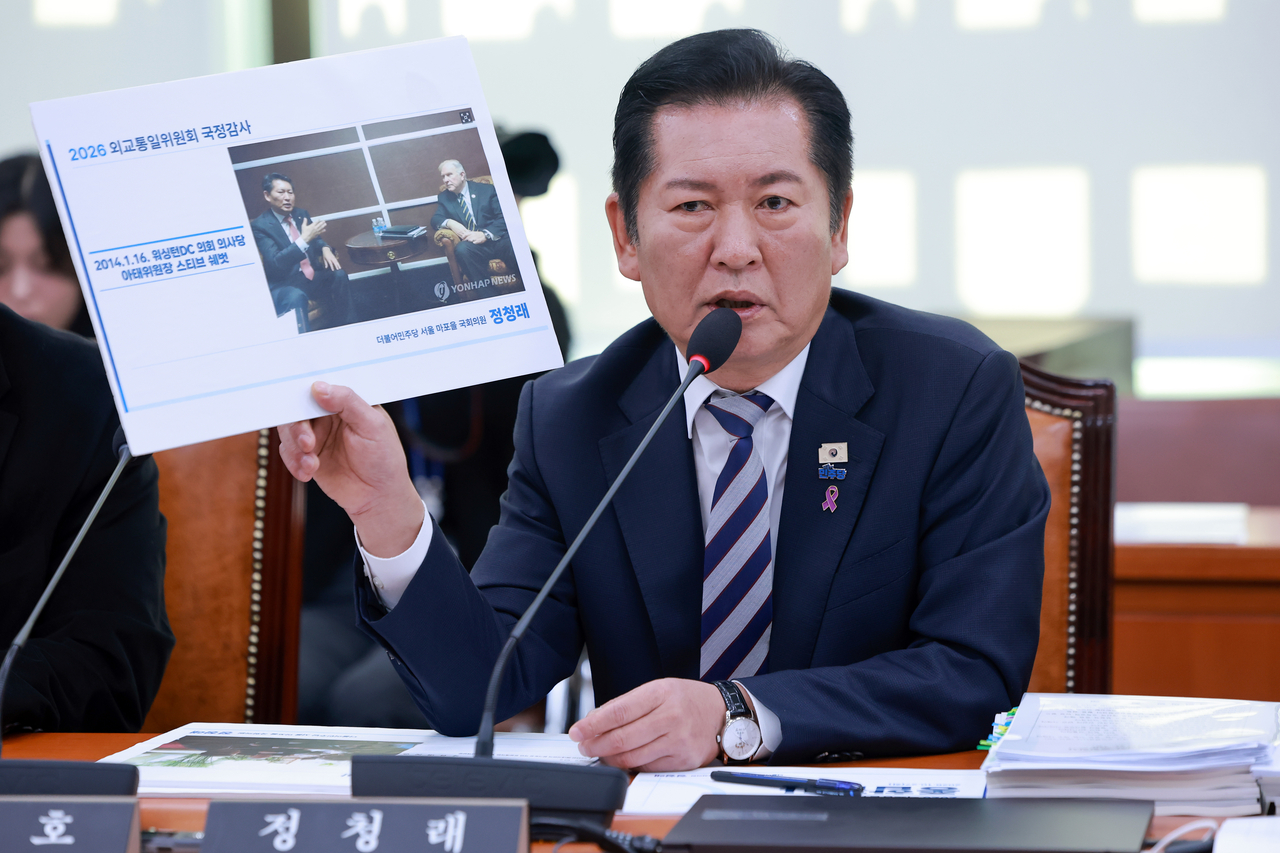
A delay faced by Rep. Jung Chung-rae in receiving a US visa became the subject of a parliamentary dispute Tuesday, with the former ruling party leader criticizing Washington’s handling of his application.
Opposition lawmakers, however, questioned whether the case reflected problems in Seoul-Washington relations.
Jung, a former leader of the ruling Democratic Party of Korea, had planned to visit Washington for a parliamentary audit of the South Korean Embassy on Oct. 12.
He was unable to attend because his visa had not been issued and instead joined the group auditing Korean diplomatic missions in Europe.
“My current application has neither been approved nor rejected, with its status simply listed as ‘under review,’” Jung told a National Assembly Foreign Affairs and Unification Committee audit. “I find the US administration’s handling of this matter very regrettable.”
Jung said he had visited the US without problems in the past and contributed to relations between the two countries. He also pushed back against the opposition’s characterization of the delay as a sign of a crack in the Korea-US alliance.
“This is an issue that should draw criticism across party lines, not be used as a means of attacking our own government,” Jung said. “I also hope my visa issue does not harm the alliance.”
Rep. Kim Dae-sik of the main opposition People Power Party questioned whether the delay could be considered entirely unrelated to diplomatic relations.
“We are asking (the Foreign Ministry) whether relations between Korea and the US remain firm,” Kim said. “It should not happen that a lawmaker is unable to attend a parliamentary audit because of a visa denial or delay.”
Kim also criticized Foreign Minister Cho Hyun for failing to provide sufficient support for a lawmaker’s diplomatic activities under the circumstances.
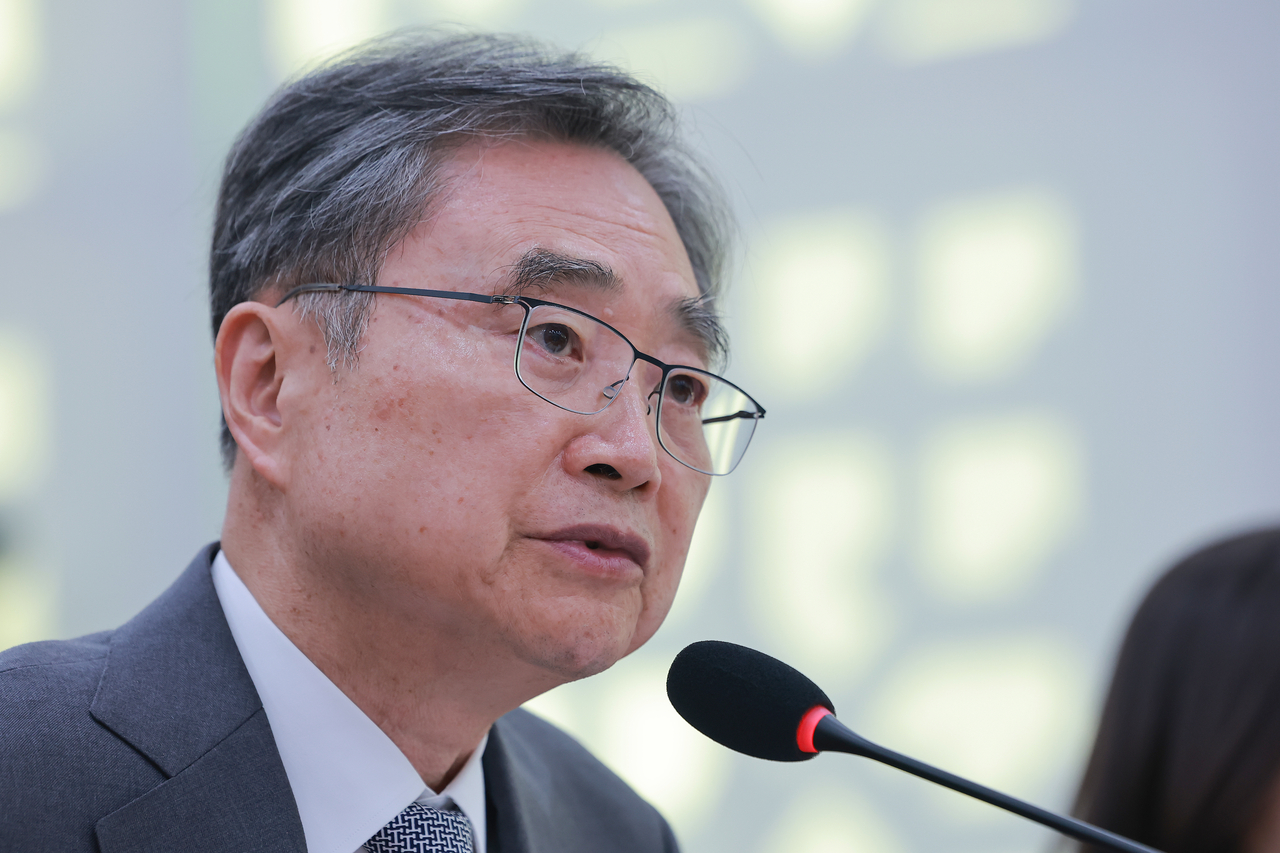
Cho said he would raise the issue with US Secretary of State Marco Rubio if they meet during his visit to the US beginning Thursday for a Group of 20 foreign ministers’ meeting.
“US visa procedures are somewhat haphazard, although it is difficult to even call them a policy. They say they do not know why this is happening and cannot do anything about it,” Cho said. “Looking at the conduct of agencies such as Immigration and Customs Enforcement, many things go beyond common sense.”
Jung also addressed speculation that his participation in a 1989 protest, during which student activists occupied the US ambassador’s residence in Seoul, may have been linked to the visa delay.
He said the matter had been resolved after he reconciled with then-US Ambassador Donald Gregg. The two met in 2006, 17 years after the protest.
Jung has said he visited the US in 2012 for a parliamentary audit and again in 2014, when he met US lawmakers and visited Gregg at his home.
forestjs@heraldcorp.com