
Nearly 30% of language study visa recipients here illegally, with Vietnamese nationals making up the largest share
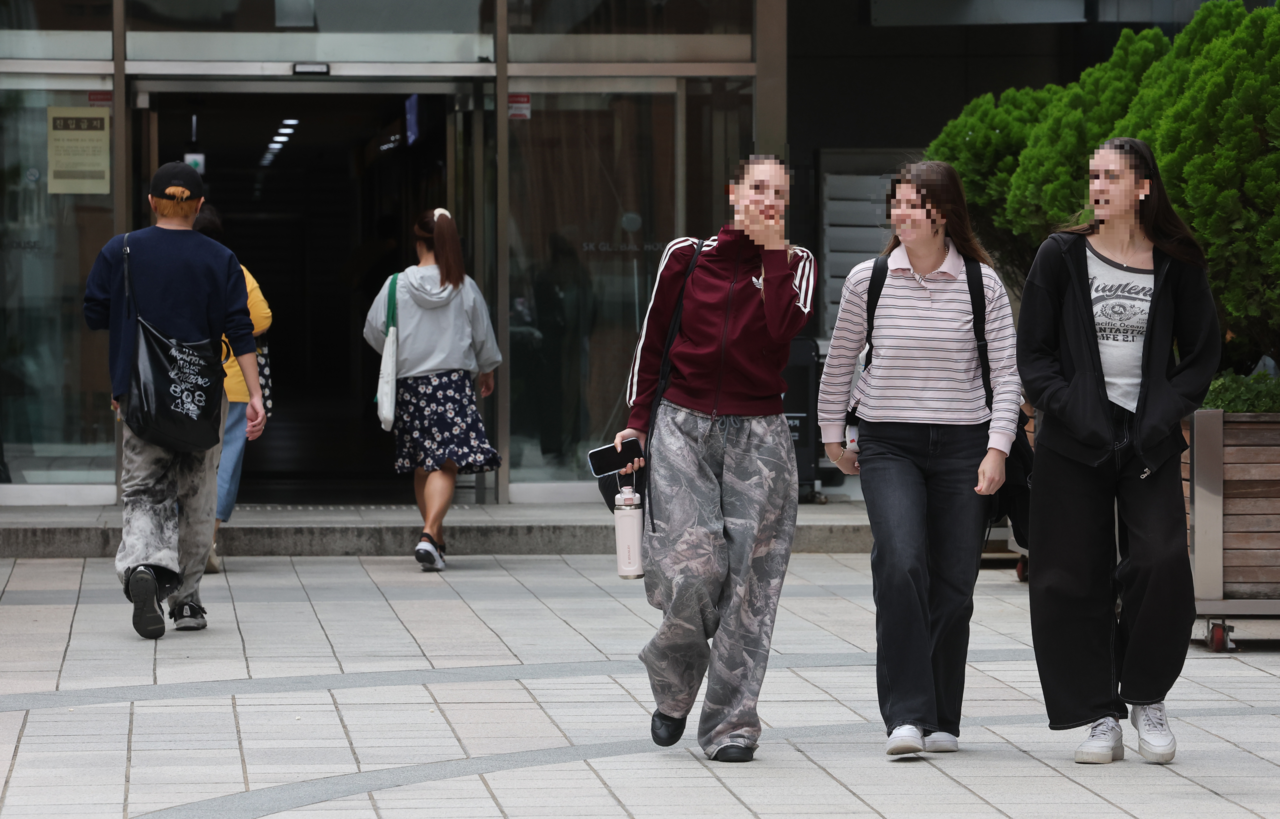
More than 31,000 foreign students who had been issued either D-2 or D-4 visas were staying in South Korea illegally as of August, government data showed Friday.
A total of 31,665 foreign students who had entered Korea on undergraduate or language training visas were in Korea without permission as of August, according to Ministry of Justice data obtained by People Power Party Rep. Kim Hee-jung.
Of these, 21,719 had entered on D-4 visas, which are issued for language study, while 9,946 had entered on D-2 visas for university degree programs.
The figures highlight a sharp disparity between the two groups. While 29.2 percent of D-4 visa recipients were in Korea illegally, the rate for D-2 visas was just 3.6 percent.
The illegal residency rate among language students rose from 25.3 percent in 2025 to 29.2 percent as of August this year, reversing a downward trend that had continued since 2022, when the rate stood at 42.2 percent.
The total number of foreign language trainees staying in Korea, including those without legal residency status, fell from 89,267 last year to 74,450 as of August.
Among degree-seeking students, however, the rate has continued to decline, from 7 percent in 2022 to 3.6 percent in August, even as the number of foreign nationals in the D-2 visa category more than doubled over the period.
Vietnamese nationals accounted for 82.8 percent of foreign students staying illegally.
They were followed by those from Uzbekistan at 2,033, Mongolia with 1,353, China with 731 and Nepal with 316.
The figures partly reflect the large presence of Vietnamese students in Korea's nondegree programs. According to Education Ministry data, Vietnamese students accounted for 46.1 percent of all international students enrolled in nondegree programs as of April 2026.
Separate data tracking newly reported cases of illegal residency among foreign students at Korean universities showed that the number rose 12.2 percent from 3,631 in 2025 to 4,074 this year.
This year's figure included 1,872 degree-seeking students and 2,202 language trainees.
More universities report students' illegal residence
The number of universities reporting such cases has also increased. Among 344 universities nationwide, 190 reported cases involving degree-seeking students this year, up from 182 in 2025. The number of universities reporting cases involving language trainees increased from 186 to 208.
By region, Gyeonggi Province recorded the largest number of newly reported cases this year, at 994, up from 710 last year.
North Gyeongsang Province followed with 470 cases, South Chungcheong Province with 402 and Seoul with 401.
North Chungcheong Province saw the steepest increase, with cases jumping 158.2 percent from 134 last year to 346 this year.
At one university in Jeonnam-Gwangju, 207 of the 690 foreign language trainees newly admitted in 2025 subsequently became illegally resident.
Kim criticized universities for prioritizing the recruitment of foreign students without adequate systems to ensure their continued enrollment and legal residency.
"Universities, which should be centers of learning, have become backdoor channels for illegal residency," Kim said.
She called on the Education Ministry and the Justice Ministry to conduct a comprehensive review of the international student system, from visa screening and admissions to residency monitoring and follow-up management.
seungku99@heraldcorp.com