

Gender gap emerges as women report threefold higher rates of lower-body limitations
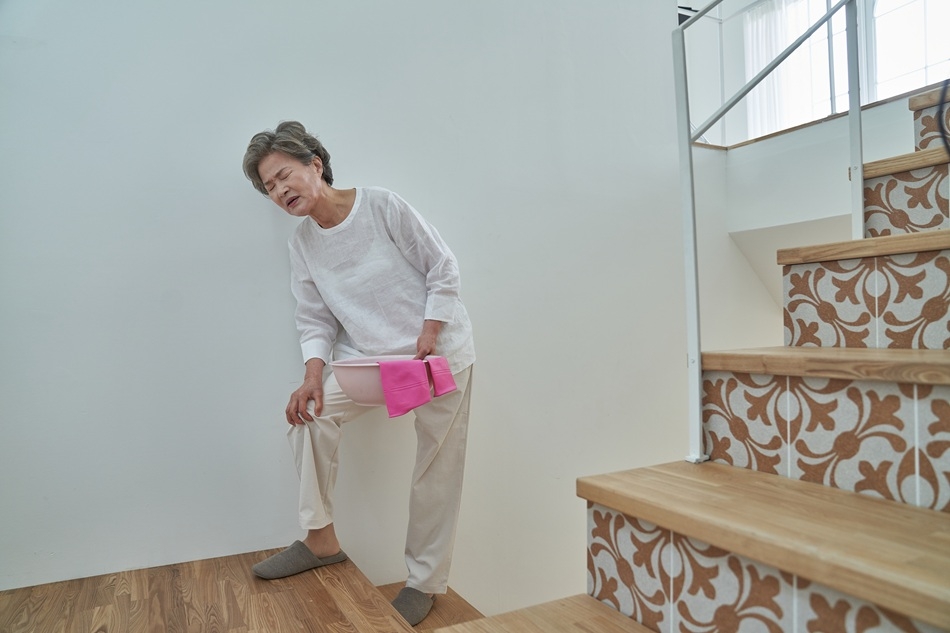
At what age do everyday tasks like climbing stairs, squatting or getting up from a chair start to feel harder? A government report says that, for South Koreans, physical functioning begins to decline more noticeably in the mid-70s.
The average score on the Life Functioning Scale-10, which measures how easily older adults can perform everyday activities, fell more sharply from age 75 onward, according to a recent report by the Korea Disease Control and Prevention Agency.
The average score was 92.6 out of 100 among adults aged 65 to 69 and 89.7 among those aged 70 to 74. It fell to 83.8 for those aged 75 to 79 and dropped further to 70.6 among those aged 80 and older.
Across all adults aged 65 and older, the average score was 85.9. Men scored 92.1, compared with 80.9 for women.
The findings were based on a 2024 national health survey of approximately 1,700 older adults. Participants assessed how difficult 10 everyday activities were, including walking, climbing stairs, lifting objects and using public transportation. Each activity was rated on a five-point scale from zero to four, with the combined score converted to a 100-point scale. Higher scores indicate greater ease in performing daily tasks.
Women struggle more
The report found that both men and women faced greater challenges with lower-body movements, with women particularly affected.
Bending, squatting or kneeling posed the greatest challenge for adults aged 65 and older, with 35.6 percent of women and 8.5 percent of men reporting severe difficulty or an inability to perform these movements.
Climbing a single flight of stairs was a challenge for 18.3 percent of women, nearly four times the 4.7 percent recorded for men. Standing on tiptoe was another obstacle, affecting 13.7 percent of women and 5.3 percent of men.
The gender gap was also evident in walking 400 meters, with 12.8 percent of women and 3.3 percent of men struggling with the task. Similarly, 11.2 percent of women and 3.3 percent of men reported problems rising from a chair without armrests.
"Women were about three times as likely as men to report limitations in lower-body movements, highlighting differences in physical functioning by gender and age and underscoring the need for health promotion programs tailored to these differences," the KDCA said in a statement.
The pattern extended to upper-body movements and other daily activities, though the differences varied by task.
Lifting a 5-kilogram object was particularly challenging for women, with 12.6 percent reporting serious limitations, compared with just 1.7 percent of men. The gap was narrower for picking up small objects, at 3.6 percent and 3 percent, respectively.
Women also recorded higher rates for using public transportation, at 6.6 percent versus 2.3 percent for men, and participating in social activities, at 6.4 percent versus 2.9 percent. Bathing or showering posed the fewest problems among these activities, affecting 2 percent of women and 1.5 percent of men.
cjh@heraldcorp.com