Each year as spring arrived, the queen of the Joseon era (1392~1910) would head to the secret garden of Changdeokgung Palace where azaleas bloomed.
By the garden's flowing streams, the queen and her court women, would make and enjoy hwajeon — pancakes made of glutinous rice flour topped with freshly picked azalea petals. It was described in the Encyclopedia of Korean Culture published by the Academy of Korean Studies.
Beyond the palace, the custom was also enjoyed among commoners. On Samjinnal, the third day of the third lunar month, people ventured outdoors to mark the arrival of Spring.

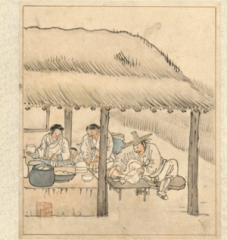
“In the Joseon period, women would go out in groups during spring, set up small cooking stations outdoors and make hwajeon and sing 'hwajeon-ga,'” said Kang Hye-sun, professor of Korean literature at Sungshin Women’s University.
“At the same time, male scholars would gather separately in scenic places, eat hwajeon and compose poetry.”
"Hwajeon-ga" were songs that described both the beauty of spring and the emotional struggles of women, while "hwajeon nori" were seasonal outings where people gathered outdoors to make and share the dish.
“There are also records of rose hwajeon (in early summer) and chrysanthemum hwajeon (in fall), but what we commonly refer to as hwajeon is made with azaleas,” she said.
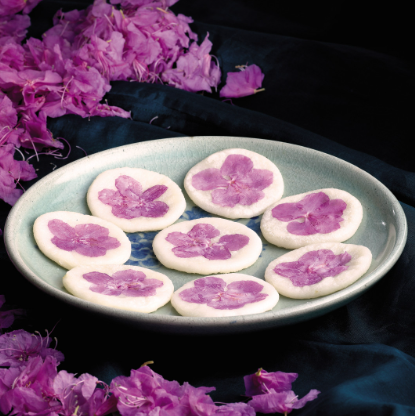
The flowers used are "jindallae" azaleas, the purple flowers that typically bloom from late March to early April, rather than the later blooming "cheoljjuk," which contain toxins.
Able to thrive even in harsh conditions, they have long been regarded as a “flower of integrity,” according to the Korea Food Promotion Institute.
Long regarded as a relic of the past, hwajeon has recently reappeared in contemporary Korean dessert shops, presented with a more curated and aesthetic approach.
Sin Yong-il, owner of Korean traditional dessert cafe Haap, recalls how he began offering hwajeon with a personal memory. His mother once brought him branches of blooming azaleas from her garden, prompting him to revisit the traditional dish.
“Many customers say they only feel that spring has arrived after eating hwajeon,” Sin said.
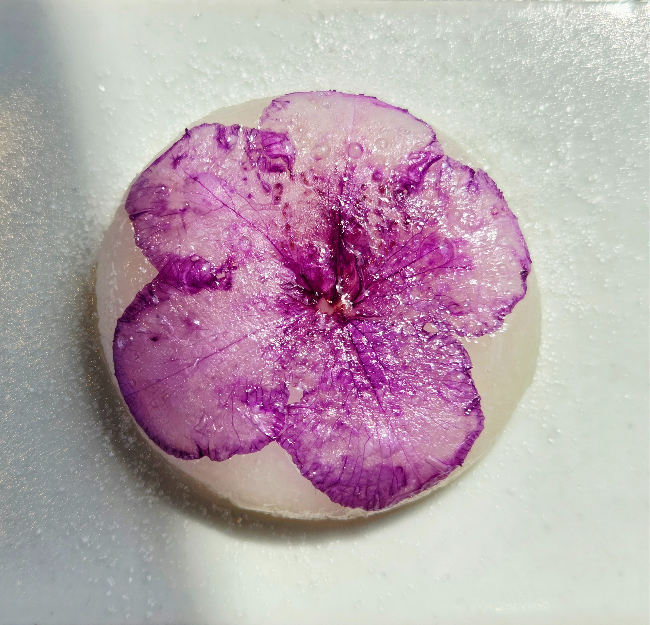
Another contemporary Korean dessert shop, 1994Seoul, has incorporated hwajeon into its tea course, presenting it as a seasonal confection.
“With its subtle nuttiness and refined aroma, it is a confection to be appreciated first with the eyes, then with the palate,” the shop explains.
In April, the shop serves hwajeon topped with azalea petals, while in other seasons it adapts the dish using different edible flowers.
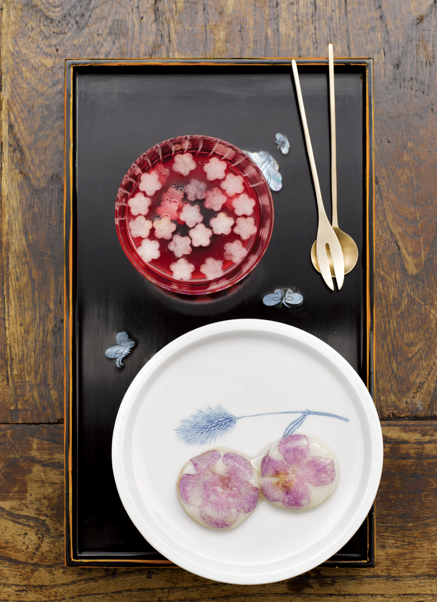
Hwajeon is often paired with traditional drinks such as omija tea, a refreshing infusion made from magnolia berries or baesuk, a warm pear-based drink that complements its subtle flavors.
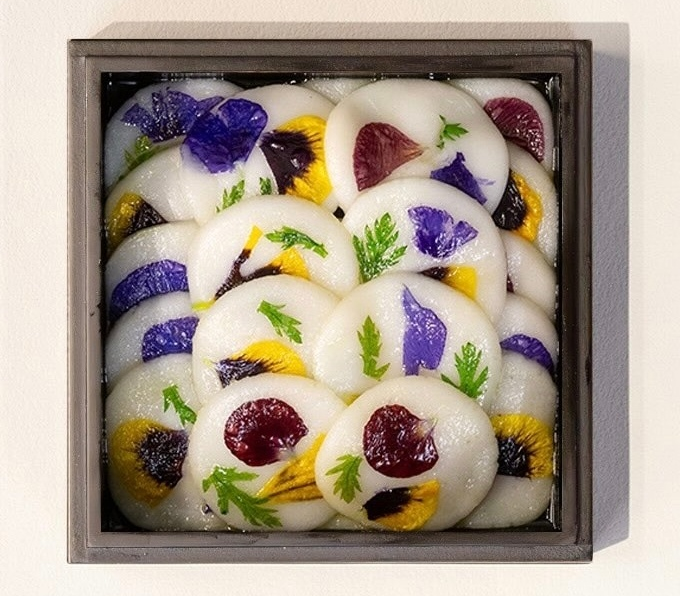
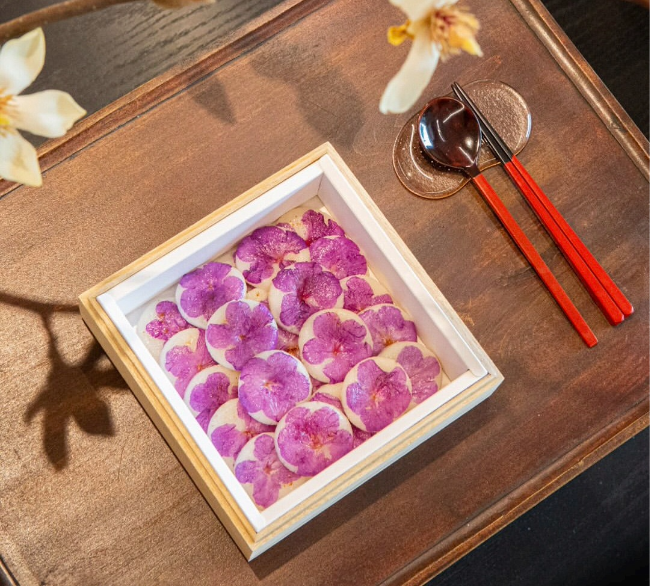
Traditionally, finely ground glutinous rice flour is mixed with a pinch of salt and kneaded into a soft dough. Small portions are shaped into flat rounds and gently pan-fried, with each flower petal carefully placed on top before the cakes are fully cooked. The finished pieces are lightly sweetened with honey or sugar.
But the process is far from predictable, Sin said. Because the dish relies on fresh, seasonal flowers, its production depends entirely on nature. That fleeting moment at the turn of the seasons is precisely what gives hwajeon its meaning.
Rather than trying to produce it year-round, he chooses to follow the rhythm of the season.
“You can’t control when the flowers bloom, and wind or rain can easily damage them,” he said. “It’s something you wait for. That’s why it feels special every time it comes back.”
yunapark@heraldcorp.com