How porcelain from Joseon era is being reimagined in Korean beauty, dining, home living
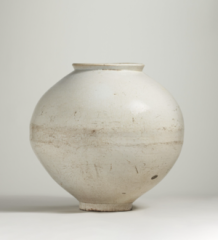
Soft and milky in tone, its rounded and generous form quietly draws the eye. The moon jar, a representative Korean porcelain that first emerged during the Joseon era (1392–1910), continues to captivate artists and designers today as an enduring source of inspiration.
Made by joining two hemispherical halves rather than shaping a single body at once, the traditional moon jar allows for subtle variations in form — a quality often associated with Korea’s aesthetic appreciation for natural imperfection.
In 2023, an 18th-century moon jar fetched $4.5 million at Christie’s, marking the highest price ever achieved by a Korean moon jar at auction.
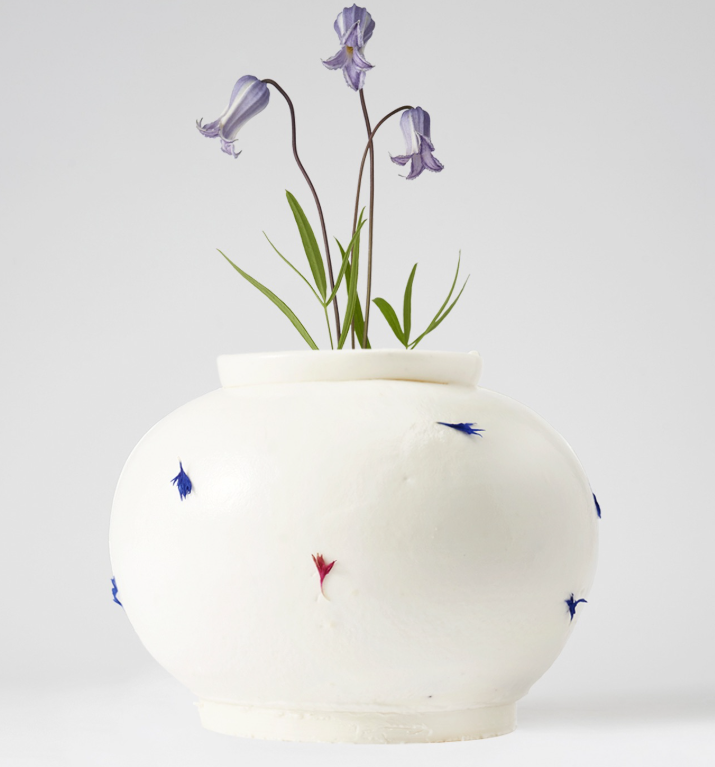
Today, the form of the moon jar has found its way into contemporary branding, from beauty packaging to tableware used in Korean fine dining restaurants -- and even in the cake business.
Unahaus gained popularity online after its whipped cream cakes -- inspired by the form of the traditional Korean moon jar -- went viral, with celebrities purchasing them.
Among their designs, the blueberry cake gained particular attention after it was revealed that Jennie of Blackpink personally purchased the treat to celebrate the group’s eighth anniversary.
Korean beauty brand Sulwhasoo also incorporates the form of the Joseon-era vessel into the packaging of its lip balm, drawing on what the company describes as the “graceful movement of light on the glaze of the moon jar.”

Contemporary artists continue to reinterpret the moon jar in new materials and forms, allowing the people of today to enjoy its beauty within the home.
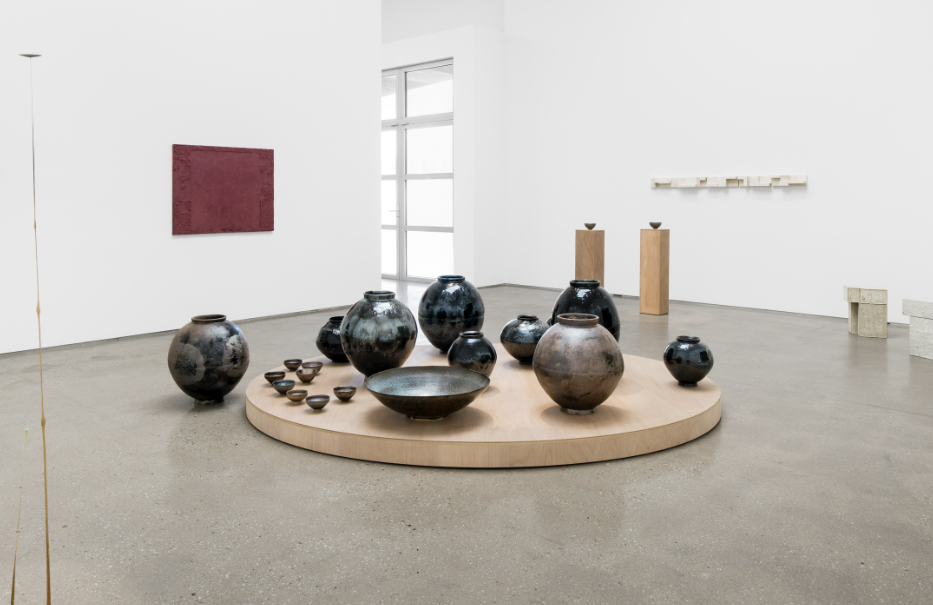
For Kim Sy-young, a master of black-glazed ceramics, the moon jar is no longer confined to white porcelain. Working with darker clay, each of his jars appears to contain its own universe, the artist said, as the natural tones of soil subtly emerge through the firing process.
“Binding the two rather than building it up at once allows for more variation,” Kim said, referring to moon jars’ traditional process of joining two separately formed halves.
“In Korea, there is an acceptance for imperfection, unlike in Japan where perfection is often more strongly pursued.”
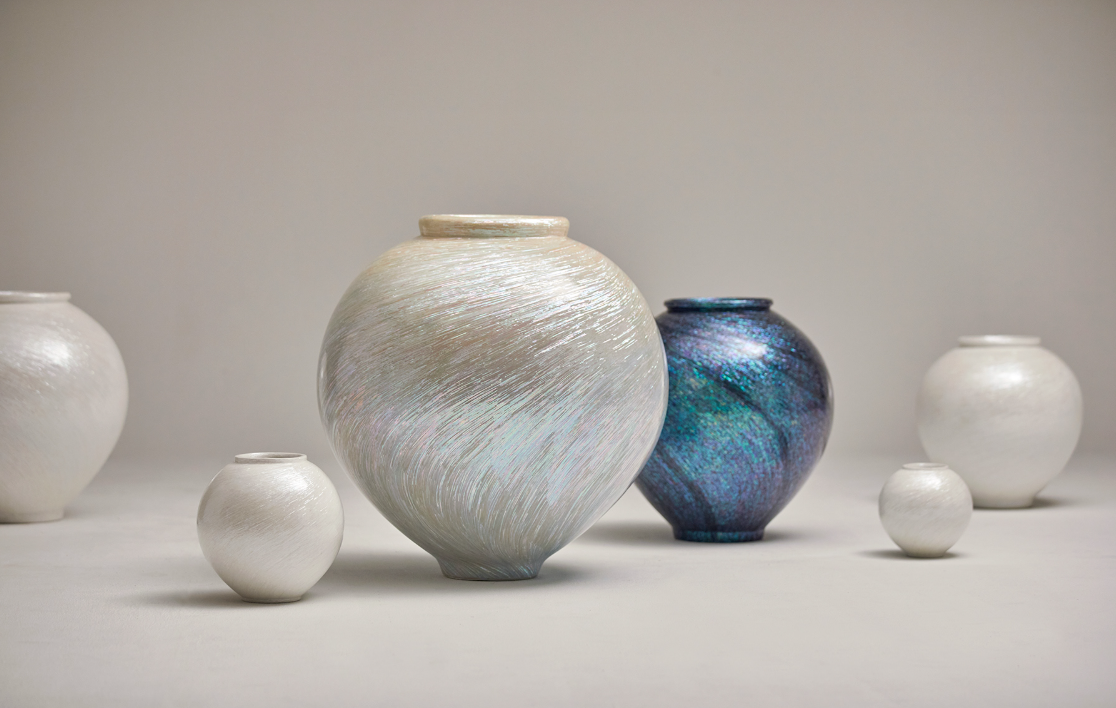
Artist Yoo Ji-an approaches the form from an entirely different direction, incorporating mother-of-pearl.
Her reinterpretation of the traditional vessel, adorned with nacre, was presented as a state gift to the White House in 2023.
Drawing inspiration from what she describes as the “aesthetics of emptiness,” Yoo constructs her moon jars using contemporary industrial materials and mother-of-pearl coating techniques.
“Mother-of-pearl carries traces of time within the material itself, and it appears different each time you look at it. That is why I consider it to be the most suitable medium to express the passage of time, emotions and a sense of existence,” Yoo said.

Moon jars have also inspired artists beyond ceramics.
Painter Choi Young-wook, widely known for his “Karma” series that is steadily sought after in the art market, constructs the volumetric presence of the jar through a labor-intensive process of layering gesso mixed with white powder onto canvas.
The surface is repeatedly coated and sanded, allowing fine cracks to emerge over time.

His series traces its origin to an encounter with a moon jar at the Metropolitan Museum of Art in New York, where he was struck by what he described as a presence that felt “modest yet confident.”
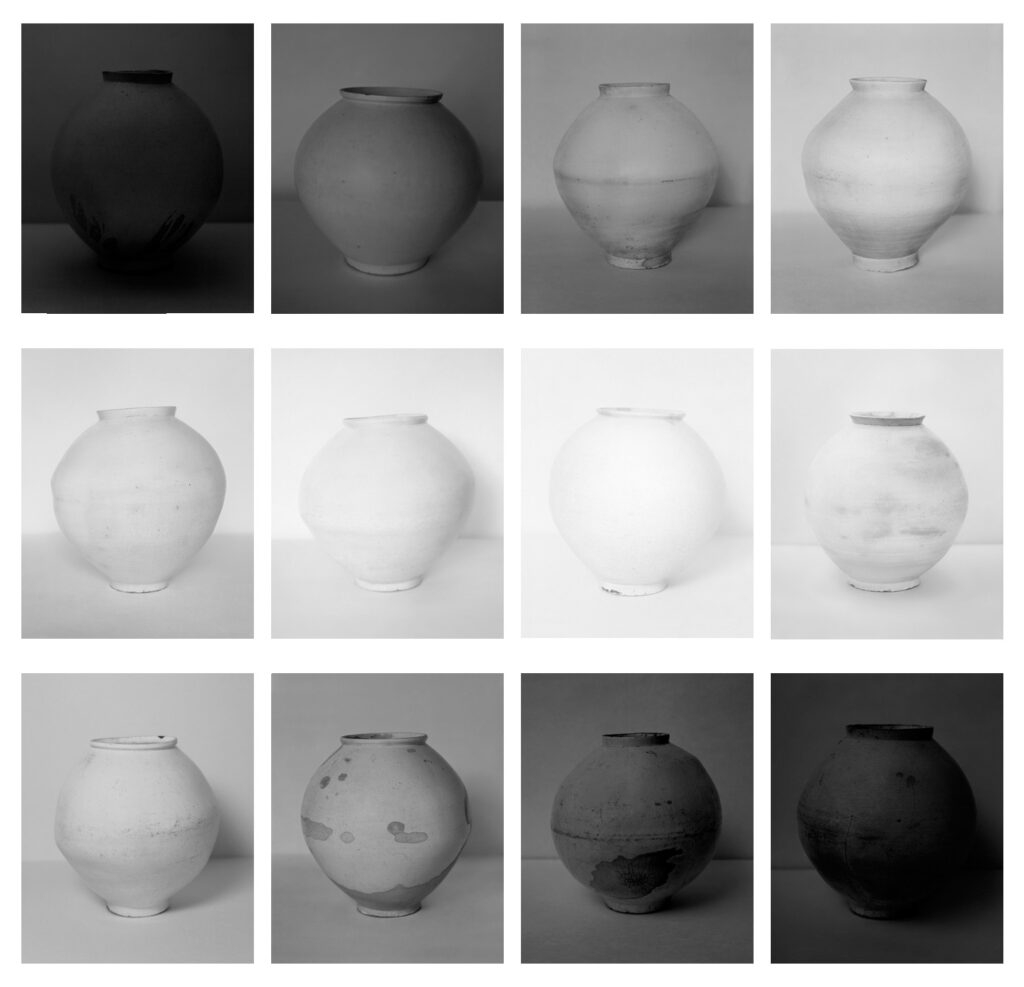
Photographer Koo Bohn-chang has similarly explored the subject in his work “Moonrising III,” a series depicting 12 moon jars from collections around the world. Presented in varying tones of black and white, the photographs evoke the waxing and waning of the moon itself.
yunapark@heraldcorp.com