Furniture of Joseon era shaped by Confucian ideals, soban lives on as object of quiet aesthetic reflection
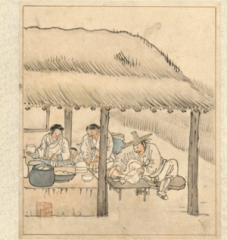
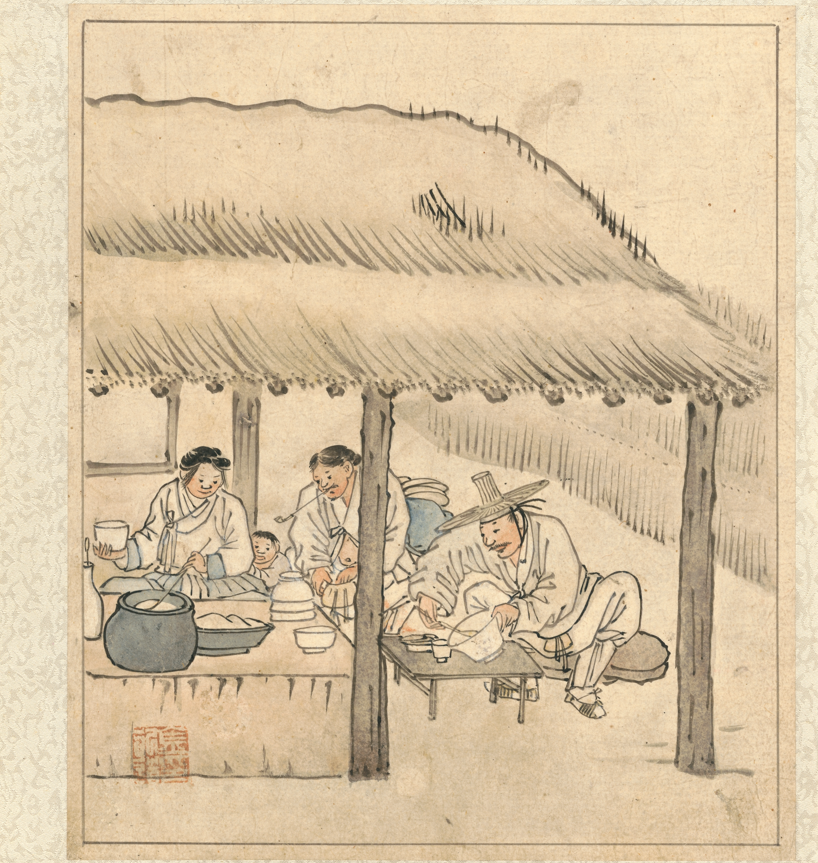
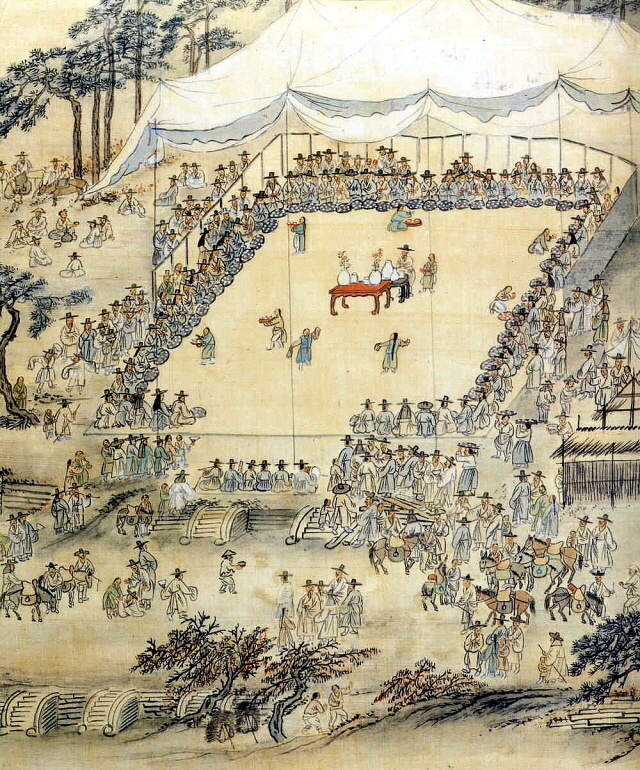
In a brush-and-ink painting by Kim Hong-do (1745-1806), a small portable wooden table appears in a scene of a middle-aged couple stopping for a quick meal at a tavern on their journey. Another of Kim's paintings depicts a banquet for 64 guests of advanced age, with individual wooden tables placed for each person.
The small table is called "soban" — a daily dining table widely used during the Joseon era, when people often ate individually rather than sharing a large table. Lightweight and roughly the width of one's chest for easy carrying, the table is low, making it suitable for a floor-seated lifestyle.
"The emergence of soban is closely tied to the ondol heating system, which led to the development of floor seating, as well as the separation between the kitchen and dining spaces at hanok, traditional Korean houses," said An Jeong-yun, senior curator at the National Folk Museum of Korea.
"Confucian values also made individual meal settings the norm, with meals often arranged separately by gender and age."
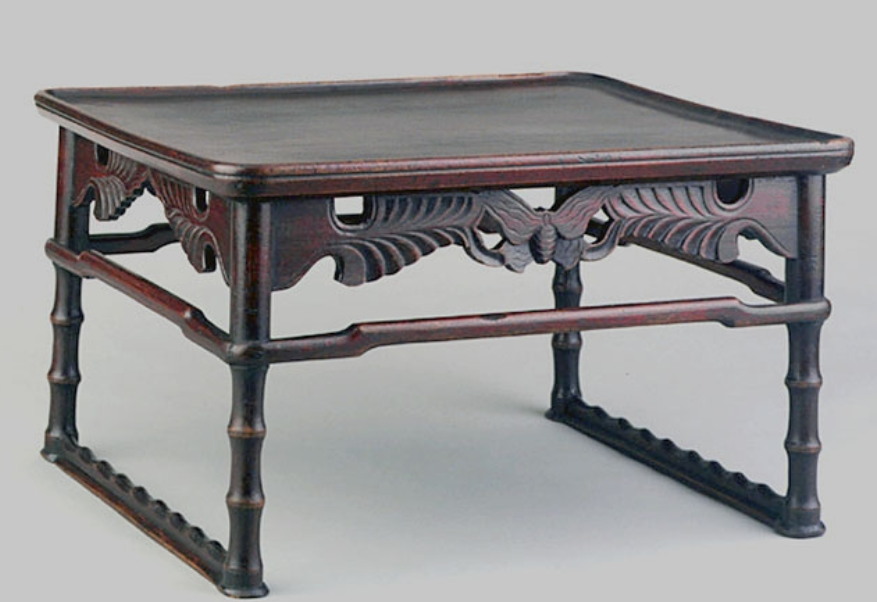
For its lightness, soban was typically made from readily available woods in Korea such as ginkgo, pine, jujube and zelkova.
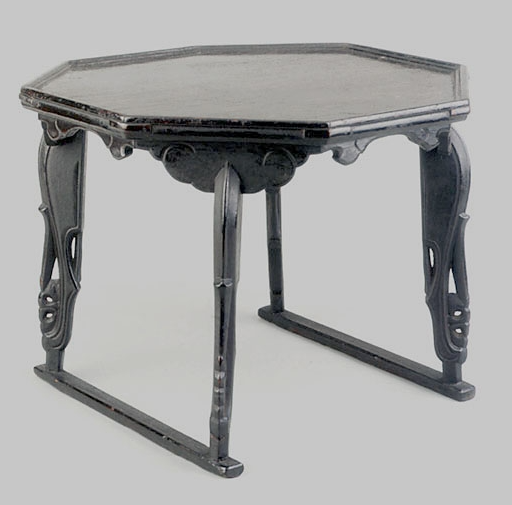
Regional characteristics were reflected in both form and craftsmanship —Tongyeong in South Gyeongsang Province, Naju in South Jeolla Province and Haeju in South Hwanghae Province, now in North Korea, were known for their distinctive designs and high-quality production.
Soban from the three regions were referred to as the "three major soban centers of Joseon," according to the National Museum of Korea.
While Naju soban is characterized by its simplicity and sturdy, functional construction with minimal ornamentation, Tongyeong soban is more ornate and decorative, often featuring refined craftsmanship.
As lifestyles gradually shifted toward Western-style living, particularly in the post-Korean War period of rapid urbanization, floor seating declined and soban fell out of everyday use as a dining table.
Literally meaning "small tray" or "small table," the furniture is still seen in Korea today, often in a more decorative role, finding new pathways into the market through exhibitions and department store pop-ups.

"While its original function may no longer fully align with contemporary lifestyles, soban still holds functional potential," Sohn Dong-hoon, craft artist and assistant professor of industrial design at Kookmin University, told The Korea Herald.
Soban is still used in traditional settings during ancestral rites at home and in celebrations such as a child's first birthday or a 100-day event to present ceremonial foods such as rice cakes on a soban, which is placed on top of tables.
"What has changed is how we engage with it — from a mobile, functional object to a more static one. Today, it is increasingly appreciated not only for its function, but as an object of aesthetic contemplation," he said.

The small piece of furniture is now drawing attention in Europe at Milan Design Week 2026. The ongoing exhibition "Seoul Life 2026 Milan: Heritage Reimagined, Soban" at ADI Design Museum in northern Italy, presents contemporary reinterpretations by 17 artists and collectives, some incorporating modern technologies such as 3D printing into traditional forms.
Craft artist Park Jung-won presents "Structure of Void," a contemporary reinterpretation that preserves the structural balance of traditional soban while incorporating the aesthetics of Korean curves, crafted in crystal and ginkgo wood.
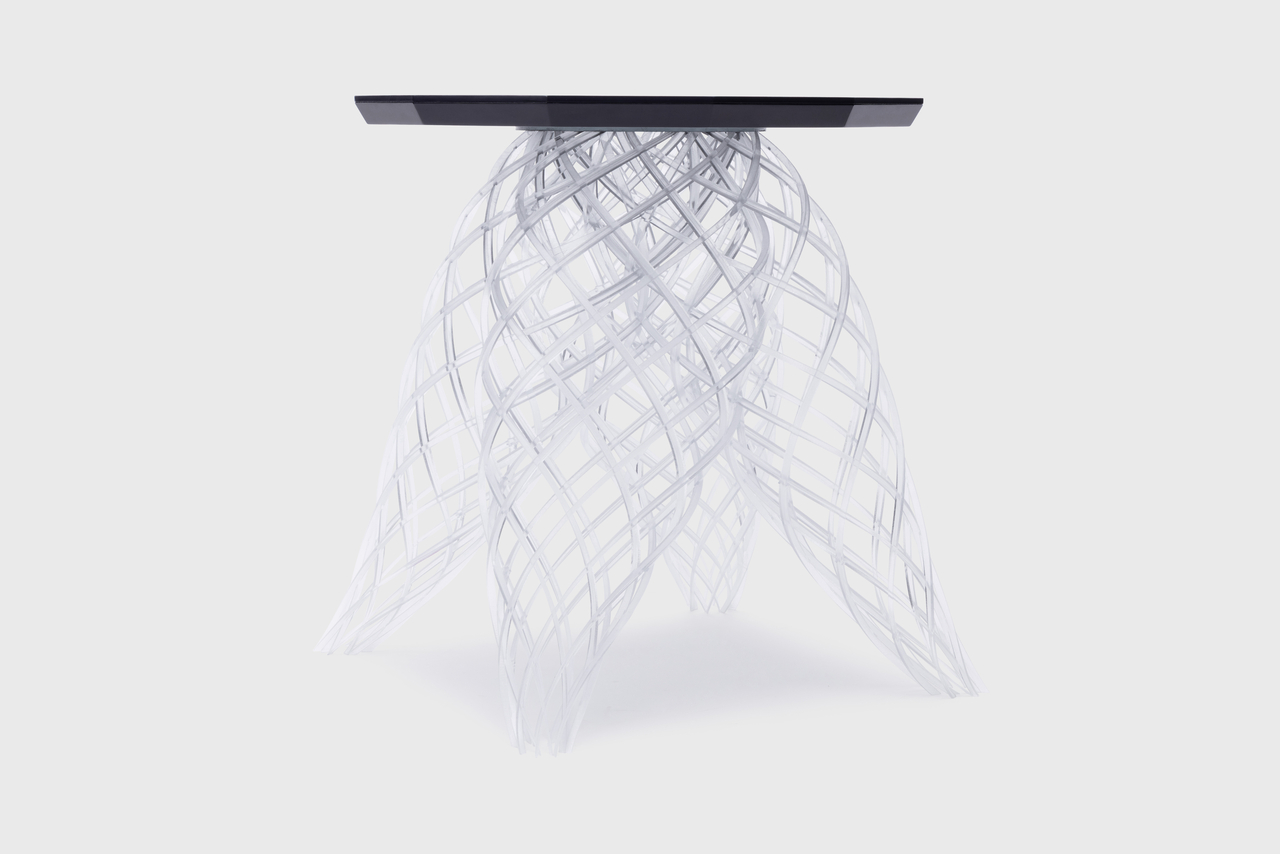
Sohn introduces "Swell Series Soban," inspired by Seoul's dynamic urban landscape and the architecture of Dongdaemun Design Plaza. The piece features expanded volumes with a glossy lacquer finish.
"In the past, soban was such an everyday object that it often went unnoticed, but today its aesthetic possibilities have opened up, becoming something we can appreciate and reinterpret in new ways," the professor said.