-
Travel
The thrill is in the find at Namdaemun's dish market
Almost any plate or cup can be ordered online in a few taps. Yet on a weekday morning, the corridors of Namdaemun Market’s tableware arcade were packed with shoppers in their 20s and 30s. Moving along the crowded aisles and reaching the shelves took patience. They were not necessarily there for a bargain. The appeal was more tactile: picking up a dish, seeing its colors and finish in person, and sifting through stacks of stock until something caught their eye. For decades, the wholesale tablewar
Sept. 19, 2026 - 09:00:00
-
Culture
Beyond luxury labels, handbags with a distinctly Korean touch
Handbags have long served not only as practical accessories, but also as markers of taste and status. While luxury labels continue to dominate the market, a niche category is gaining attention among those looking for something more distinctive: bags inspired by Korean culture and tradition. Gaya Wie, launched by designer Wie Ju-he in 2017, took inspiration from hanok — traditional Korean architecture — and Korea's traditional wooden furniture. “Working abroad, I began thinking about creating des
Sept. 12, 2026 - 09:00:00
-
Culture
How spoons became part of Korean culture
Few everyday objects appear as often in Korean expressions as the spoon. Among them are the instruction to “not lift your spoon before the eldest person at the table begins eating,” a well-known rule of dining etiquette, and the saying to “put one’s spoon on (the table),” a reference to placing your spoon on a meal that someone else has prepared, meant as a criticism of someone who jumps in at the last minute to take credit for someone else’s work. More recently, the terms “gold spoon” and “dirt
July 31, 2026 - 09:00:00
-
Culture
'Ok' is back: Korean jade is Gen Z's latest jewelry obsession
The ring is always greener on someone else's finger. As summer arrives and sleeves grow shorter, young shoppers are making their way to Seoul's Jongno jewelry district to find the perfect jade ring. Jade, or "ok," long seen as a gemstone for older generations, is enjoying an unlikely revival among Generation Z. Affordable, unique and tinged with vintage nostalgia, the rings have become a sought-after accessory. Although online retailers promise fast delivery, many prefer to browse in person. Bec
July 10, 2026 - 09:00:00
-
Culture
How Korean 'jang' traveled from earthenware jars to fine dining
Rows of brown earthenware jars may appear unremarkable at first glance. Yet these traditional Korean earthenware vessels known as "onggi" have been far more than simple kitchenware for centuries. The humble vessels helped shape one of Korea's defining culinary traditions by allowing fermented condiments and foods to mature over time. Among the foods traditionally fermented in onggi is "jang" — the family of fermented condiments such as soy sauce, or ganjang, soybean paste, or doenjang, and red c
July 4, 2026 - 16:00:00
-
Culture
How Korean bedding became a coveted souvenir
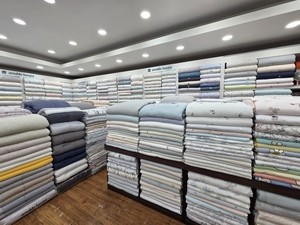
At Seoul’s Gwangjang Market, a destination long associated with textiles and fabrics, a growing number of foreign visitors are shopping for something unexpected: Korean bedding. Inside one bedding store, stacks of colorful quilts and blankets lined the walls while recently purchased items were being vacuum-packed for travelers preparing to take them overseas. “About 70 percent of our customers are foreigners these days,” said the owner, surnamed Kim, of the bedding store at the market. “Many for
June 20, 2026 - 16:00:00
-
Culture
Hanbok gets dressier for modern celebrations
The term hanbok, literally meaning "Korean clothing," emerged to distinguish it from clothing that entered Korea in the 19th century: "yangbok," meaning "western clothing." Korea's traditional attire has been around for centuries, but is no longer considered everyday clothing. Instead, hanbok tends to be reserved for special occasions and ceremonies such as weddings, first birthdays, and lunar new year and Chuseok celebrations. "Today's common perception of traditional hanbok is largely based on
May 30, 2026 - 16:00:00
-
Culture
Dining table of foregone era, 'soban' now shapes contemporary design
In a brush-and-ink painting by Kim Hong-do (1745-1806), a small portable wooden table appears in a scene of a middle-aged couple stopping for a quick meal at a tavern on their journey. Another of Kim's paintings depicts a banquet for 64 guests of advanced age, with individual wooden tables placed for each person. The small table is called "soban" — a daily dining table widely used during the Joseon era, when people often ate individually rather than sharing a large table. Lightweight and roughly
May 2, 2026 - 09:00:00
-
Culture
From palace ritual to spring treat, hwajeon lives on
Each year as spring arrived, the queen of the Joseon era (1392~1910) would head to the secret garden of Changdeokgung Palace where azaleas bloomed. By the garden's flowing streams, the queen and her court women, would make and enjoy hwajeon — pancakes made of glutinous rice flour topped with freshly picked azalea petals. It was described in the Encyclopedia of Korean Culture published by the Academy of Korean Studies. Beyond the palace, the custom was also enjoyed among commoners. On Samjinnal,
April 17, 2026 - 09:00:00
-
Culture
Design for life: Minhwa becomes part of contemporary living
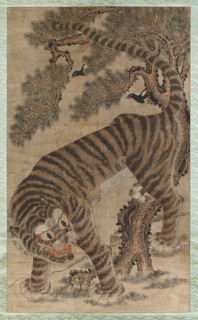
A painting of a magpie and a tiger, or hojak-do, symbolizes good news and protection — with the magpie bringing good news and the tiger symbolizing authority, which is often portrayed with humor. As part of “minhwa,” or folk painting, the classic motif is enjoying unprecedented popularity. The folk painting genre “minhwa” flourished in the late Joseon era (1392–1910) and its popularity was amplified recently by its appearance in "KPop Demon Hunters" and other areas of pop culture. "Whenever I me
March 28, 2026 - 16:00:00
-
Culture
Moon jar, reimagined
Soft and milky in tone, its rounded and generous form quietly draws the eye. The moon jar, a representative Korean porcelain that first emerged during the Joseon era (1392–1910), continues to captivate artists and designers today as an enduring source of inspiration. Made by joining two hemispherical halves rather than shaping a single body at once, the traditional moon jar allows for subtle variations in form — a quality often associated with Korea’s aesthetic appreciation for natural imperfect
Feb. 28, 2026 - 16:00:00