
Train operations likely to be disrupted as union members slow service until Dec. 4
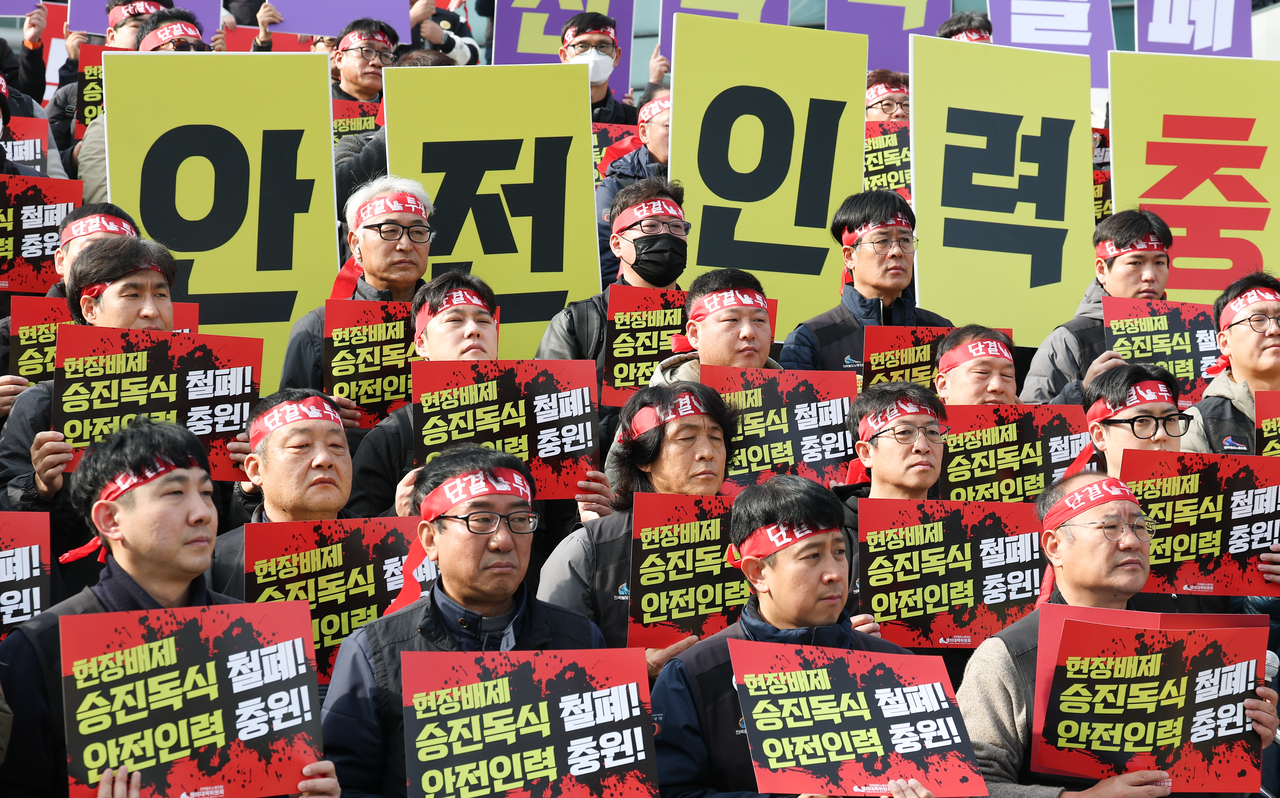
The Korean Railway Workers’ Union said Wednesday it would begin a work-to-rule protest at 9 a.m. on Thursday and continue through Dec. 4, possibly delaying some trains during the period.
A "work-to-rule" action, or slowdown, is an industrial action in which employees do only the minimum required. This can reduce productivity and disrupt operations, serving as a form of protest without a complete work stoppage.
At a press conference held Nov. 18, the union said rail workers had kept trains on schedule by working on their days off, putting in “endless overtime” and performing dangerous tasks alone. “If trains run late and work stops simply because we follow the rules, that is proof we are short-staffed,” it said.
The union has warned it will launch an indefinite strike on Dec. 10 if its demands for a fairer promotion system, additional allowances and more safety staff are not met.
During the protest, union members will strictly adhere to all safety and operating rules and decline overtime work.
Under the union’s guidelines, train drivers will run trains at speeds slower than the limits set for each track and train type. They will also stop speeding up to make up for lost time when trains are delayed.
Drivers will refuse to take a train into service if a predeparture inspection reveals a fault. They will also decline overtime and shifts on their days off.
Operations workers will follow every step required when moving railcars into position and inspecting freight cars before departure. Station staff will follow the protocol for handling abusive complaints.
Onboard crew will wait until all passengers have left the train at the last stop before stepping off themselves. Train maintenance workers will decline overtime and duties excluded from staffing calculations.
Track maintenance workers will refuse assignments unless they have a safe place to take cover and are guaranteed that the track can be closed to traffic for at least 30 minutes.
Electrical crews will work in pairs on ladders and in teams of at least four for work on top of electric trains or for detailed nighttime inspections at substations.
State-run railway operator Korail has activated its emergency transport headquarters and said it would deploy all available staff if trains are delayed.
It urged passengers to check service updates on its website or the Korail+ and Korail Subway Talk apps before traveling. It advised those with time-sensitive commitments, including students attending college admissions essay tests or interviews, to consider other transportation.
The operator will waive fees for ticket refunds and changes during the protest. Passengers can obtain delay certificates through the app, on Korail’s website or at its stations.
“We will do everything we can to minimize inconvenience to passengers during the union’s industrial action,” a Korail official said.
shwang9@heraldcorp.com