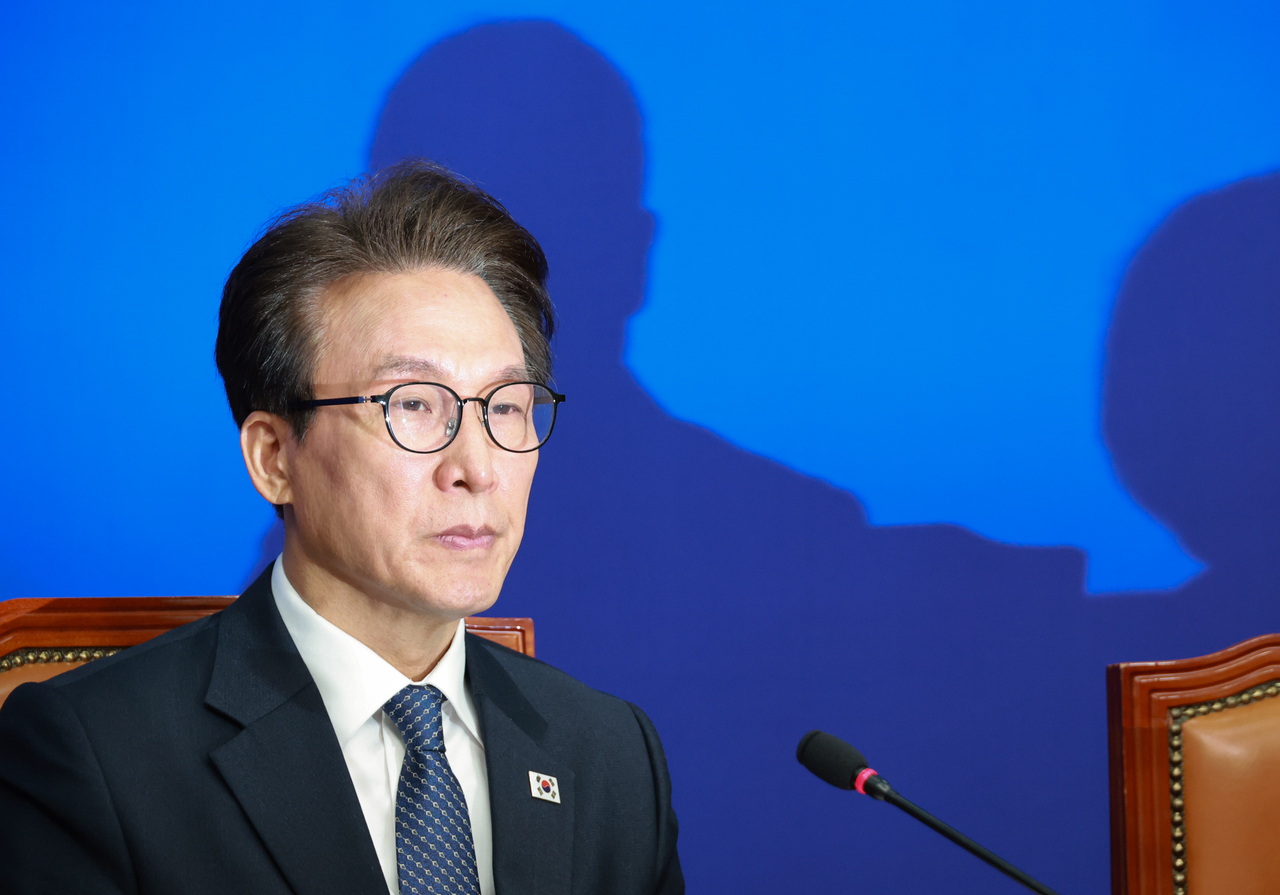
Months of factional infighting within the ruling Democratic Party of Korea spilled into the open on Friday, as three senior officials boycotted a leadership meeting and demanded an ethics investigation into party chair Kim Min-seok.
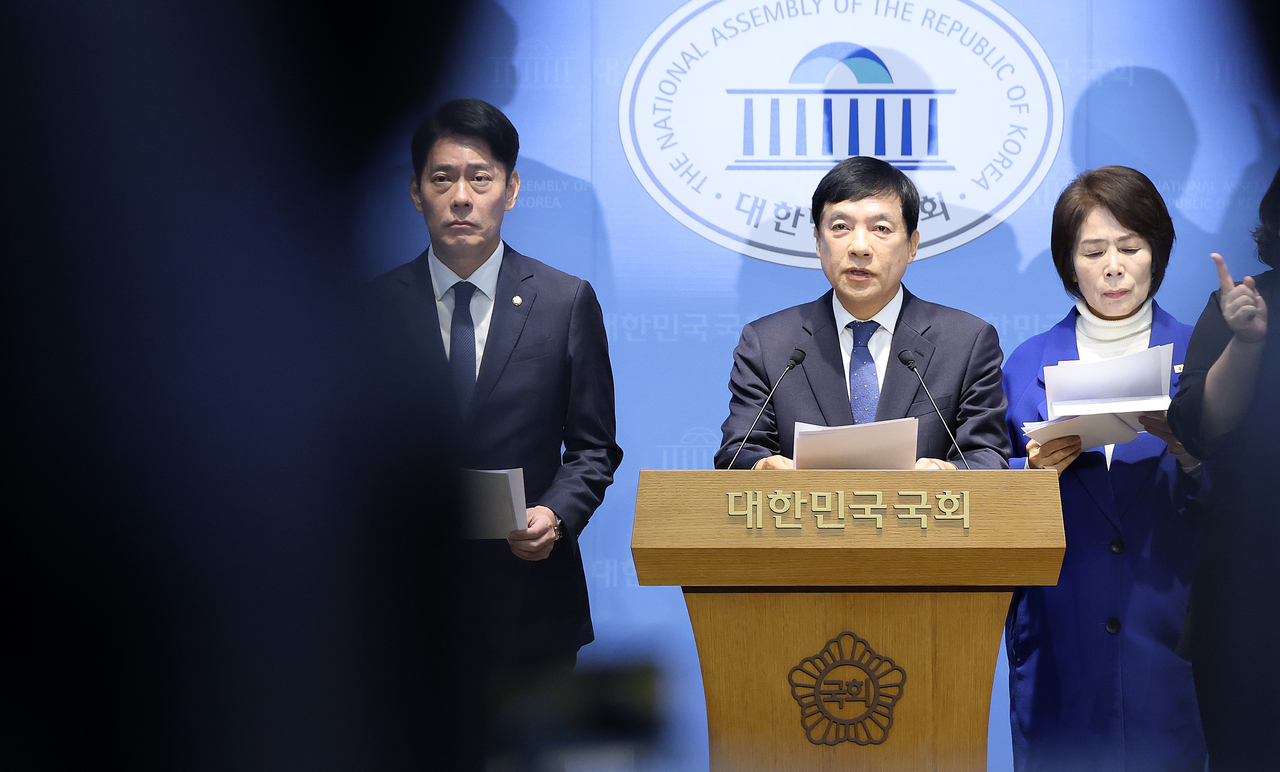
The three — Reps. Choi Min-hee, Lee Sung-yoon and Han Min-soo, who make up three of the party’s five elected supreme council members — held a separate news conference.
Their protest came a day after Kim ordered an ethics investigation into Choi over remarks suggesting that President Lee Jae Myung had opposed the impeachment of former President Yoon Suk Yeol.
“It is Chairman Kim Min-seok who should be subject to an ethics investigation,” Han said.
The confrontation brought to the surface a bitter rivalry dating back to the party’s August leadership election, when Kim defeated former chair Rep. Jung Chung-rae. Jung's allies have since accused Kim of using allegations involving a controversial religious group to undermine their faction.
The latest dispute began Thursday when a local news outlet reported that Choi suggested at a private gathering in October that Lee, then the opposition leader, had opposed impeaching Yoon following his December 2024 martial law declaration.
Later that day, the presidential office rejected the account as “groundless” and expressed “strong regret.” Kim subsequently ordered an immediate ethics investigation into Choi, citing serious concerns over a series of controversies surrounding her recent remarks and conduct, according to the Democratic Party.
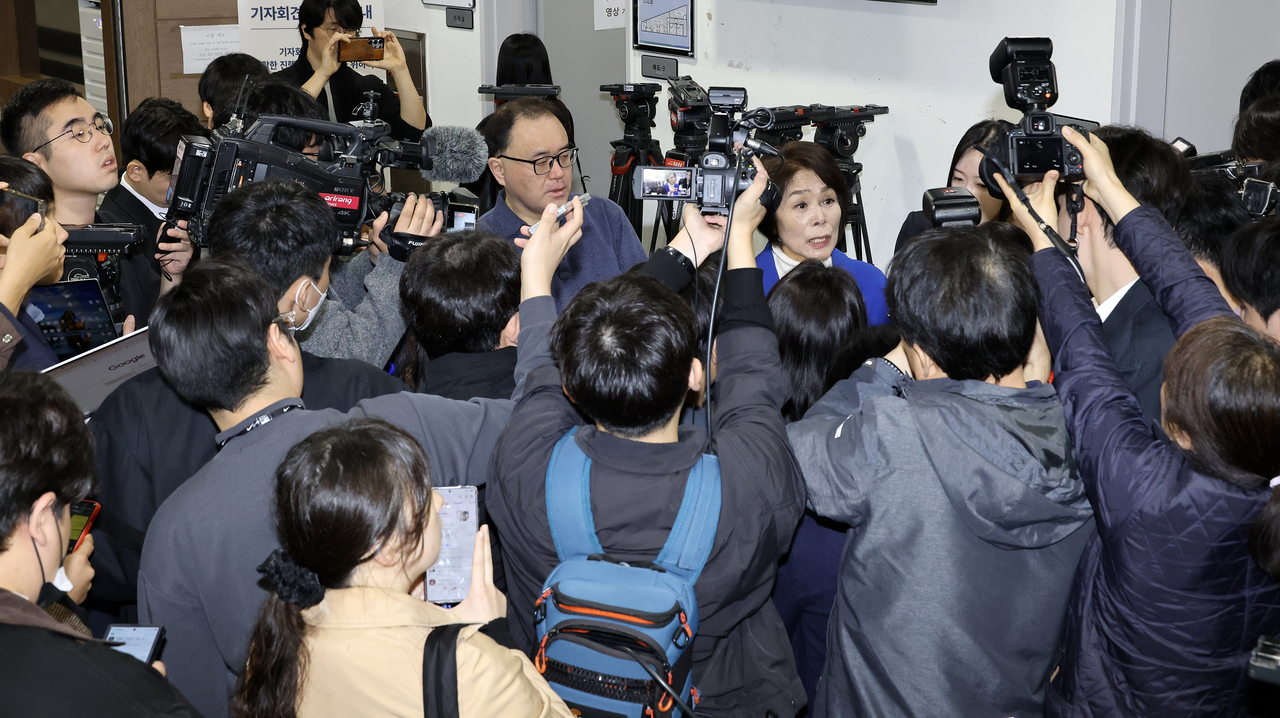
At her own news conference Friday morning, Choi said she had confused the impeachment proceedings against Yoon with those involving former Prime Minister Han Duck-soo.
Choi clarified that President Lee had consistently supported Yoon’s impeachment following the martial law declaration, while expressing frustration over Kim’s handling of the controversy.
“I wish he had asked me about the circumstances before ordering an ethics investigation, but I didn’t receive so much as a phone call,” Choi said.
Choi’s complaint echoed criticism from Han, who accused Kim of “unfairly running the party” at Friday’s joint news conference.
The rivalry dates back to Aug. 17, when Kim defeated Chung in a leadership election with 54.08 percent of the vote against Chung’s 45.92 percent. Despite losing, Chung retained considerable influence, with three of the five elected supreme council members aligned with him.
Shincheonji claims fuel factional rift
The tensions intensified over allegations involving Shincheonji, a controversial religious group whose members were suspected of joining the Democratic Party in large numbers ahead of the leadership contest.
During the race, Kim raised suspicions of a secret alliance among anti-Lee forces, factional rivals and Shincheonji members. The allegations were widely interpreted as targeting Chung’s camp, which denied any collusion.
An internal party task force subsequently investigated the allegations. At a closed-door meeting of lawmakers on Nov. 3, Kim acknowledged that no evidence had substantiated the alleged alliance and apologized to those harmed by the accusations.
But Chung’s supporters said the apology did little to settle the dispute. They accused Kim of allowing suspicions about Chung’s faction to linger despite acknowledging a lack of evidence for the alleged alliance. They also criticized his decision to restrict access to the task force report to lawmakers and local party chiefs.
Against that backdrop, Kim’s decision to investigate Choi reinforced their accusations that he was applying different standards to political allies and opponents.
Defeated rival signals next move
At Friday’s joint news conference, Lee Sung-yoon questioned whether the Shincheonji investigation had been designed from the outset to target Chung.
“This raises suspicions that the task force was intended from the beginning to destroy a rival in the party leadership race,” he said.
The three officials also criticized Kim’s handling of proposed property tax changes and judicial reform, accusing him of making important decisions without sufficient consultation.
“We, the three supreme council members, will continue to push for party reform,” Han said.
The confrontation comes ahead of Kim’s 100th day in office on Nov. 24, a date his defeated leadership rival Jung has identified as a turning point for his own political activities.
“I’ve been carefully thinking through and writing down what role I should play after that, what political cause I should champion and what message I should rally people around,” Chung said on Oct. 31.
Kim’s camp hits Back, demands Choi’s ouster
Kim’s supporters, however, rejected accusations of political retaliation, arguing that Choi’s remarks misrepresented President Lee’s role in Yoon’s impeachment and that senior party officials should be held accountable for such statements.
“We anticipated the insurrection and prevented it,” Rep. Park Sun-won, a supreme council member aligned with the pro-Lee camp, said at Friday’s party leadership meeting, referring to the Democratic Party’s response to the martial law crisis. “No one in the party leadership should be allowed to belittle that record.”
The Democratic Party National Reform Council (literal translation), a group of staunch Lee supporters, went further and called for Choi’s expulsion from the party.
“Choi’s remarks cannot be dismissed with just an explanation and an apology,” the group said in a statement Friday, demanding that she be held politically accountable.
Rep. Park Sung-joon, the Democratic Party’s chief spokesperson, also condemned the three officials’ boycott, arguing that the supreme council was the proper forum for resolving internal disagreements.
“The supreme council is the official decision-making body where members can fully express and debate their views,” he said. “To abandon that meeting and hold a news conference instead is something that should never happen in the Democratic Party.”
dagyumji@heraldcorp.com