From Beethoven to Thucydides, defense chief's philosophical rhetoric raises questions over policy clarity and leadership
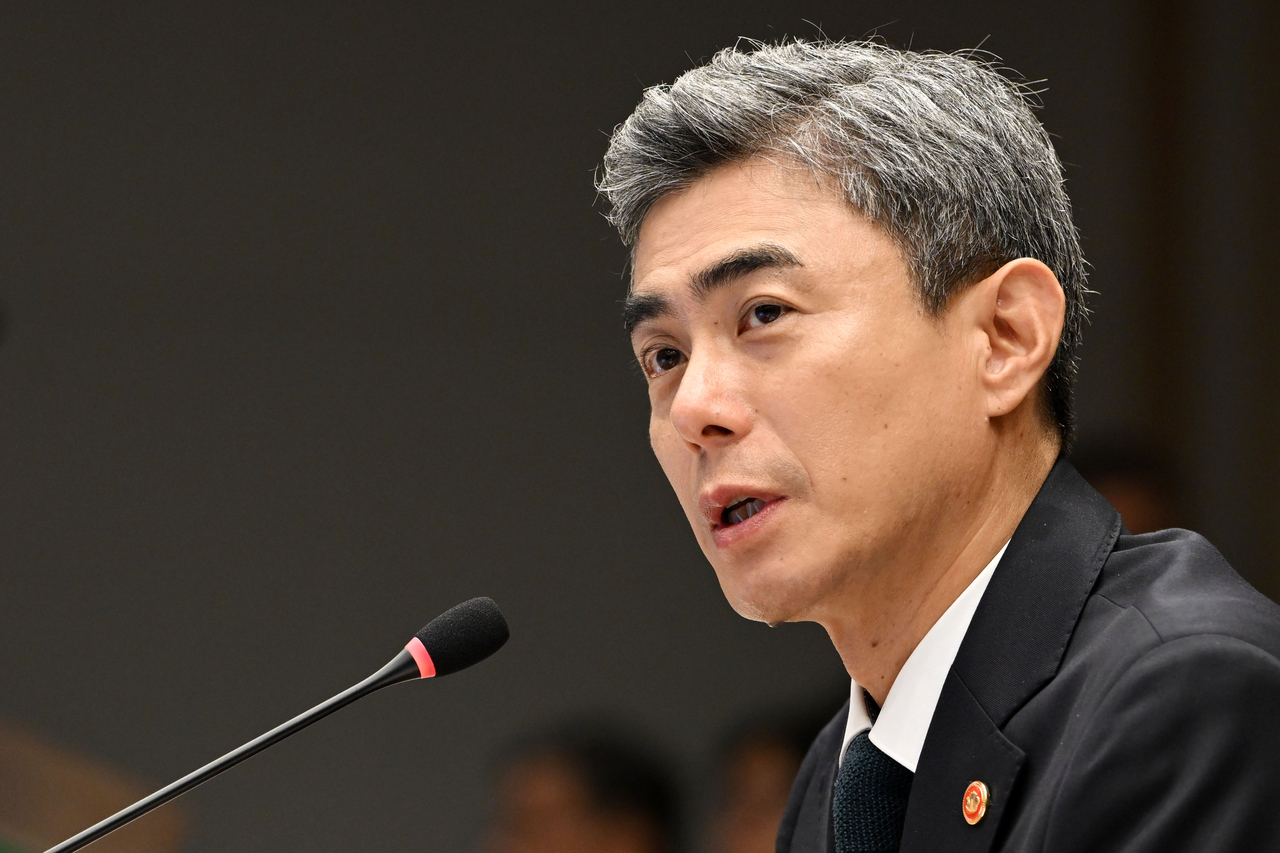
Words can inspire and persuade, but they can also confuse.
Philosophical references have become a distinctive feature of South Korea's Defense Minister Kang Shin-chul's leadership, and frequently accompany his explanations of military affairs.
But less than two months after taking office on Sept. 22, Kang faces contentious military reforms and sensitive negotiations with Washington, raising questions over whether his style — rarely seen among Korean military leaders — builds consensus or leaves policies open to interpretation.
The contrast was evident Tuesday, when Kang met about 60 cadets from the Army, Navy and Air Force academies at the Korea Military Academy in Seoul to discuss the government's controversial plan to integrate the three institutions.
The proposal, aimed at strengthening cooperation among the armed services and modernizing officer education, has faced resistance over concerns that integration could undermine each service's specialized training, traditions and identity.
Invoking Aristotle, Machiavelli, Descartes and Greek novelist Nikos Kazantzakis, Kang urged cadets to challenge conventional thinking and established traditions.
"Young people should be rebellious," Kang said, emphasizing the importance of critical thinking.
Yet cadets pressed him for concrete answers about why integration was necessary, whether existing joint training could achieve similar objectives, and how each service's identity would be preserved.
"Cadets are growing increasingly weary of unclear and changing information," one first-year cadet said.
Another, who described Kang as one of his most respected military leaders, said, "I don't really know what you are thinking right now," questioning whether Kang himself supported integration.
Kang appeared receptive, promising a survey and further consultations. But his responses repeatedly returned to intellectual flexibility and challenging conventional thinking.
"Even if 99 percent of our traditions are valuable, there is still that 1 percent that needs to change," Kang said.
The exchange highlighted a tension between communicating a vision for change and explaining how it would be implemented.
A language of his own
Kang's philosophical references predate his appointment.
As commander of the Army's 11th Mechanized Infantry Division in 2019, he invoked Vincent van Gogh and Beethoven to discuss military leadership. At his 2023 inauguration as deputy commander of the South Korea-US Combined Forces Command, he also cited Goethe's Faust and Thucydides' History of the Peloponnesian War.
An official who worked with Kang at the CFC said he tended to avoid outright refusals, even when proposals appeared impractical.
"He rarely said no directly, even when something clearly wasn't going to work. Instead, he would leave room for further discussion rather than reject it outright," the official said on condition of anonymity.
Kang is also said to have described the South Korea-US alliance as a "show-window couple," apparently referring to a relationship in which disagreements are managed privately while both sides publicly maintain a united front.
Similar approaches have continued since he assumed office.
Asked on Sept. 3 whether academy integration could be withdrawn, Kang avoided a direct answer, saying the academies of the past, present and future would all remain South Korea's military academies.
Asked how he would handle differences with the president, he replied, "To change, there are things that must remain unchanged, and to remain unchanged, there are things that must change."
In October, Kang described the conditions for transferring wartime operational control from Washington to Seoul as involving both "science" and "art," distinguishing measurable readiness from broader military judgments.
His stance drew opposition criticism. At an Oct. 15 parliamentary audit, Rep. Yoon Sang-hyun of the People Power Party warned against allowing political considerations to override military assessments.
"Politicians can make political statements, but the defense minister must not simply follow their lead," Yoon said.
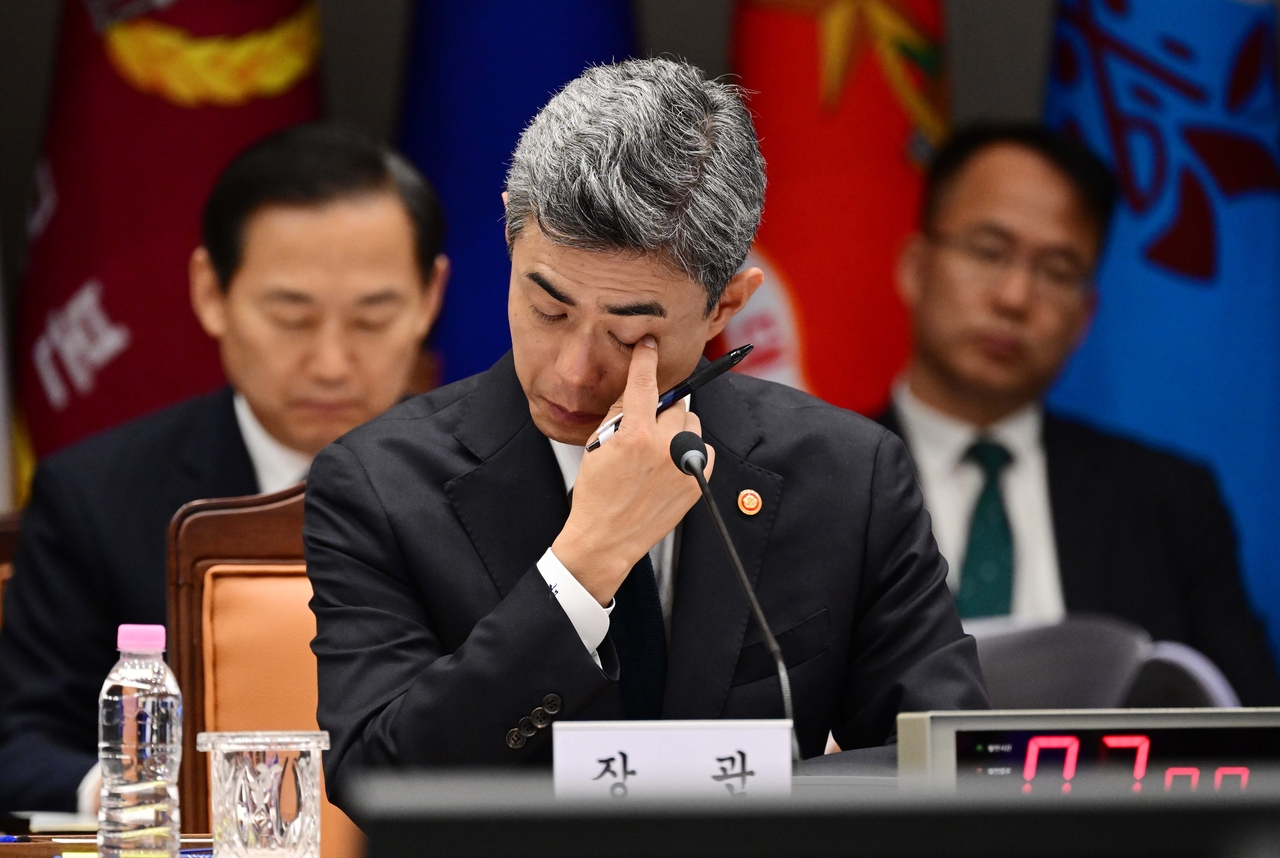
Ambiguity or strategic flexibility?
Political commentator Choi Yo-han placed Kang's approach within South Korea's changing military culture.
"Defense ministers under the previous administration were military men in the traditional sense, emphasizing combat readiness and taking a confrontational stance toward North Korea," Choi said.
He contrasted that approach with the Lee Jae Myung administration's initial appointment of civilian politician Ahn Gyu-back as defense minister, following the military's involvement in former President Yoon Suk Yeol's December 2024 martial law attempt.
"Kang is not a civilian by background, but his approach appears more civilian-oriented than that of traditional military leaders," Choi said.
Such a shift, however, raises questions about whether philosophical appeals alone can overcome institutional resistance when military reforms require clear direction and internal consensus.
Yet flexibility could prove useful in negotiations with Washington, where leaving room for interpretation may help manage disagreements.
"In dealing with Washington, deliberately leaving some room for interpretation can be advantageous. It allows both sides to maintain their positions without closing the door to compromise," said a professor specializing in South Korea-US relations at the Korea National Defense University, who requested anonymity.
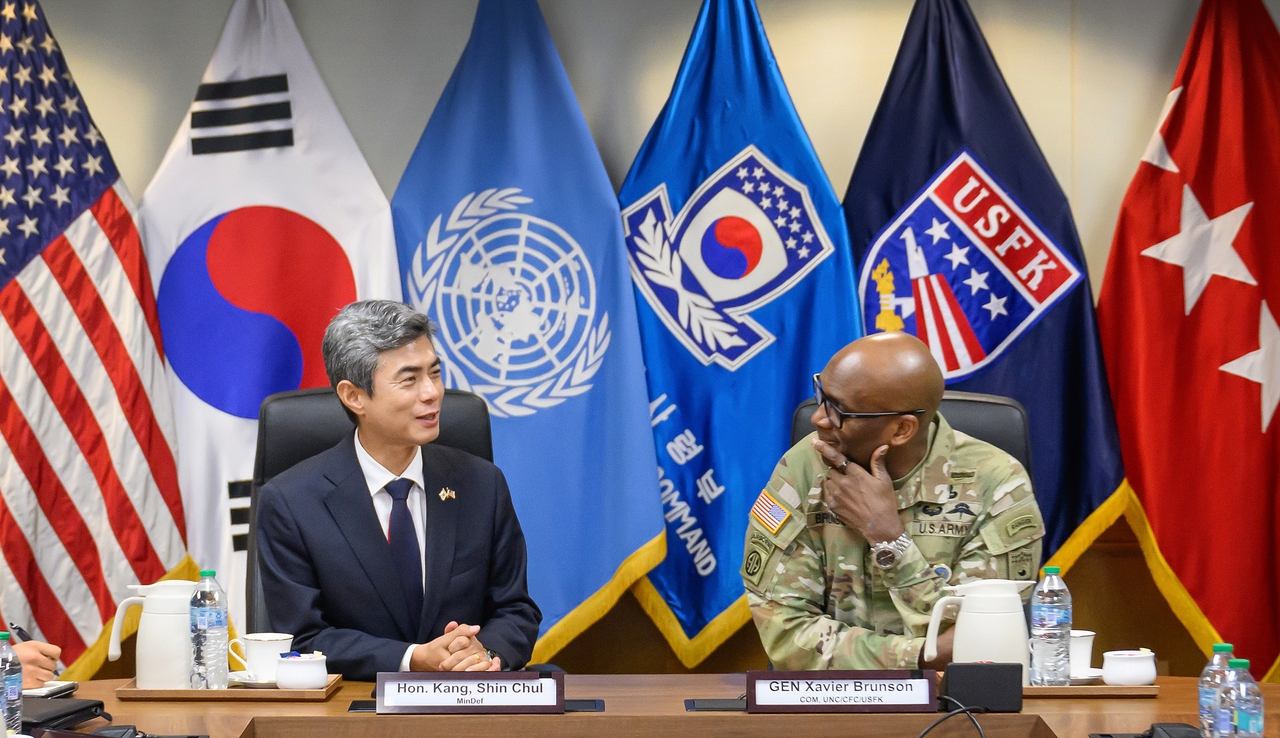
That distinction matters amid strains over wartime operational control.
In October, Gen. Xavier Brunson, commander of US Forces Korea, referred to changed conditions and "new standards" for the transfer without elaborating, raising concerns in Seoul about possible shifts in Washington's requirements.
The annual Security Consultative Meeting has also been postponed until early 2027, with a separate defense ministers' meeting planned for December, amid differences over the transfer process.
Kang's distinction between measurable readiness and broader military judgment could offer negotiating room, though its effectiveness remains uncertain.
"Strategic ambiguity can be useful in negotiations, but ultimately it is the results, not the rhetoric, that determine whether the approach works," the KNDU professor said.
flylikekite@heraldcorp.com