As viral posts fuel anxiety over potential conflict, government guidelines offer a more measured approach to emergency preparedness
Posts showing people stocking up on bottled water, food and survival supplies amid fears of war are gaining traction on social media, prompting others to wonder whether they should do the same.
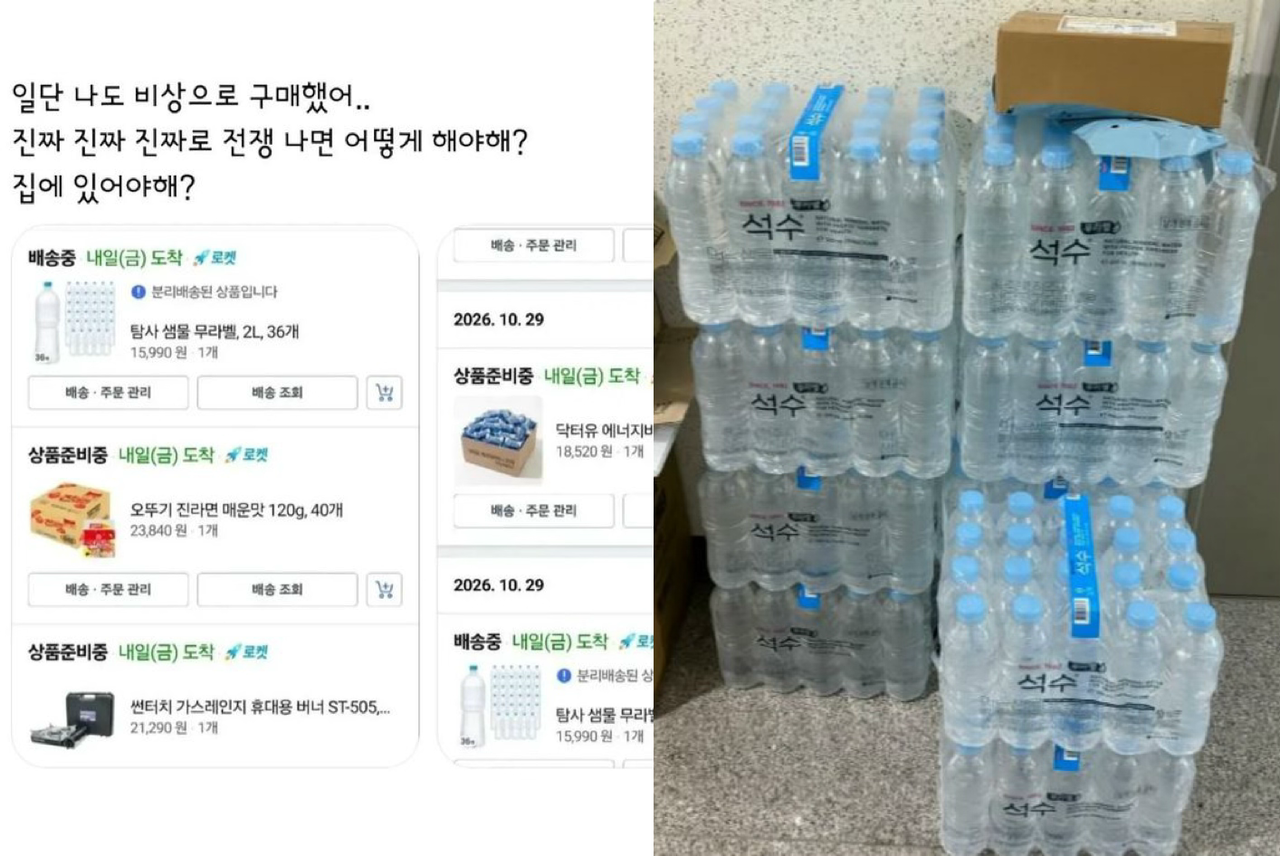
One user shared a shopping list that included 72 liters of bottled water, 80 packs of instant rice and 40 packets of instant noodles, along with a portable gas stove, emergency radio and power banks.
Others reported purchasing gas masks, water purification tablets, protective helmets and portable toilets. One user even claimed to have bought a Starlink satellite internet device to maintain connectivity in the event of widespread communications outages.
Reactions have been mixed. Some questioned whether the purchases were excessive, while others argued that preparing for the worst was reasonable in a country that remains technically at war with North Korea.
Why the sudden rush?
The online discussion is somewhat ironic in South Korea, where residents have often appeared calm during crises that might alarm people elsewhere.
During the COVID-19 pandemic in 2020, the country largely avoided the widespread panic buying seen in the United States and Europe. North Korea's recurring missile tests have also become a familiar part of life in the South, generally causing little disruption to everyday routines.
The familiarity, however, doesn't mean the threat is insignificant. North Korea continues to expand its weapons programs, while reinforcing its border areas with weapons and landmines. It has also emerged as a major cyber threat. The FBI attributed the theft of more than $6 billion in cryptocurrency from Binance, the largest cryptocurrency heist on record, to a North Korean hacking group.
The latest social media trend, however, appears to draw more heavily on overseas preparedness campaigns than on immediate concerns about the northern neighbor.
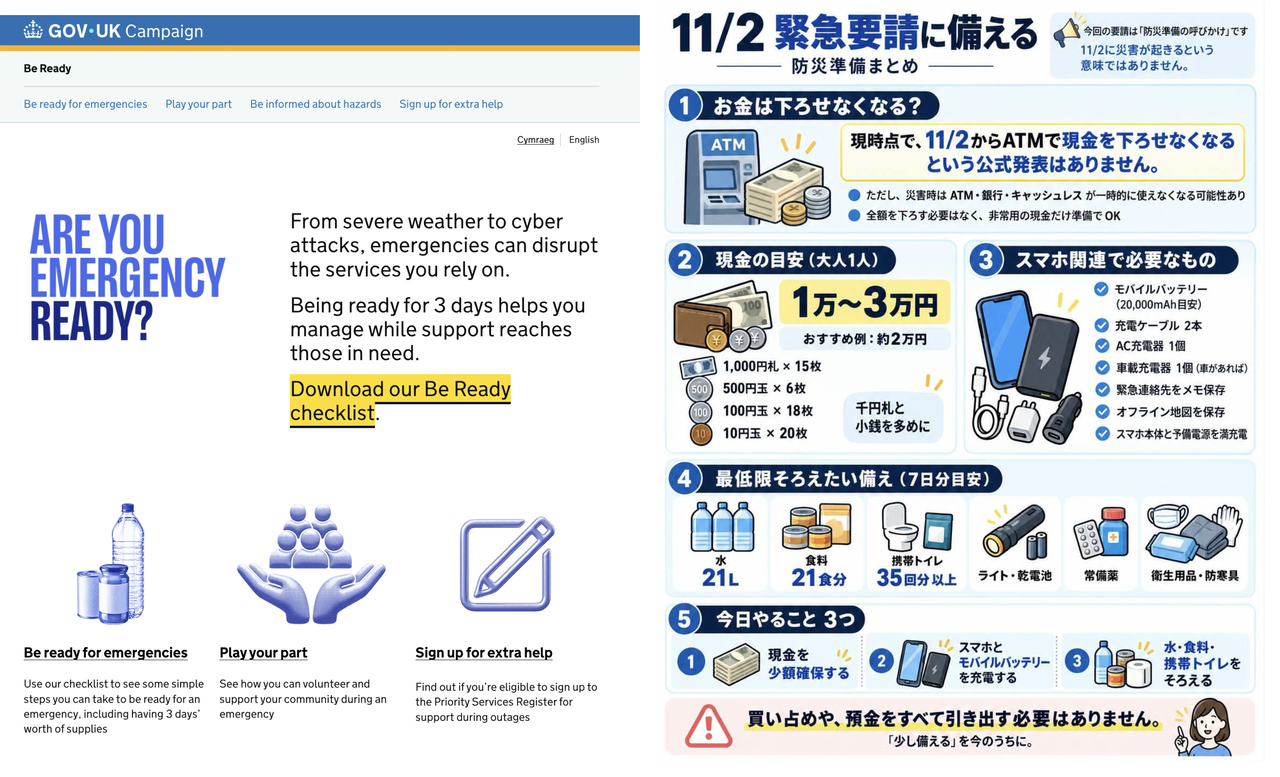
On Oct. 22, the British government launched its "Be Ready" campaign, advising households to prepare enough essential supplies to manage at least three days of disruption to everyday services. The campaign focuses on emergencies such as severe weather, rather than an imminent threat of war.
In Japan, the newly established National Disaster Management Agency issued an emergency request on Nov. 2, urging households to secure furniture, stockpile at least three days' worth of food and water, preferably enough for a week, and identify nearby evacuation shelters.
Both campaigns are part of broader efforts to encourage households to prepare for a range of emergencies, rather than signals of an imminent threat.
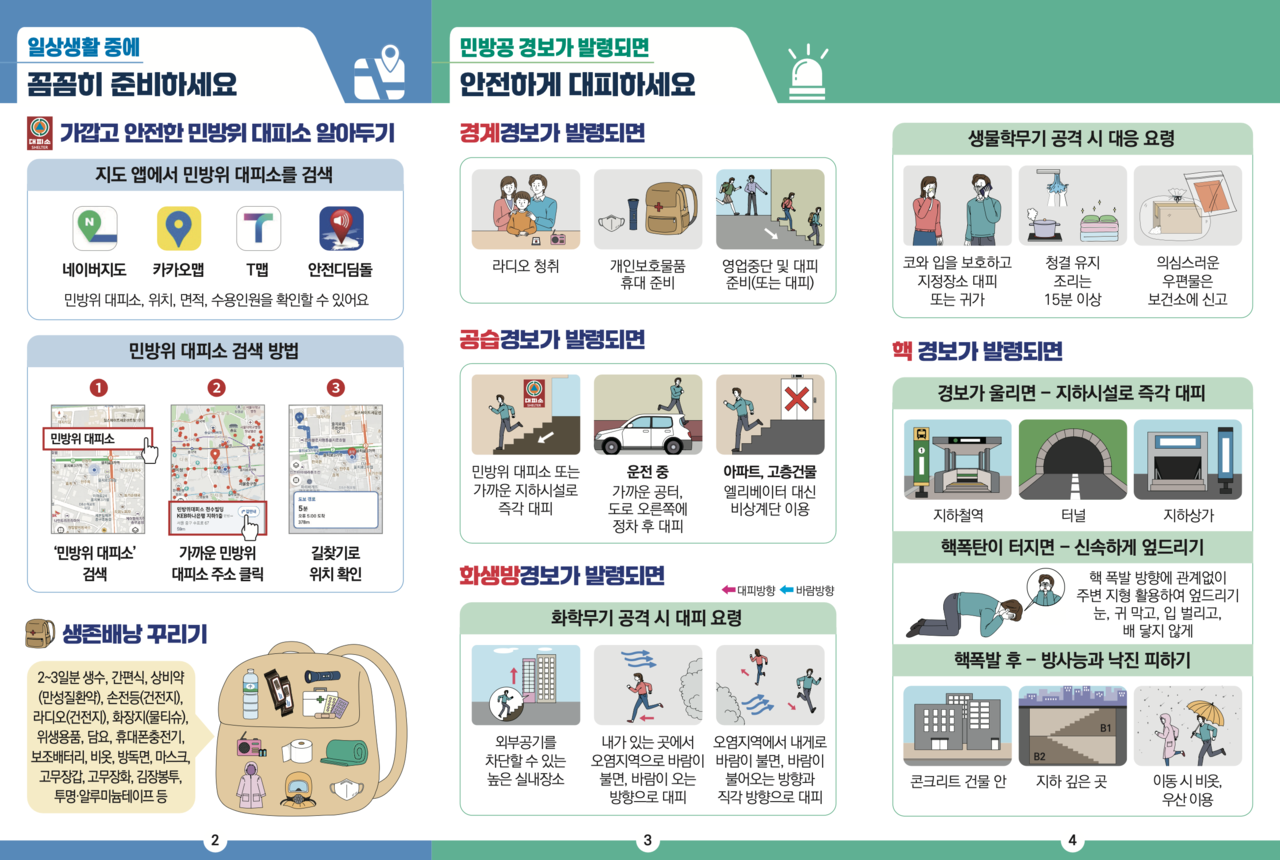
To be sure, South Korea, too, has emergency preparedness guidelines covering both natural disasters and wartime situations.
The Ministry of the Interior and Safety's latest emergency preparedness booklet, published in August, identifies assembling a survival backpack as one of four essential precautions households should take.
Similar recommendations appeared in government guidance as early as 2019, suggesting that the recent online interest is drawing attention to an established preparedness practice rather than an entirely new precaution.
What should an emergency kit actually contain?
According to the ministry's 2026 guidelines, households are advised to prepare emergency supplies including bottled water, ready-to-eat food, essential medication, flashlights, battery-powered radios, hygiene products and blankets.
The guidelines also include protective equipment such as gas masks, raincoats, rubber gloves and boots, reflecting South Korea's need to prepare for a range of emergencies, including military attacks.
However, official preparedness advice does not suggest that households need to spend millions of won on specialized survival equipment. The UK's Be Ready campaign, for instance, emphasizes that many preparedness measures are inexpensive or entirely free.
The emphasis on three days of supplies also has a practical explanation. According to the British Red Cross, having enough essentials to last 72 hours helps households manage temporary disruptions to everyday services while reducing pressure on emergency responders.
Other recommendations include keeping important documents accessible, writing down emergency contact numbers and making arrangements for family members who may need additional assistance. In South Korea, authorities also recommend identifying nearby emergency shelters in advance, which residents can locate through the government's Emergency Ready App.
tammy@heraldcorp.com