Joseph Juhn of 'Jeronimo' and 'Chosen' sees diaspora as key to understanding, peace
What are the odds of the taxi driver picking you up at Havana’s international airport telling you that she is Korean, and that her grandfather came to Cuba about 100 years ago?
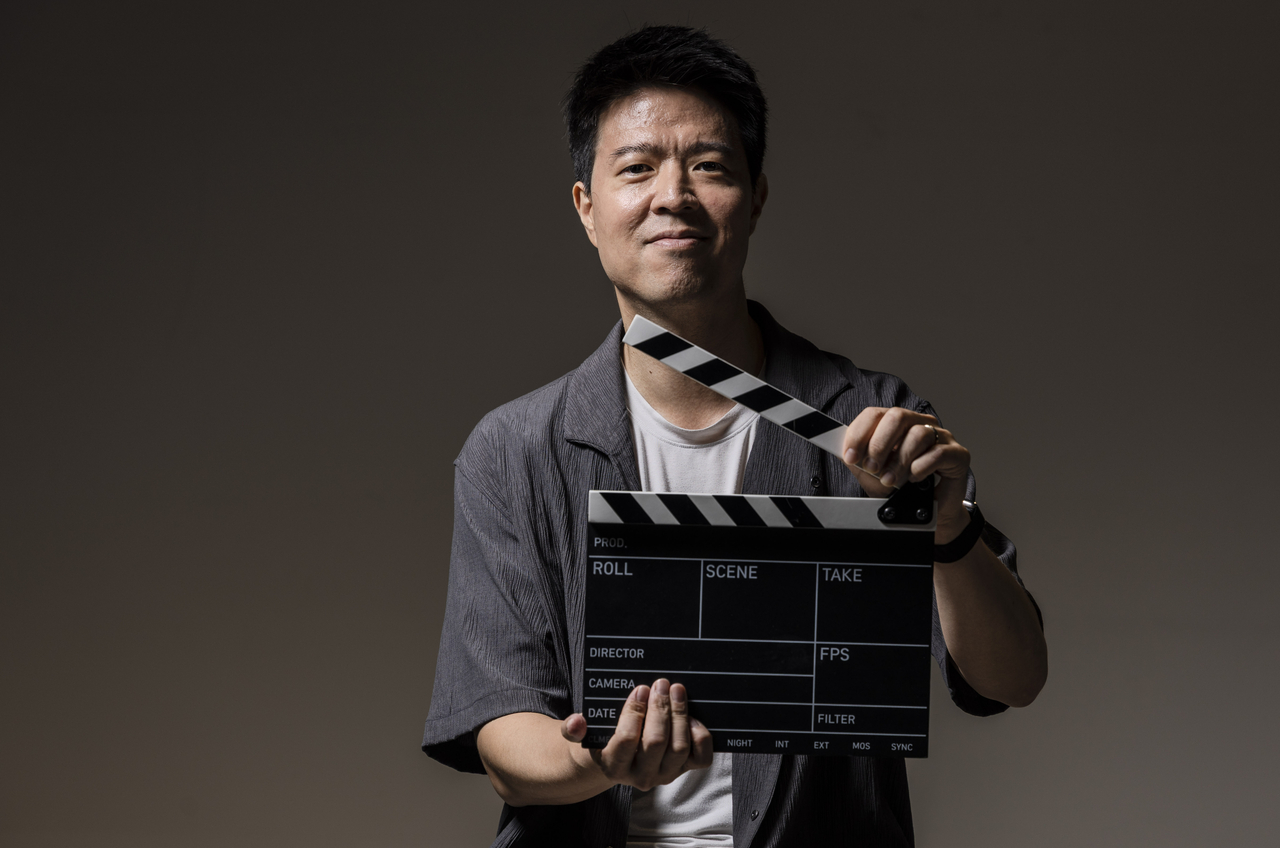
When Joseph Juhn, a Korean American lawyer from New York, arrived in Havana in December 2015, he had no inkling what would unfold in the next few days. He had come on a weeklong backpacking trip with no plans.
In July of that year, the US and Cuba had formally restored diplomatic relations and Juhn hopped on a plane, curious about young Cubans living under a socialist system.
As he recalls in his 2021 book “Your Adjective,” published in Korean by Changbi Publishers, Juhn had a feeling that his encounter with the Korean Cuban cab driver, Patricia Lim, and the invitation to join her family in visiting their relatives about two hours away in Varadero, was about to change the nature of his holiday.
It ended up changing the trajectory of his life.
Struggles with identity
Juhn was born in Minneapolis, Minnesota, and came to Korea at the age of 5. At 17, he gave up his dual citizenship and moved back to the US.
“I didn’t fully comprehend the gravity of that decision, let alone that it would follow me for the next 20 years or so,” Juhn said during an interview with The Korea Herald on Aug. 20.
“I was renouncing my Korean citizenship and coming to the US as a US citizen and I didn’t know how to become American per se,” he said. “I was trying to figure out what it means to be American. … What do I do with the Korean part of my identity? Do I renounce it and try to assimilate fully into the US?”
That question of identity dogged him for years until he attended a workshop led by K. W. Lee, “the godfather of Asian-American journalism,” at the 2005 Korean American Students Conference.
“He basically said that before the 1992 LA riots/uprising, Koreans were just immigrants, but after ’92, we became Korean Americans,” Juhn recalled.
That transformation changed how Korean Americans viewed success, or the American dream: The focus on accumulating wealth shifted to prioritizing civic engagement.
“For me, learning that was a crucial identity-cementing moment and I thought that was it — being Korean American was the end of my identity journey,” Juhn said.
As Juhn traveled around the world after college, his understanding of himself broadened as a member of the larger Korean diaspora. He ran into ethnic Korean Chinese when he traveled to China, an experience that was repeated in country after country — Brazil, Germany, South Africa and Jordan.
“I’ve always wondered what to do with diaspora, what kind of relationship should they have with people in the homeland, how can they internalize their dual sense of identity in a constructive way that doesn’t denounce one side over the other,” he said.
“And then this happened in Cuba.”
A hero
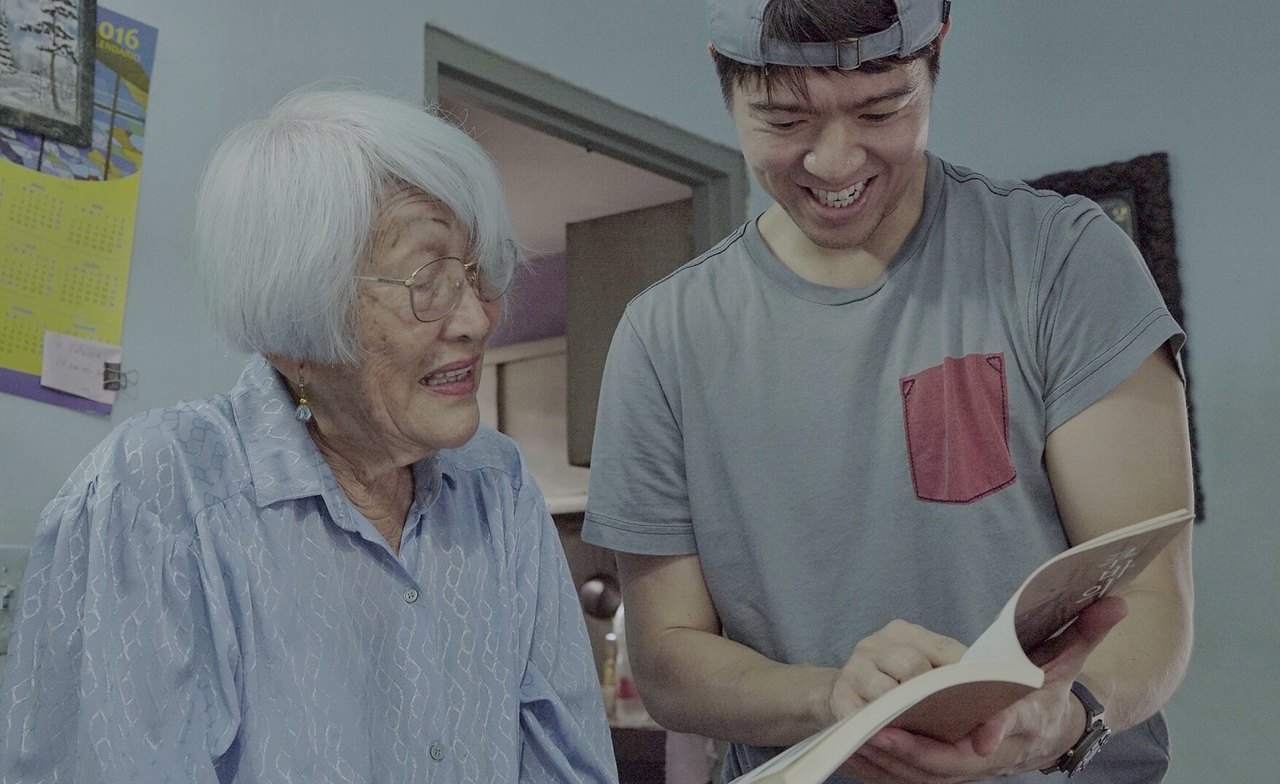
When Patricia Lim identified herself as a fourth-generation Korean Cuban, Juhn thought their meeting could not have been a mere coincidence.
“To make things more interesting, she came from an extraordinary family,” Juhn said.
Her grandfather, Lim Cheon-taek, had come to Mexico at the age of 3 along with his mother as part of the first wave of Korean laborers who left Korea in 1905 to work on henequen (sisal) plantations in Mexico.
At 18, he moved to Cuba in search of better opportunities, and he soon became a leader of the Korean Cuban community. He was a Korean patriot whose name appeared in independence activist Kim Koo’s memoir, and he supported Kim Koo’s efforts to raise funds for the Korean Provisional Government.
His son, Jeromino Lim, was a revolutionary and later a leader of the Korean Cuban community.
When Patricia brought Juhn to meet her mother, Cristina Chang, the next day, Chang showed him a photograph of Kim Shin, Kim Koo’s son, together with her husband, Jeronimo Lim. His Korean name was Lim Eun-joh, Chang told Juhn.
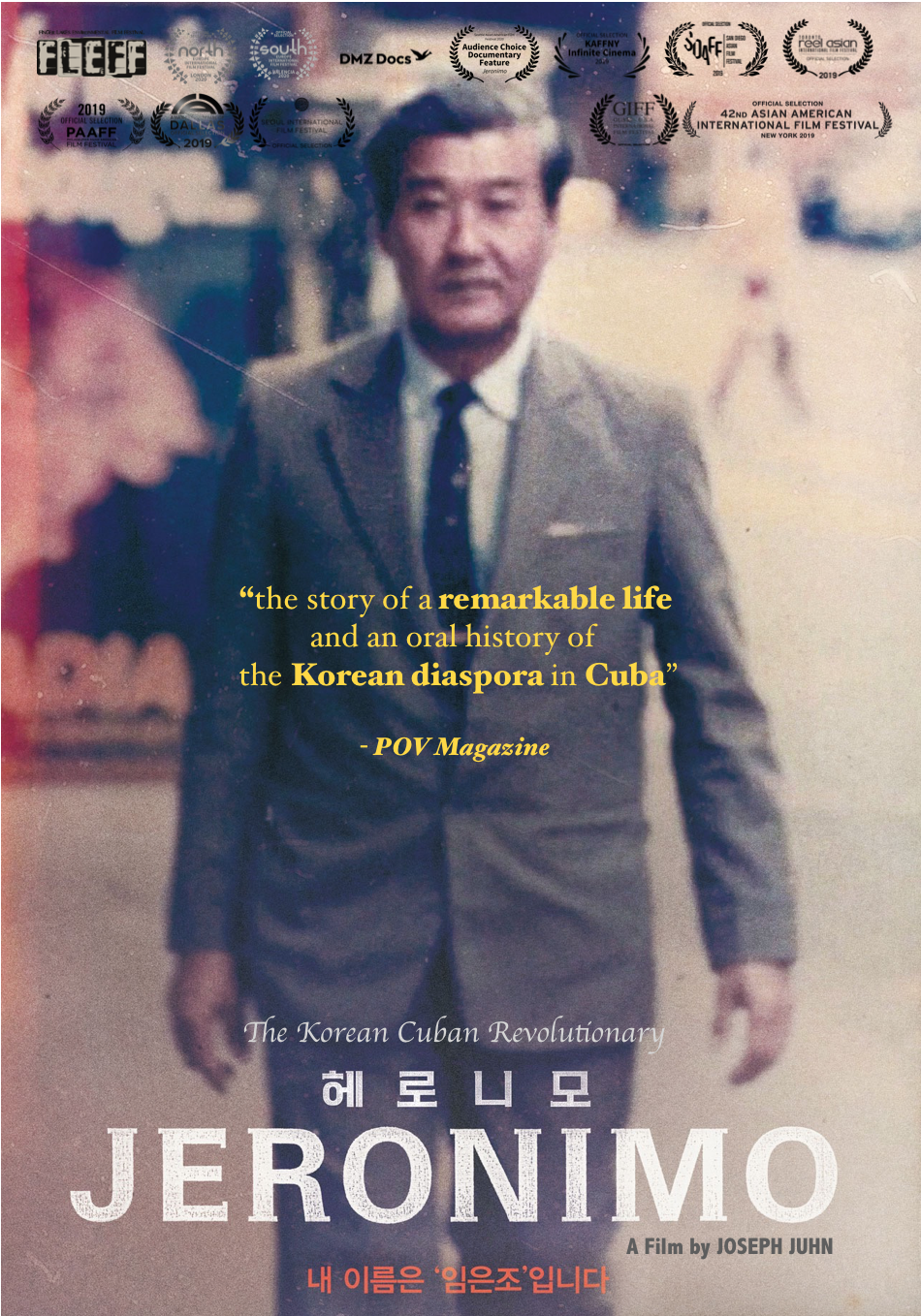
Leafing through old photo albums, documents and medals, Juhn learned that Jeronimo Lim had been a high-ranking Cuban government official, had fought in the Cuban Revolution and worked with Che Guevara.
He also learned that Jeronimo Lim had spent the latter part of his life organizing Korean Cubans and finding ways to teach them about their language, culture and history. He had passed away 10 years earlier.
Chang said Jeronimo Lim was a figure who must be known to the world and Juhn vowed to help tell the world about the work Lim had done for the Korean Cuban community.
Juhn began recording with the GoPro he had bought for the trip.
A film studies major in college, Juhn realized that the project required a professional approach and returned to Cuba in 2016 with a team. The project culminated in a documentary, three years in the making.
According to Juhn, there are about 100 Korean Cubans in Cuba, and starting from the fourth generation and below, they had almost completely lost the language until BTS came along,
The younger generations are now motivated to learn everything about Korea because of pop culture, but even before the Korean Wave had arrived on Cuban shores, their “clinging to the Korean side of their identity” was very prominent, Juhn noted.
“I began to question what makes you Korean other than the fact that your ancestors came from that country,” he said, adding that in the case of Jeronimo, he wanted to know why he had suddenly decided to rebuild the Korean Cuban community.
“I think identity is an interesting organism,” Juhn continued. “Sometimes you feel like it’s a done deal, it’s a done journey, but then it creeps back on you.”
Following the collapse of the Soviet Union, Cuba faced enormous economic difficulties, difficulties that continue to this day.
Jeronimo Lim’s visit to South Korea in 1995 as a Korean Cuban representative at the invitation of the South Korean government and a visit with his extended family members in Miami likely played a part in the change in him, Juhn suggested.
Seeing how affluent those societies were, Jeronimo Lim may have begun to question what he was fighting for when the Cuban people seemed bound for continued economic hardships, Juhn posited.
“He wanted to find meaning by questioning, maybe, his roots. I think that’s one of the reasons that he took interest in rediscovering who he was,” Juhn said.
“There’s a joke within the Korean Cuban community that what Jeronimo tried to build in 20 years, BTS did it overnight,” said Juhn, who last visited Cuba in 2023.
“And it’s quite true. Maybe in the ’90s, when Jeronimo was trying to visit as many Korean Cubans as possible to instill in them a sense of identity and why we have to honor those legacies, I don’t think people were necessarily excited by the idea after 50 years of having lost touch with one another,” he said.
“But when South Korea became the global power that it is now — economically, culturally and otherwise — I think it is human nature to want to reclaim that part of you in correspondence with how your motherland is doing,” he said.
Korean Americans in politics
Juhn had just returned to New York in February 2020 following the theatrical release of “Jeronimo” in Korea at the end of 2019, when COVID-19 hit and the world ground to a halt.
Unable to get a new job, Juhn was looking around for a story he wanted to follow, when he was struck by the former US National Security Advisor John Bolton’s take on the failure of the 2019 North Korea-US Hanoi Summit between Donald Trump and Kim Jong-un. In his memoir, “The Room Where It Happened,” Bolton attributed the failure to a clash of personalities among Trump, then US Secretary of State Mike Pompeo and himself.
"What if one of the political staff members or the decision makers themselves were of Korean background? Would they have made the same decision just based on their self-interests?" Juhn wondered.
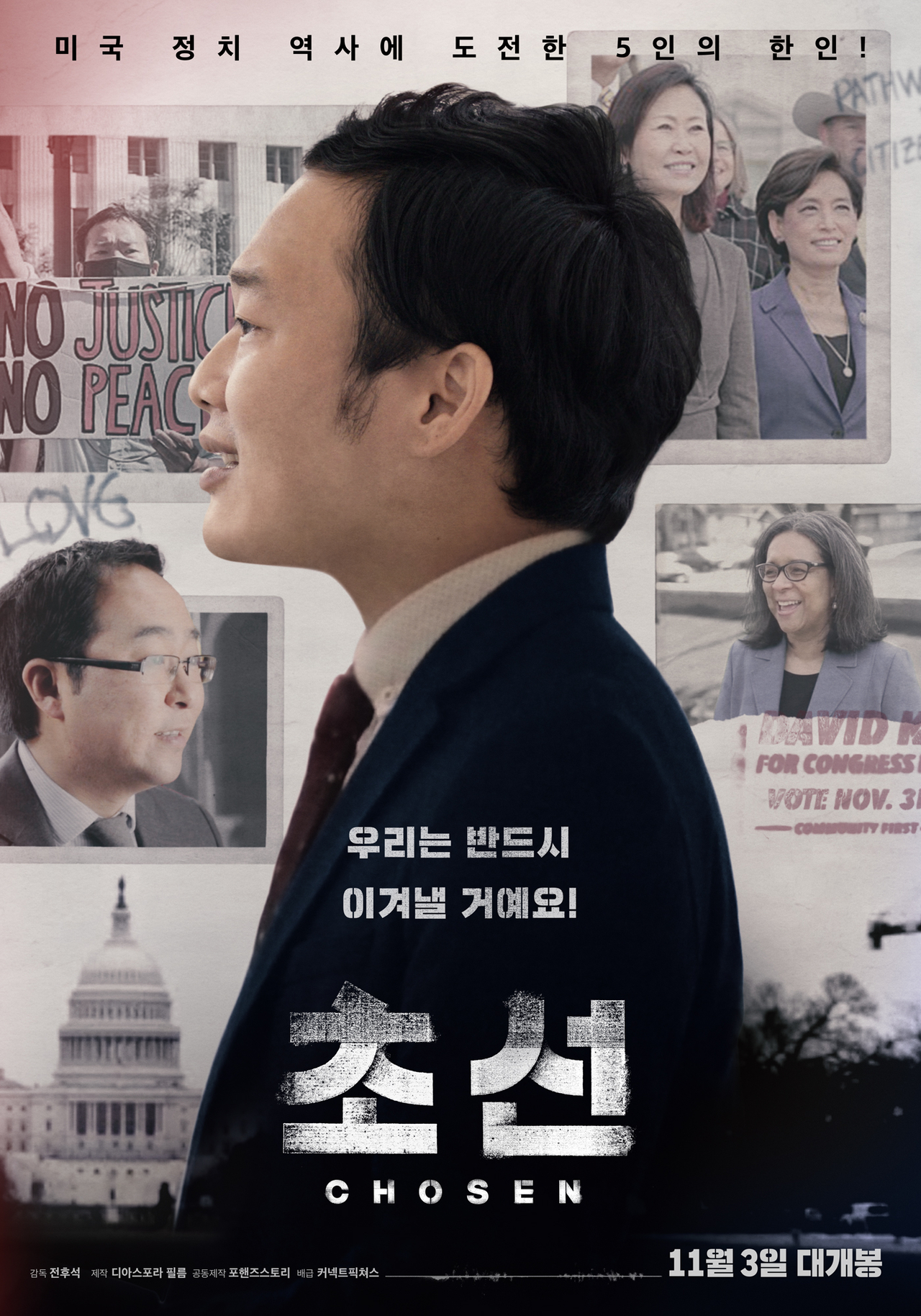
Seeing on the news five Korean Americans running for the US Congress, he saw them as the solution and started following their story.
“The film ("Chosen") became so much more than just their relationship to the motherland. It expanded into Asian American empowerment, political representation. Mind you, this was right after COVID hit, so there were a lot of Asian hate crimes happening,” Juhn said.
“Also, the fact that the five Korean Americans that I covered came from widely different backgrounds and political motivations made the story all the more interesting and relevant to the American context,” he added.
Four of the five Korean American candidates won Congressional seats in the 2020 elections: Andy Kim, an incumbent Democratic Congressman from New Jersey; Marilyn Strickland, a centrist Democratic candidate in Washington who is the daughter of a Korean mother and African-American father; Young Kim, a Republican candidate in California; and Michelle Steel, another Republican in California.
David Kim, a US attorney and progressive LGBTQ candidate, narrowly lost his race for a seat in Los Angeles.
Today, Steel is the US ambassador to Korea. Andy Kim was elected a New Jersey senator in 2024 after serving three terms as a congressman. Strickland is on her way to serve in the US Congress for a fourth consecutive term after winning reelection in last week's midterms.
In “Chosen,” the director focused on David Kim’s journey, seeing his story as a microcosm of the Korean community at large.
“David comes from a very complicated identity background,” he said. David Kim, a progressive politician whose father is an evangelical Christian pastor and a Trump supporter, came out as gay in 2019.
“How do you navigate those dynamics? What happens when MAGA-style conservative ideals and social progressive ideals clash?” Juhn said.
Juhn is currently working on a new film revolving around a Korean American couple, Stephen and Joyce Yoon, who worked with children with developmental disabilities in North Korea, first in Rason and then Pyongyang, from 2007 to 2017, when the US government banned its citizens from living in North Korea.
They now live in South Korea and continue to do the same work with South Korean children, developing pediatric rehabilitation and training programs, and are ready to return to the North when the borders open.
Diasporic awareness
Juhn also gives lectures on “diasporic awareness” to Korean university students and members of the Korean diaspora.
“I talk about diasporic identity as an empowering concept. Oftentimes members of the diaspora struggle with this tension, the tension of duality, wanting to find a place of belonging in the host country versus your motherland,” Juhn said.
“That sense of feeling loss is a blessing in a way because diasporic consciousness, the way I define it, is disposition, some awareness shaped by living across multiple worlds, not just geographically but culturally or ethnically. It allows you to have an additional perspective,” he said.
Fostering that consciousness will ultimately lead to cultivating a sense of hospitality, he said. “Because we were once outsiders, we are able to recognize those who are also on the margins.”
In “Your Adjective," Juhn calls for the inclusion of diasporic history in Korean studies programs.
“I was arguing that if we include the history of 8 million members of the Korean diaspora around the world, the Korean Cuban story, Korean American story, Korean Russian story, Korean Indian story, Korean South African story can all be part of an extension of Korean history,” Juhn said.
“If you espouse a worldview where members of the Korean diaspora, their narratives and their history become your own. I think a lot of the sentiment, the hostile sentiment brewing here in Korea against, for instance, people like the Korean ethnic Chinese people living here, will be quickly resolved. Because then they understand why they are, who they are, why they take certain positions, all because of their history of survival in China,” he said.
Juhn said he didn't make a conscious jump from being a lawyer to a filmmaker, but that it just happened.
“It’s not a vocational duty that I’m driven by. It is more of a moral conviction that this story needs to be told in this light," he said.
This is one of a series of interviews in which Kim Hoo-ran, editor-at-large at The Korea Herald, speaks with leaders, trailblazers, unsung heroes, and both well- and lesser-known figures who share the stories of their lives and their visions for a better world — Ed.