South Korea on Tuesday reaffirmed its commitment to maintaining close communication with the International Atomic Energy Agency over its nuclear-powered submarine program, as Seoul accelerates efforts to build its own fleet.
Jeong Yeon-doo, South Korea's vice foreign minister for strategy and intelligence, met with IAEA Director General Rafael Grossi in Vienna on Monday to discuss cooperation on nuclear safeguards related to the country's planned acquisition of nuclear-powered submarines, according to the Foreign Ministry.
During the meeting, Jeong expressed hope that Seoul and the UN nuclear watchdog would maintain "close and transparent communication" on safeguards related to the submarine program, the ministry said.
Grossi expressed understanding of South Korea's strategic position and proposed continued dialogue at the technical level, the ministry added.
Seoul's nuclear-powered submarine program gained momentum last week after the project was exempted from a feasibility study that would normally take one to two years.
On Friday, the Defense Acquisition Program Administration said the Defense Acquisition Program Promotion Committee approved the basic implementation strategy for the Jang Bogo N project, formally known as KSS-III Batch-III, aimed at developing nuclear-powered submarines using domestic technology.
The exemption removes a major procedural hurdle, allowing South Korea to move closer to its goal of launching the project in 2027 and deploying the submarines from the late 2030s onward.
The exemption was granted under a provision that allows highly classified defense projects to bypass the standard feasibility review, although the program will still undergo a separate in-depth assessment.
"The nuclear-powered submarines acquired through this project are expected to strengthen deterrence against security threats, including North Korea's nuclear weapons and missiles, and enhance our self-reliant defense capabilities by enabling an underwater kill chain," DAPA said.
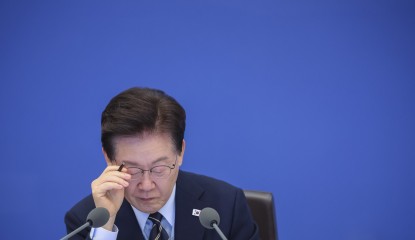
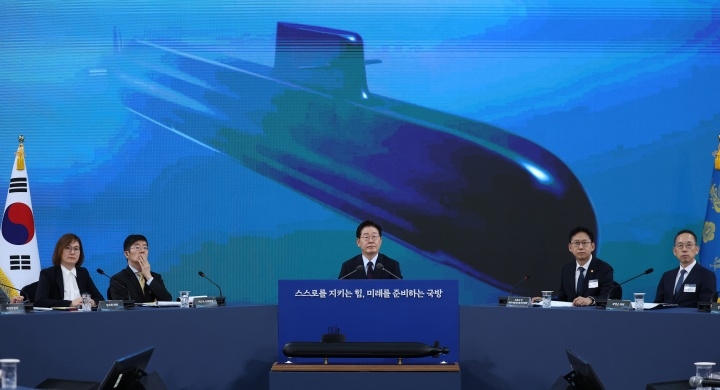
The decision followed President Lee Jae Myung's call in September to accelerate the construction of nuclear-powered submarines and the development of advanced missile systems, including hypersonic missiles.
"We must accelerate the construction of nuclear-powered submarines and the advancement of missile technologies, including hypersonic missiles, which are key to self-reliant national defense," Lee said during a Cabinet meeting on Sept. 29.
Meanwhile, during his meeting with Grossi, Jeong also raised North Korea's nuclear program and called on the IAEA to continue drawing international attention to the issue, including through reports issued by its director general.
Grossi reaffirmed the agency's commitment to maintaining enhanced readiness to verify North Korea's nuclear activities and expressed support for South Korea's diplomatic efforts to promote peace and stability on the Korean Peninsula, according to the ministry.
flylikekite@heraldcorp.com