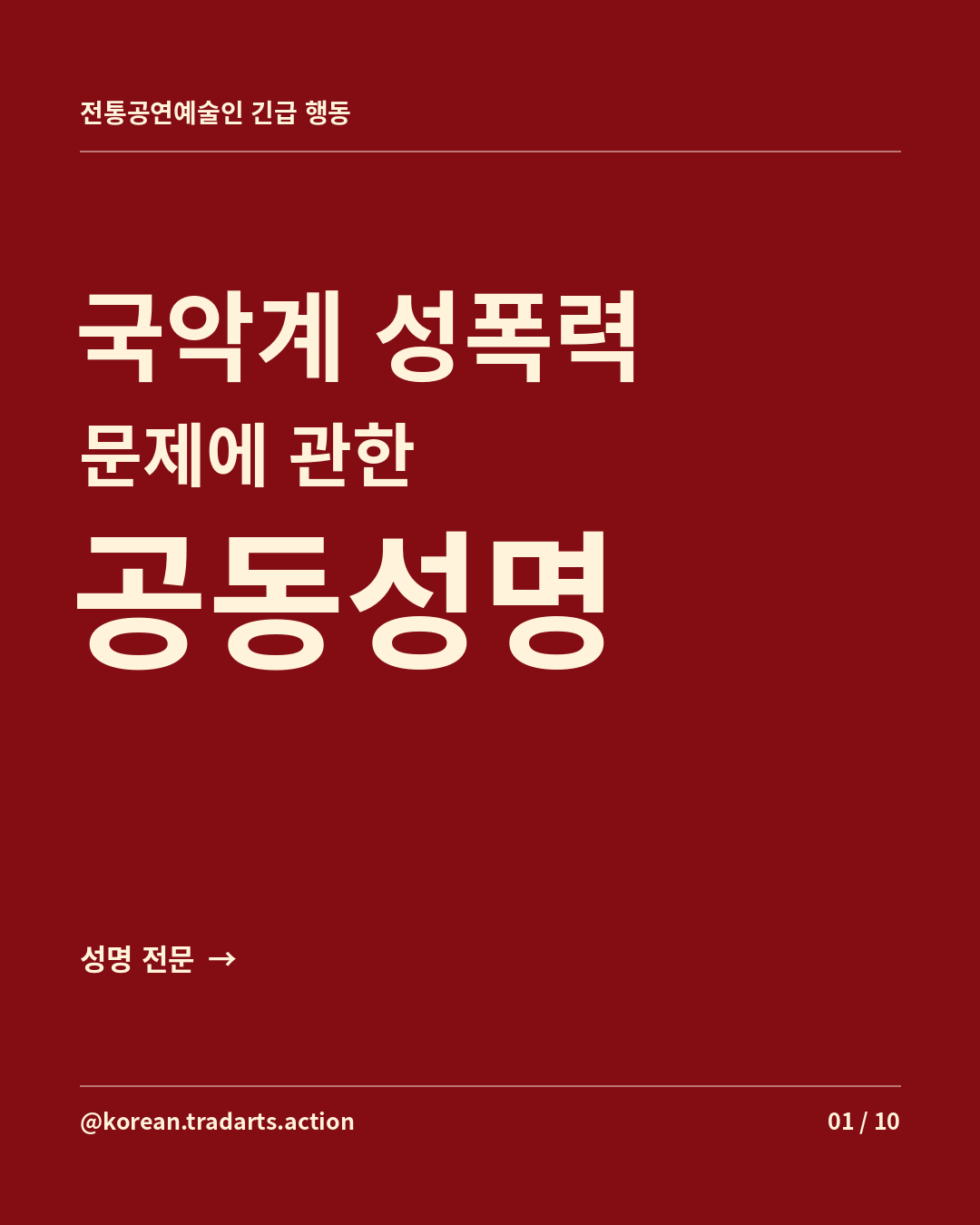
More than 3,000 people from Korea's traditional performing arts community have signed a joint statement condemning sexual violence in the field and calling for an end to a culture of silence that they say has allowed abuse to persist across generations.
The statement, released Saturday by an emergency coalition of traditional performing artists, had drawn more than 3,190 signatures as of Monday morning, according to the group. More than 500 signatories are students.
The outpouring followed a series of reports in recent weeks detailing sexual abuse allegations in the "gugak" field of traditional Korean music.
The cases include two male students at the National High School of Traditional Korean Arts who were referred to prosecutors over allegations they raped and illegally filmed a female classmate, a member of the National Orchestra of Korea indicted on charges of molesting a former student he had taught since her middle school years and a prominent traditional musician accused of sexually exploiting a minor student for more than four years.
The statement was initiated by 30 figures from the traditional performing arts community, including university professors, performers, critics, directors and arts organizers, among them faculty members from Seoul National University, Dankook University and the Korea National University of Arts.
The signatories said the recent reports reflected a long-standing problem in a close-knit artistic community, where established figures wield considerable influence over university admissions, employment and career opportunities.
"What these reports have revealed is nothing new. We have continuously witnessed sexual violence, both large and small, in the world of traditional performing arts," they wrote.
They pointed to hierarchical teacher-student relationships and close professional networks as factors that have helped shield perpetrators. As university admissions, auditions and employment can depend heavily on recommendations and personal connections, victims may feel pressured to maintain relationships with those who abuse them rather than risk their careers.
"Why should victims have to give up traditional music?" the signatories asked, arguing that everyone in the community shares responsibility for a culture that has made it difficult to speak out.
"Traditions of covering up sexual violence are being passed down in a world devoted to passing down tradition," they wrote.
Artists press for reform
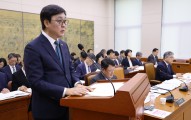
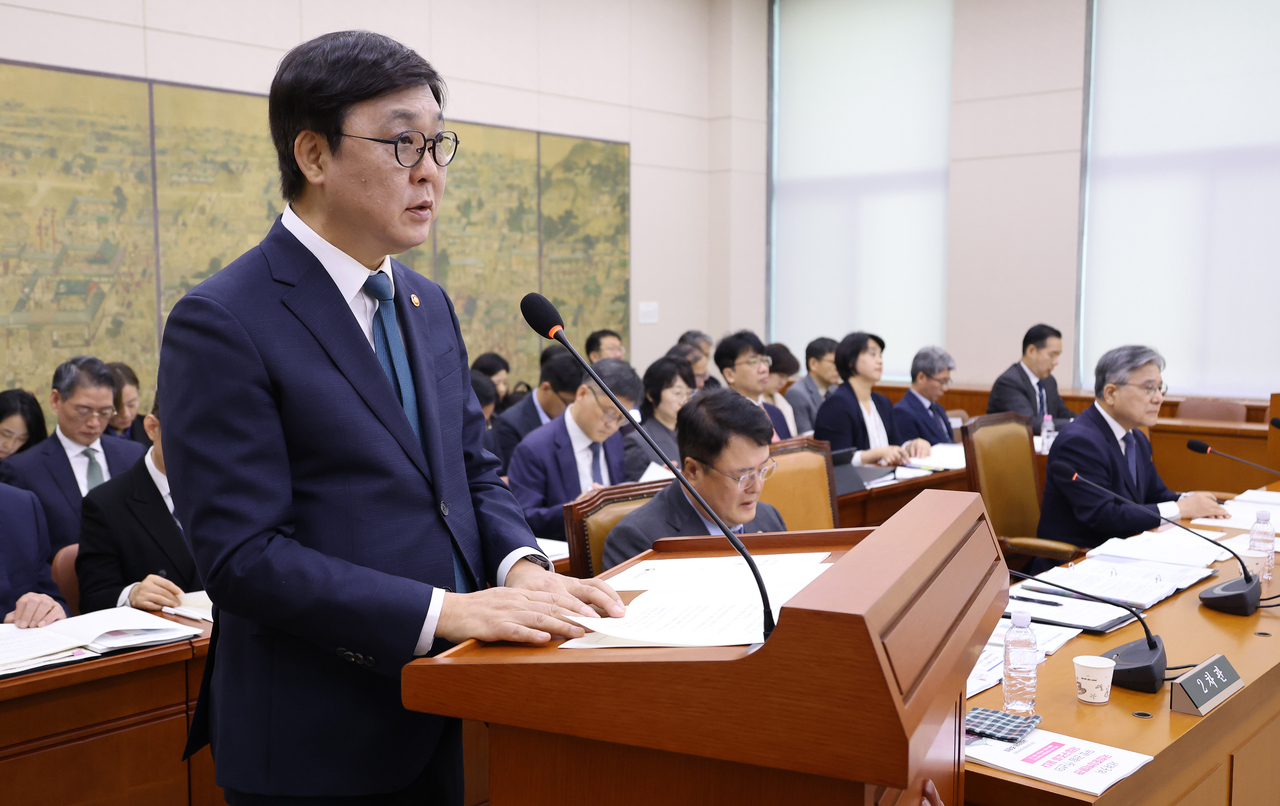
The issue came under scrutiny recently at the National Assembly. At a parliamentary audit on Oct. 23, Chae Hwi-young, the culture minister, apologized for the handling of the case at the National High School of Traditional Korean Arts, which is overseen by the ministry, saying he felt a profound sense of responsibility.
In their statement, the artists outlined three demands: holding perpetrators accountable and supporting victims; confronting the traditional music community's own practices and power structures; and establishing concrete prevention measures across government agencies, schools and public arts institutions.
They called for independent reporting and counseling channels that do not require victims to approach people who may teach, evaluate or hire them. They also urged a comprehensive survey of sexual violence across schools, universities, private music lessons, public arts organizations and performance venues.
Other proposals included barring confirmed perpetrators from performances, teaching, auditions and hiring decisions; establishing safeguards against conflicts of interest in admissions and recruitment; and preventing academic or professional retaliation against those who report abuse.
On Monday, Chae addressed the issue again in a social media post, expressing anger and dismay over the reports and apologizing for the government's failure to protect artists.
"I will do this properly. I will stand with the victims and hold perpetrators accountable to the end," he wrote.
Chae said the ministry would launch a public-private task force to review practices and working conditions that leave artists vulnerable to abuse. It will also open a special reporting period through the end of the year, inviting reports of sexual violence involving ministry-affiliated schools, as well as national and public arts organizations.
The culture minister pledged that anyone found to have committed sexual violence would be barred from participating in performances, teaching, examinations and hiring. The ministry is to work with education authorities to review how schools handle sexual violence cases and strengthen protections for minors.
hwangdh@heraldcorp.com