South Korea’s food and agricultural industry exports surpassed $10 billion in a record 262 days this year, driven by rising overseas sales of instant noodles, grapes and agricultural supplies, the Agriculture Ministry said last week.
The milestone was reached in September under the government’s “K-Food Plus” category, which combines fresh and processed foods with agricultural machinery, fertilizers, veterinary medicines and smart farming systems.
Exports continued to grow after crossing the threshold, reaching $11.88 billion through October, up 4.9 percent from a year earlier. A preliminary November tally put the total at $12.29 billion, the ministry said.
Food exports rose 5.4 percent to $9.07 billion in the first 10 months, while agricultural industry exports increased 3.4 percent to $2.81 billion.
Instant noodles remained a major source of growth. Exports climbed 26.3 to $1.59 billion through October, exceeding the full-year 2025 total of $1.52 billion. Overseas sales of snacks, sauces and processed rice products also increased.
The United States remained South Korea’s largest food export market, with shipments rising 11.7 percent to $1.68 billion. China followed at $1.41 billion, up 7 percent, and was the largest overseas buyer of Korean instant noodles.
Growth also extended to emerging markets. Food exports to Latin America increased 29.4 percent, while sales to Europe, including Britain, rose 24.2 percent. Exports to Gulf Cooperation Council countries grew 20.6 percent.
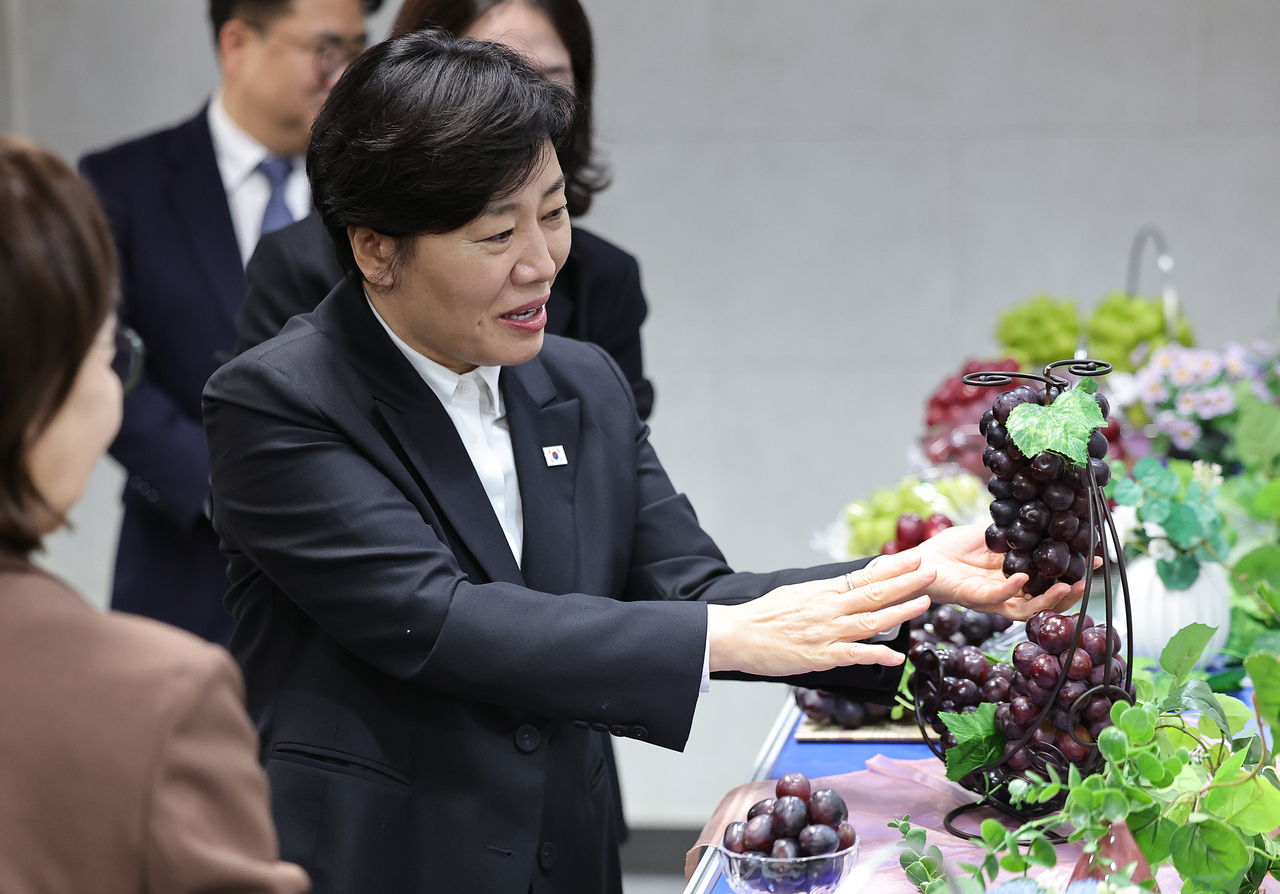
Grapes became South Korea’s first fresh agricultural product to exceed $100 million in exports in November. The ministry attributed the growth to strong demand in Taiwan and wider distribution through mainstream US retailers, including Costco.
Quarantine agreements opened additional markets, with South Korean sweet persimmons entering China and mandarins from Jeju Island reaching Uzbekistan for the first time in November.
Among agricultural industry products, fertilizer exports rose 26.6 percent to $478.8 million, veterinary medicine exports increased 23.6 percent to $333 million and smart farming exports grew 18.2 percent to $102.2 million.
"The government would continue supporting exporters facing higher logistics costs and work to extend the grape industry’s export success to other agricultural products," said Kim Jung-wook, a senior official at the ministry.
shinyb@heraldcorp.com