Chinese members of K-pop groups could expand local activities first, potentially paving the way for full-group concerts
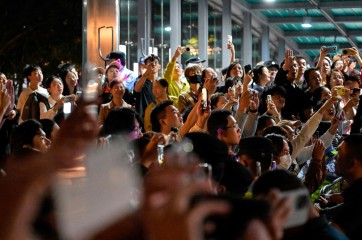
K-pop agencies are taking a cautious view of a possible return to mainland China after a trade breakthrough at the Asia-Pacific Economic Cooperation summit in Shenzhen, China, on Wednesday revived hopes that Beijing could ease its restrictions on Korean entertainment.
South Korean President Lee Jae Myung and Chinese President Xi Jinping announced the two countries had substantially concluded follow-up negotiations on services and investment under their free trade agreement. The announcement lifted entertainment stocks, with shares of SM Entertainment and Hybe closing up 14.3 percent and 7.6 percent, respectively, Wednesday.
The negotiations produced commitments on films and online games but did not explicitly cover K-pop concerts. Industry officials therefore expect the restrictions to first ease in other entertainment sectors before potentially extending to live performances.
For K-pop agencies, the most realistic scenario is a gradual expansion of activities already permitted in China, with companies likely to wait for Chinese authorities to approve a major K-pop concert before committing to full-group performances.
“K-pop groups with Chinese members already have members working in China. Those members will probably do more of what they’ve been doing there first, and from there it could expand to concerts and other live performances,” an official at a major K-pop agency told The Korea Herald on condition of anonymity.
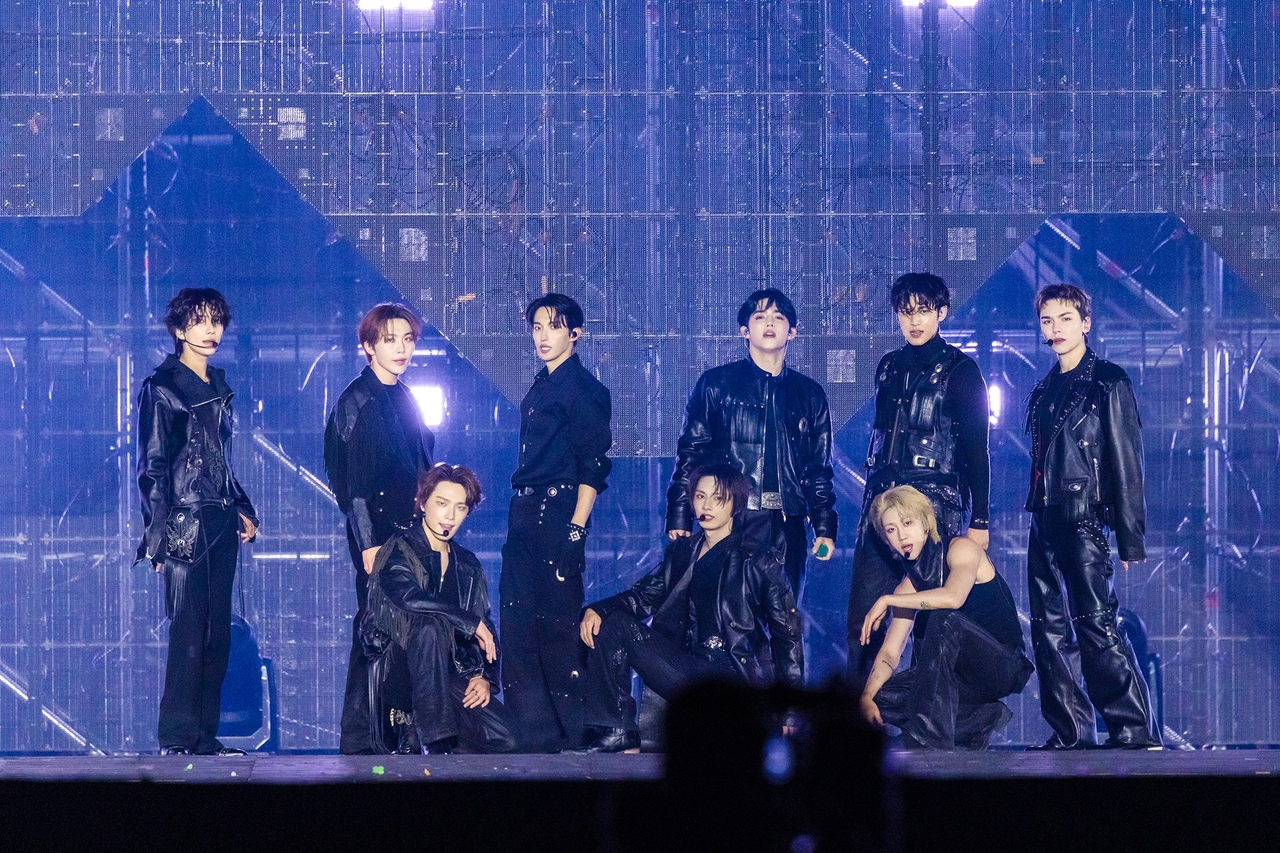
Seventeen's Chinese members Jun and The8 have released solo music and appeared on local entertainment programs, while NCT Dream's Chinese members Renjun and Chenle launched a five-city fan meeting tour in Hangzhou in July.
China has informally restricted Korean cultural content and entertainment activities since 2016, following a diplomatic dispute over South Korea's deployment of the US Terminal High Altitude Area Defense missile defense system. The restrictions, widely viewed as retaliation for the deployment, have never been formally announced, leaving entertainment companies facing uncertainty over concert approvals and possible policy reversals.

K-pop's China comeback prospects
Despite years of restrictions, major K-pop agencies have continued building their presence in China.
Hybe, home to BTS and Seventeen, established a Beijing subsidiary in April 2025, while JYP Entertainment, which entered China in 2008, announced plans in February for a joint venture with CJ ENM and Tencent Music Entertainment to develop artists targeting the Greater China market. SM Entertainment and YG Entertainment also operate subsidiaries in China.
Concerts by full K-pop groups, however, have proved more difficult to arrange.
Boy group Epex, whose members are all South Korean, secured approval for a 1,000-seat concert in Fuzhou scheduled for May 2025, but its agency postponed the event weeks beforehand, citing local circumstances.
The economic incentives for reopening the market are substantial.
According to a report released Thursday by Daol Investment & Securities, China's concert market is approximately 85 percent the size of Japan's and 2.8 times that of South Korea.
Hana Securities estimates that Korean entertainment companies' earnings could rise by around 40 percent if China permits K-pop concerts and Korean entertainment productions to resume alongside broader cultural exchanges.
The trade breakthrough also raised hopes within government that the agreement could pave the way for broader cultural exchanges and an eventual easing of China's restrictions on Korean entertainment.
“The institutional groundwork is now in place for economic cooperation between the two countries to advance,” Ha Joon-kyung, presidential chief of staff for policy, said at a press briefing in Shenzhen on Wednesday following the FTA negotiations.
A senior presidential official confirmed that the agreement contained no provision requiring either country to approve concerts by artists from the other.
“The possibility is open, and you could say there’s now more room to discuss how to get those performances approved,” the official said.
The agreement instead provides for nondiscriminatory treatment in China's preliminary reviews of Korean films and online games, while expanding joint productions to include dramas, animation, variety shows and documentaries.
A Culture Ministry official said Thursday that China had agreed to grant Korean films and games most-favored-nation treatment, meaning they would receive treatment no less favorable than that offered to content from other countries.
“The restrictions on Korean entertainment are informal,” the ministry official said. “We discussed a range of issues with China at the institutional level, but we’ll have to see how this is applied in practice.”
jaaykim@heraldcorp.com