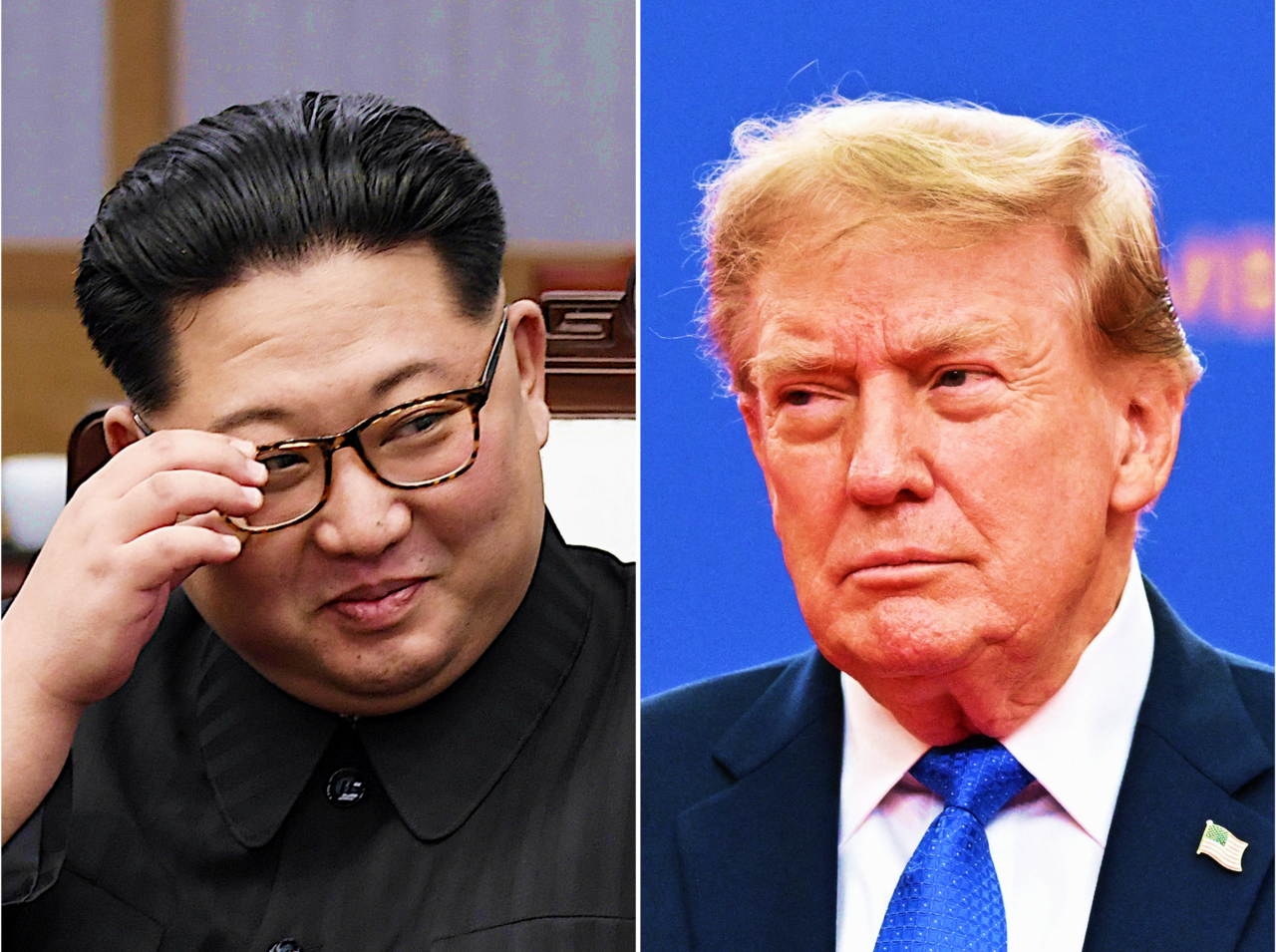
Kim Jong-un's four-day tour from the Chinese border to the country's eastern coast may signal a deliberate effort to avoid a possible meeting with US President Donald Trump.
The North Korean leader appears to see more benefits in closer ties with Beijing and Moscow than renewed talks with Washington for now, experts said Thursday.
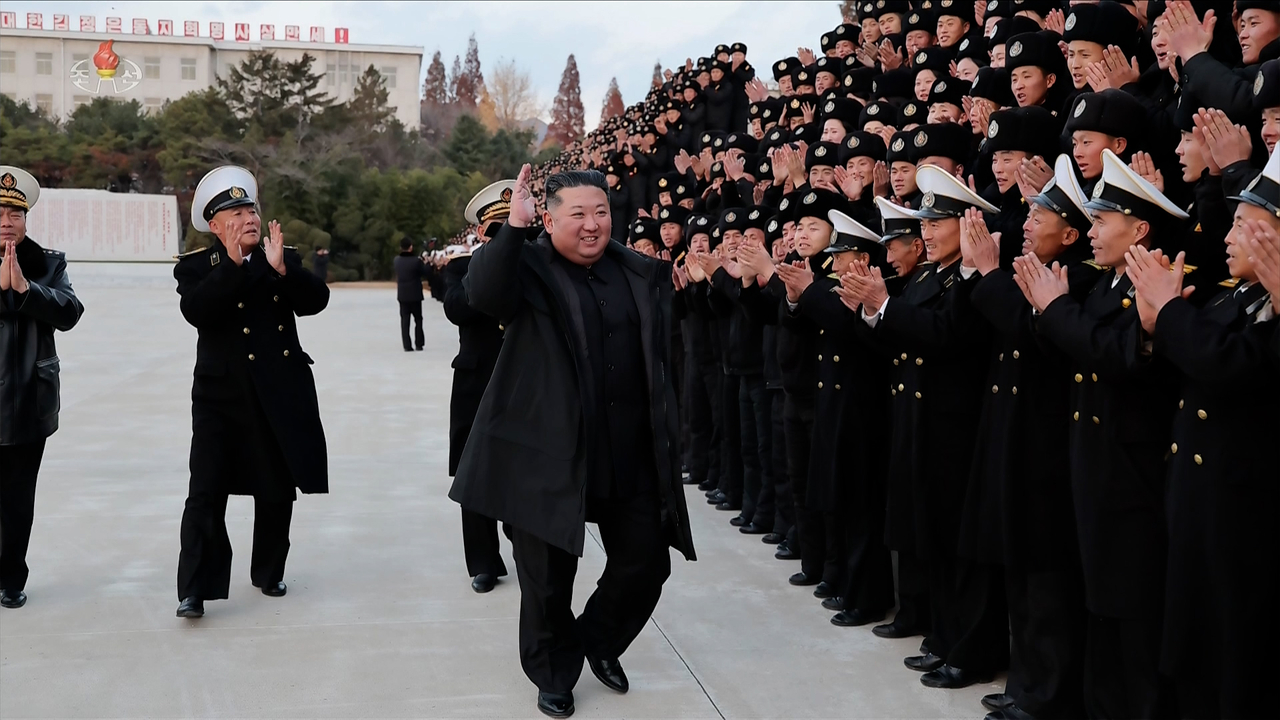
According to the Korean Central News Agency on Thursday, Kim visited construction sites in Riwon and Rakwon counties in South Hamgyong Province on Tuesday and Wednesday, before inspecting Kim Jong Suk Naval University in the eastern coastal city of Hamhung on Wednesday.
His visits to the eastern coast have raised doubts about a possible meeting with Trump, who is attending the Asia-Pacific Economic Cooperation summit in Shenzhen, China. Trump is also scheduled to hold a trilateral meeting with Chinese President Xi Jinping and Russian President Vladimir Putin on Thursday.
Speculation had grown that Trump and Kim could meet again during the US president's visit to China, as Trump has repeatedly expressed interest in resuming dialogue with the North Korean leader.
Lim Eul-chul, a professor at Kyungnam University's Institute for Far Eastern Studies, said Kim's decision to travel east rather than toward China appeared to be a deliberate signal that he was not interested in meeting Trump this time.
"It is reasonable to interpret Kim's unusual visits to areas near the Chinese border and then to South Hamgyong Province during the APEC summit as a nonverbal rejection, signaling that he will not be swayed by Trump's overtures," Lim said.
"From North Korea's perspective, strengthening its traditional alliances with Russia and China and expanding practical benefits on multiple fronts is a far safer and more rewarding strategy at this stage than meeting Trump, which carries considerable risks," Lim said.
He added that the absence of meaningful changes to Washington's policy toward Pyongyang or sufficient, credible preliminary arrangements made an immediate summit less attractive to the North Korean leader.
But Lim maintained that Kim may not be dismissing the possibility of talks with Washington entirely. He suggested Kim could be deliberately feigning indifference to heighten Trump's impatience and strengthen his bargaining position ahead of any future negotiations.
Kim's visits to South Hamgyong followed his inspections of tourism development projects in Samjiyon, Ryanggang Province, near the Chinese border, on Sunday and Monday, bringing his domestic inspection tour to four consecutive days.
In South Hamgyong, Kim inspected fish farms, housing facilities, a hospital and local factories, while his visit to the naval university focused on training personnel as the country pursues naval modernization.
Trump, meanwhile, raised the possibility of meeting Kim on Monday before departing for Asia, telling reporters at the White House that he would meet Xi and Putin and might "meet with Kim Jong-un also, so that'll be good."
The following day, Trump again left open the possibility of a meeting, saying Kim "would like to" attend the APEC summit.
Despite Trump's repeated remarks, the White House had previously said no meeting with Kim was scheduled during the president's visit.
Yang Moo-jin, a distinguished professor at the University of North Korean Studies, also assessed that Kim's recent movements appeared focused primarily on domestic affairs rather than diplomacy.
"Considering Kim's itinerary, his focus is on domestic affairs," Yang said, pointing to inspections of regional development projects and efforts to showcase progress in naval modernization ahead of major ruling party meetings.
"It is reasonable to conclude that a US-North Korea summit on the sidelines of APEC is unlikely," he said.
Yang also dismissed the possibility of a surprise meeting between the two leaders in Pyongyang during Trump's return trip, citing the absence of signs that US security personnel or advance teams had entered North Korea.
He suggested that Kim would likely assess the outcome of the US-China-Russia summit, along with recent diplomatic exchanges with Beijing and Moscow, before deciding on his approach toward Washington at a ruling party meeting later this year or early next year.
Meanwhile, a South Korean Unification Ministry official told reporters Thursday that the government had detected no unusual signs suggesting Kim was preparing to visit China.
"As far as I understand, there have been no particular developments regarding Chairman Kim Jong-un's possible visit to China," the official said.
The official, however, cautioned against completely ruling out a meeting, citing Trump's strong interest in renewed dialogue.
"We will have to wait until President Trump boards his plane back to the United States," the official said, adding that talks between Washington and Pyongyang remained possible at any time.
flylikekite@heraldcorp.com