SEJONG — Korea Gas Corp. said Wednesday it will expand liquefied natural gas trading and build a pool of cargo it can either bring to South Korea when demand rises or sell abroad when supplies are ample, in a shift aimed at reducing its reliance on costly last-minute purchases.
The state-run utility plans to expand its trading team, secure a dedicated LNG carrier for its Singapore-based subsidiary and buy more gas under long-term contracts. The government’s long-term gas plan recognizes the need for more LNG trading, and Kogas says it still needs to work out how much trading risk it can take on and how to manage it.
Starting with South Korea’s 15th long-term gas plan, the government has factored in the possibility that power plants may use more gas than forecast. Kogas is working to secure enough LNG under long-term contracts to cover that extra demand.
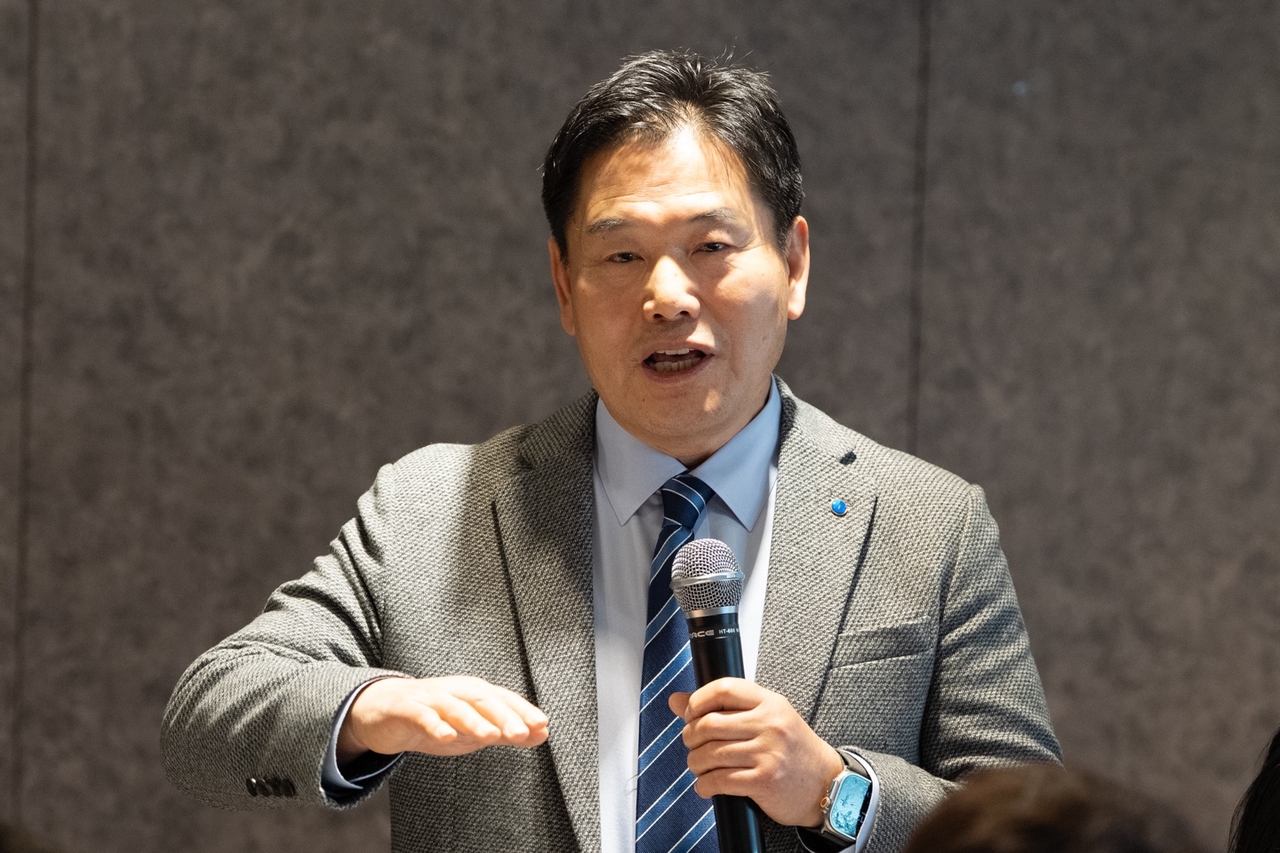
"Gas is electricity," Kogas Chief Executive Hong Eui-rak told reporters, pointing to the role fuel costs play in the power market. Gas-fired plants set South Korea’s wholesale electricity price 89 percent of the time in 2025, down from 94 percent in 2024, according to the company.
Hong said gas-fired plants can adjust output quickly when wind and solar generation falls. He also said existing gas pipelines could supply plants near semiconductor clusters and artificial intelligence data centers in areas where new transmission lines take longer to build.
As it diversifies its suppliers, Kogas expects the Middle East to account for 18 percent of its LNG supplies under long-term contracts in 2028, down from 45 percent in 2023. The company aims to secure at least 3.5 million metric tons a year by 2035 from overseas projects in which it holds stakes, up from about 1 million tons now.
Asked about Korea's potential participation in the US Alaska LNG development project, Hong called it "a very difficult project," citing harsh conditions for construction. He said he expected the US to keep pursuing the project and that the South Korean government was reviewing its potential role.
Kogas is also considering joint purchases with private LNG importers to increase their bargaining power, as well as joint investments in overseas projects. At home, it wants to make its tariff for power generators more competitive. The tariff averages fuel costs across supply contracts. Kogas also plans to set common rules for access to its nationwide pipeline network and temporarily supply gas to users who draw more than they put in.
Under its Vision 2035 strategy, unveiled Monday, Kogas plans to use AI to forecast demand and guide decisions on LNG purchases, trading and network operations.
Separately, Hong called for higher regulated city gas rates to recover fuel costs the utility has already incurred. "For now, raising rates is necessary," he said. If oil prices stay high, those unrecovered costs could grow by as much as 4 trillion won ($3 billion) between the first quarters of 2026 and 2027.
A rise of 1 won per megajoule in the fuel charge would help Kogas recover about 500 billion won over a year, based on annual sales of 500 billion megajoules to households and other retail users. Hong gave no timetable for an increase.
herim@heraldcorp.com