At Invest Korea Summit, global firms pledge investments in semiconductors, AI and renewable energy; 97% earmarked for regions outside Seoul
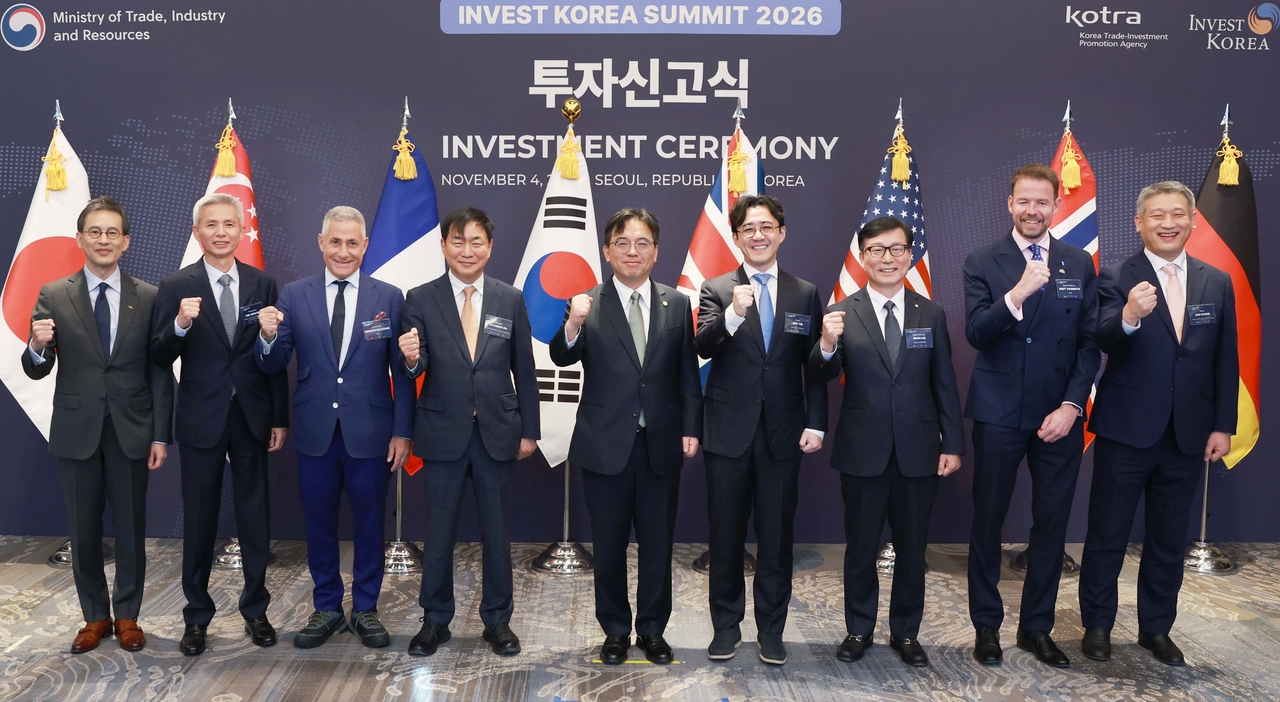
South Korea secured $2 billion in investment pledges from seven global companies at the Invest Korea Summit 2026 on Wednesday, the largest commitments in the event’s 22-year history.
The nation’s largest government-led investor relations event, hosted by the Ministry of Trade, Industry and Resources and organized by Kotra, kicked off in Seoul on Wednesday. The three-day event drew more than 2,000 participants, including investors from 267 overseas companies and business and government officials.
About 97 percent of the pledged investment, or $1.97 billion, is earmarked for projects outside the Seoul metropolitan area, aligning with the government's efforts to promote regional growth.
The bulk of the investments target South Korea’s semiconductor ecosystem, particularly advanced packaging technologies used in AI chips and high-bandwidth memory, or HBM.
France's Air Liquide plans to invest in facilities producing specialty gases used in semiconductor manufacturing in Yeosu and Cheongju. US-based Amkor Technology will expand its advanced semiconductor packaging operations in Gwangju. Germany's Henkel plans to establish a research and development center for HBM packaging materials and Japan's Tokyo Electron will invest in semiconductor equipment and materials facilities.
Beyond chipmaking, British AI infrastructure company Nscale plans to develop an AI data center. Singapore's Gurin Energy and Norway's Deep Wind Offshore will invest in renewable energy projects involving solar, wind and offshore wind power.
Britain’s Edwards, France’s Valeo and Japan’s Ibiden will operate research and development centers in Korea, which are expected to strengthen technological cooperation with domestic industries in semiconductors, future mobility and advanced materials.
At the summit's opening conference, Kim Tae-hyung, commissioner of Invest Korea, said geopolitical uncertainty was prompting global companies to rethink their supply chains, creating new opportunities for South Korea.
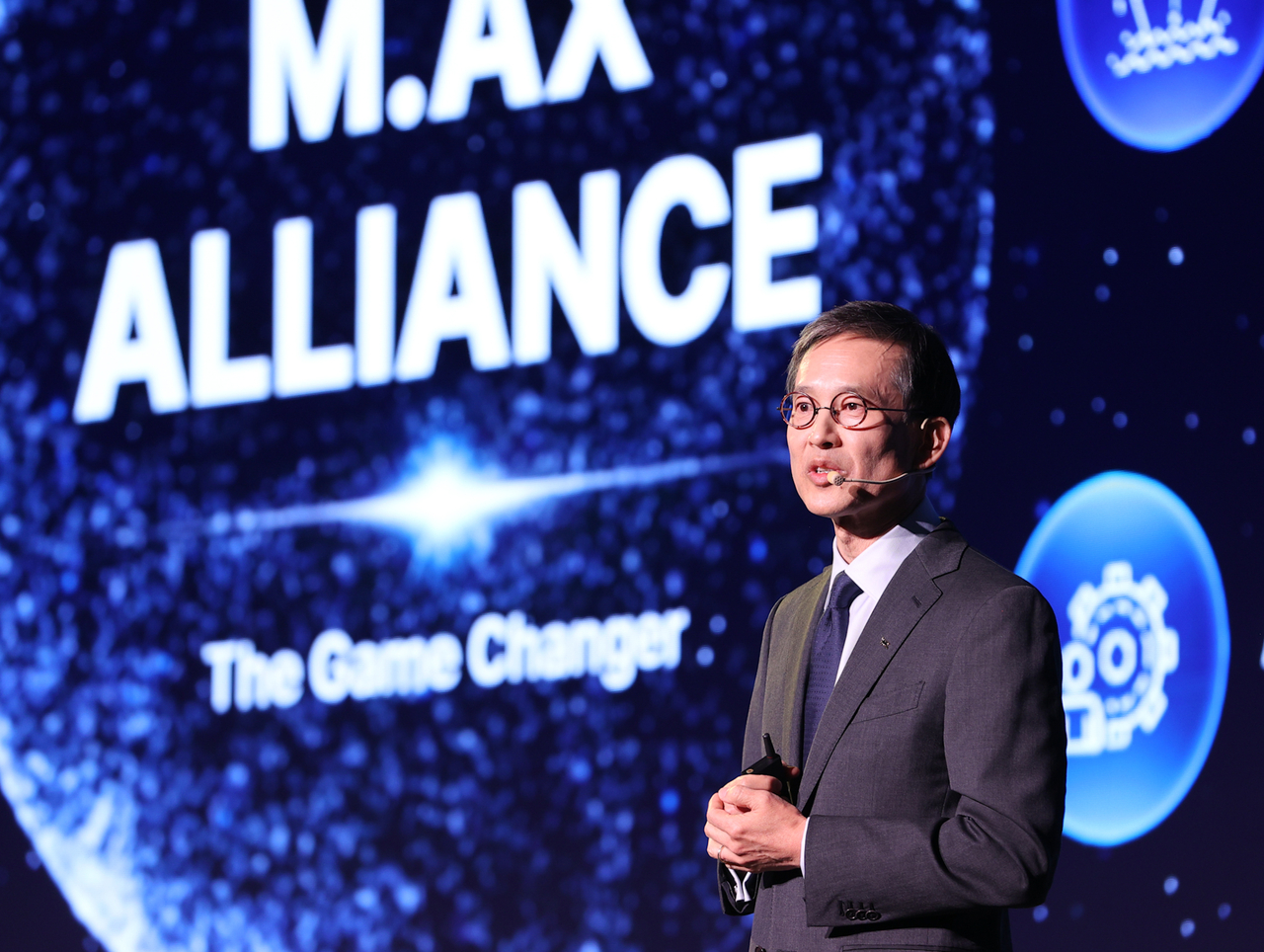
"Companies are rewiring their supply chains around security, geopolitics and geoeconomic competition," Kim said. "They need backup suppliers, more inventory and alternative routes. Every Plan B costs money."
Kim also highlighted the government's push to attract investment beyond the capital region. "The farther from the capital area, the greater the government support," he said.
Trade Minister Park Jung-sung outlined plans to develop M.AX (Manufacturing AI Transformation) industrial clusters, expand energy infrastructure and ease regulations to attract foreign investment.
"Central and local governments will work together as one team to support key investment projects and quickly resolve investment challenges," Park said.
The summit also highlighted South Korea's potential as a hub for physical AI, which brings artificial intelligence into robots capable of performing tasks in real-world environments.
Samir Menon, founder and CEO of Silicon Valley-based robotics firm Dexterity, pointed to opportunities to combine US software capabilities with South Korea's expertise in hardware, electronics and mass production.
"What we are looking for is ways to scale up the impact: hardware, electronics, integrated systems and enhancing volume production so that we can cut costs and drive productivity," Menon said. "I think Korea is a fantastic place to do that."
Dexterity has deployed AI-powered robots at more than 14 facilities worldwide and is already exploring opportunities in Korea. "Korea, I hope, will be our next country, and we're already in active conversations," he said.
LG CNS Executive Vice President Lee Jun-ho stressed that South Korea's competitive edge in physical AI lies in decades of industrial knowledge accumulated by its manufacturing and logistics workforce.
"Korea has a highly skilled workforce with years of experience across a wide range of industries, particularly manufacturing and logistics," Lee said.
"If AI can learn from the actions and decisions of these experienced workers, including how they respond to unusual situations, Korea's industrial know-how itself could become a key competitive asset in physical AI."
sahn@heraldcorp.com