Stationery chain rides character goods boom to 57 overseas stores, eyes US expansion despite profit squeeze
Korea’s most coveted souvenirs may be pocket-size tokens of cuteness, and more tourists now save suitcase space for plush toys, character key chains and stickers alongside their K-beauty and K-food hauls.
Prominent on their itineraries sits Artbox, a four-decade-old stationery chain whose quirky lifestyle goods and trinkets — a far cry from the school supplies of its early days — have put it in the same league as Olive Young, Musinsa and Daiso.
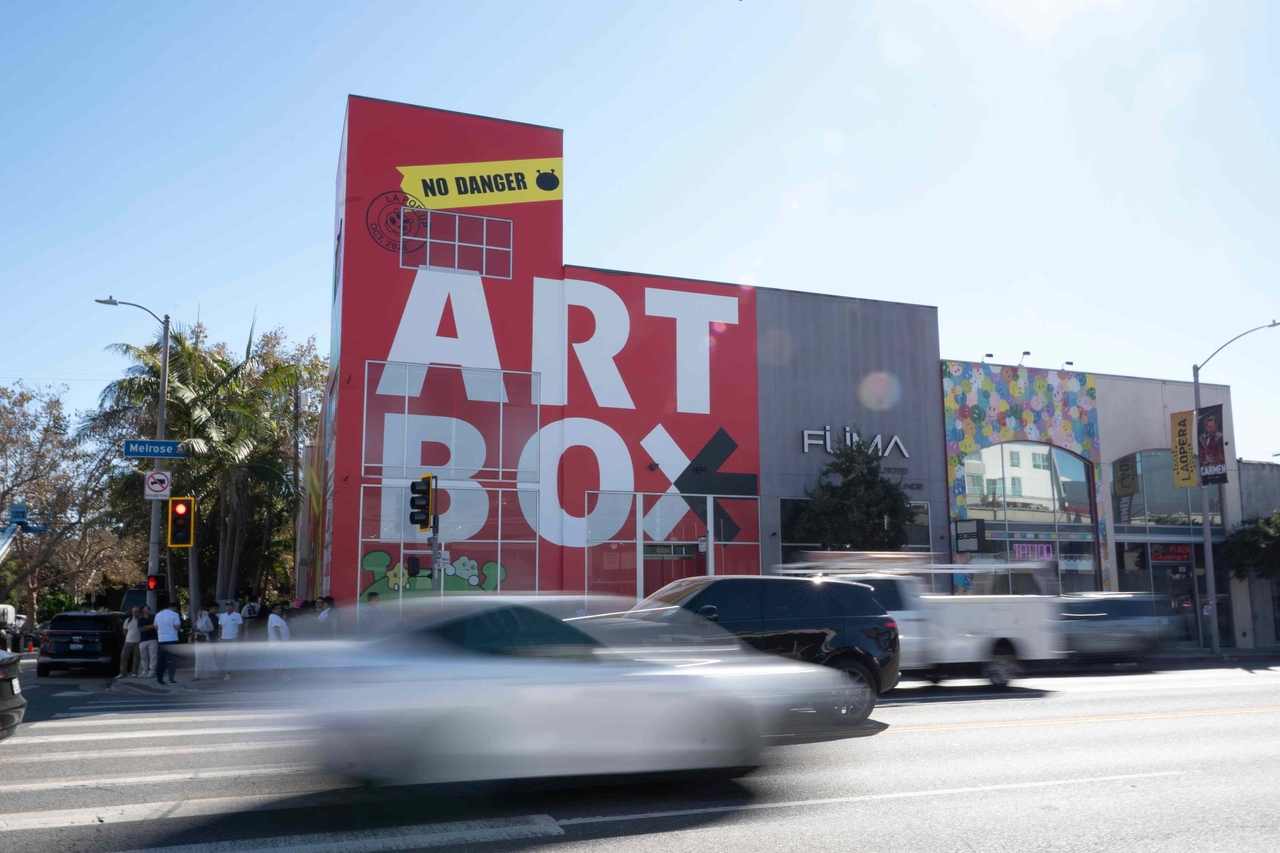
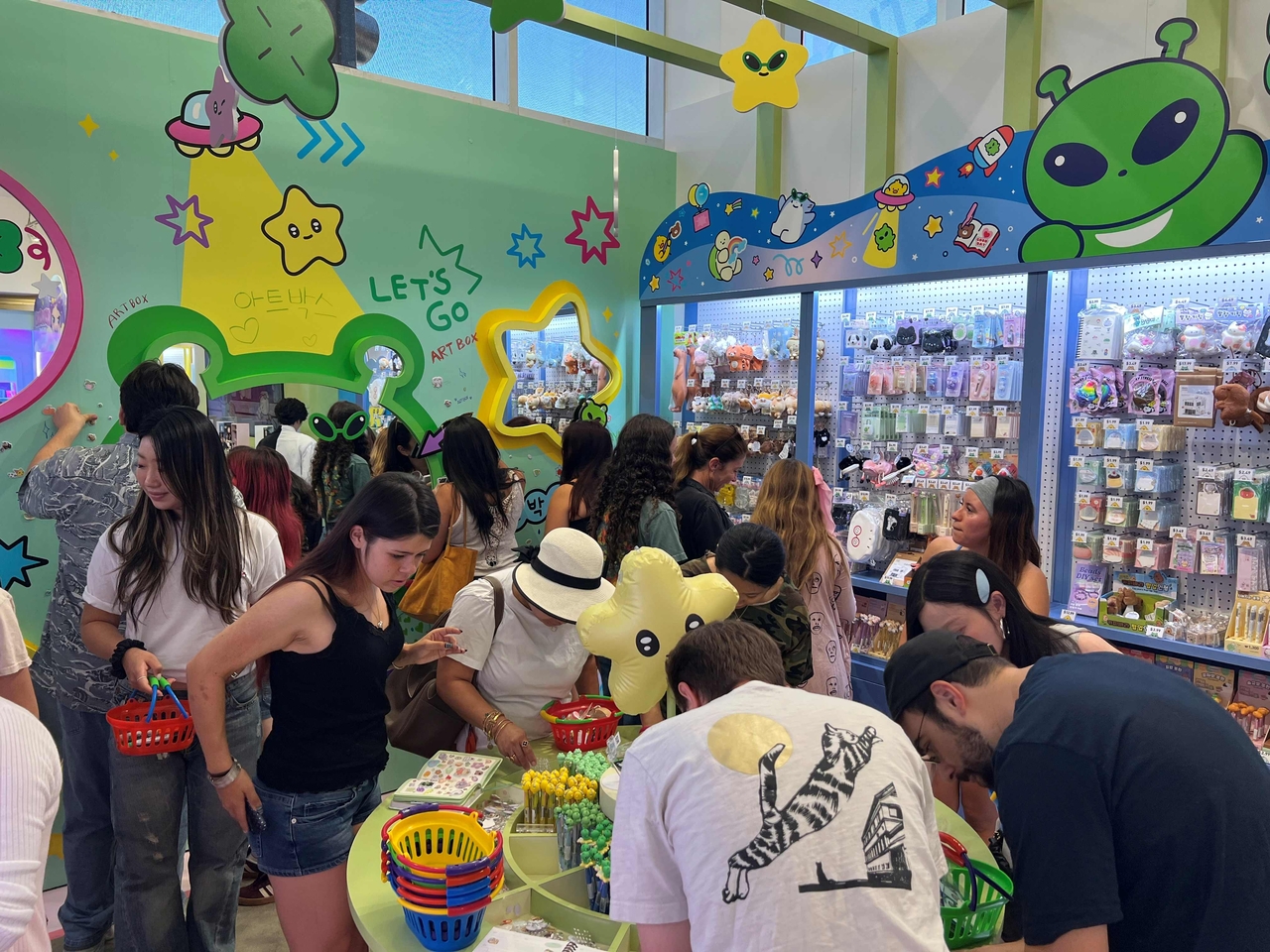
The swelling foreign traffic did not end with vacation shopping sprees. Artbox now operates just short of 60 stores across seven countries with more on the way. Its Los Angeles pop-up in early October ran under a slogan that captures the box of artful delights its name promises: "Unbox the fun, Artbox."
Where the fun lives
Artbox opened its first design stationery store in 1984 under Samsung Publishing and spun off as its own company two years later.
Stationery still runs through its veins, but the chain has branched out into character goods and household novelties. Reinvention, in turn, fueled a burst of store openings.
Artbox passed its 100th store in 2019 and its 200th last year. It now runs 236 nationwide. Industry watchers say it holds sway in the 10,000 to 20,000 won ($7.50-$15) bracket, much like Daiso in the sub-5,000 won market.
Lately, foreign visitors have felt the pull most keenly. Their purchases keep climbing from Gangnam and Seongsu-dong in Seoul, Busan and Jeju Island, as well as the Myeong-dong and Hongdae outlets in Seoul, where they generate about 80 percent of sales.
Tax-refund purchases rose about 40 percent in July from a year earlier to 62,082 transactions, according to the company. Purchases by Japanese visitors roughly doubled, while those by Taiwanese and American shoppers climbed 53 percent and 28 percent on-year, respectively.
"Character goods have become the touchpoint that draws foreign customers into our stores," an Artbox official explained, adding that around 70 percent of its customers are in their 20s and 30s.
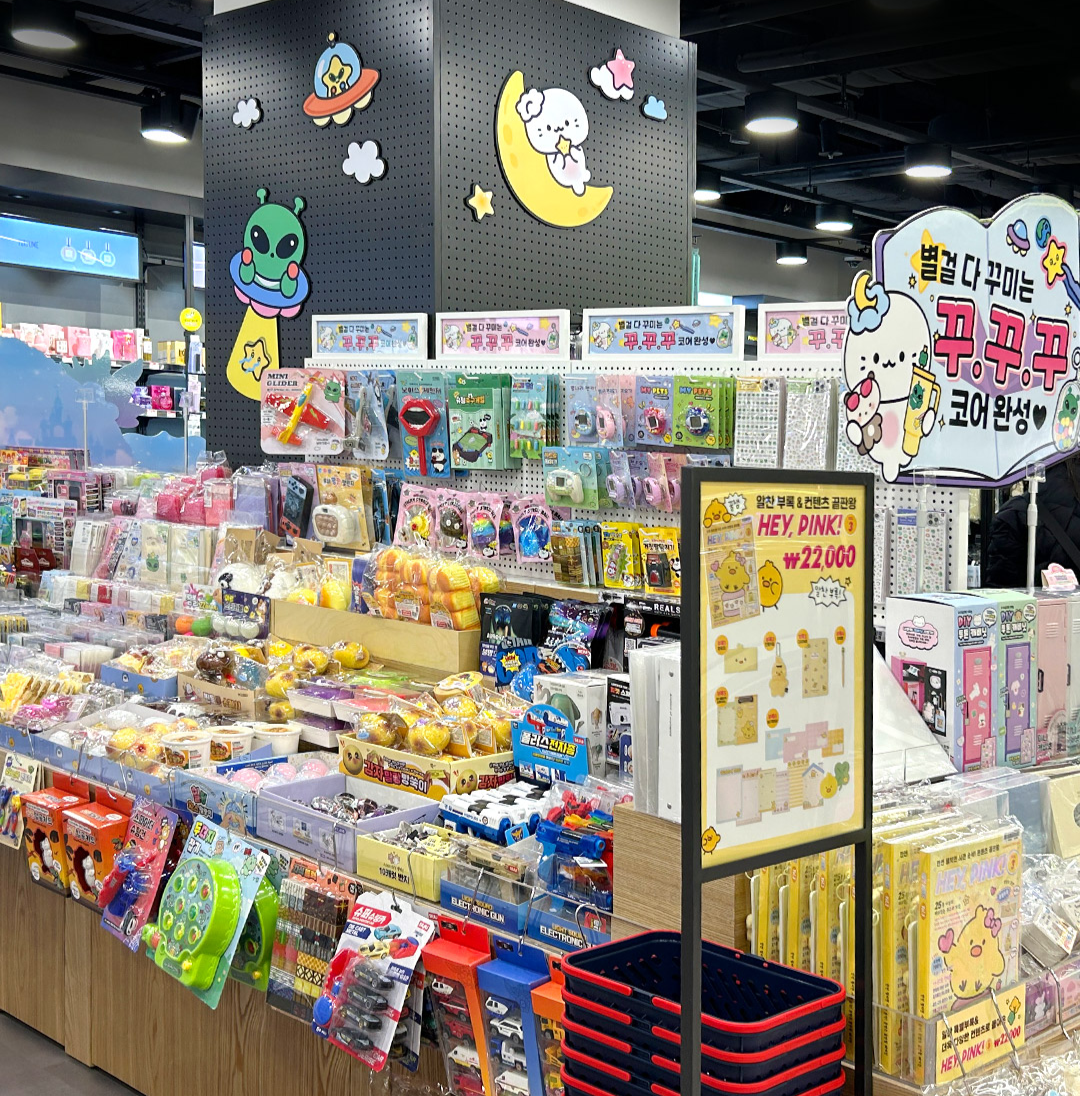
Once inside, shoppers find notebooks, diaries and desk accessories stacked beside pajamas, soju glasses and plush toys. Products featuring homegrown characters account for about 60 percent of its roughly 20,000 items, and more than 1,000 new products arrive every month. Licensed favorites fill out the shelves, from Minecraft and Chiikawa to Sanrio characters and BT21.
The stores also function like amusement halls, outfitted with photo card printers, capsule gacha machines and photo booths offering limited-edition character frames. K-pop devotees also get a corner of their own, stocked with the latest idol albums alongside photo card cases, glitter card sleeves and decorative stickers.
Behind the shelves, an in-house design lab tracks consumer trends to hatch new ideas.
"We weigh fun, design, practicality and trends, and feed customer feedback back into planning," the company official noted. "Our characters extend across products, store content and experiences, giving Artbox an identity all its own."
Where fun travels
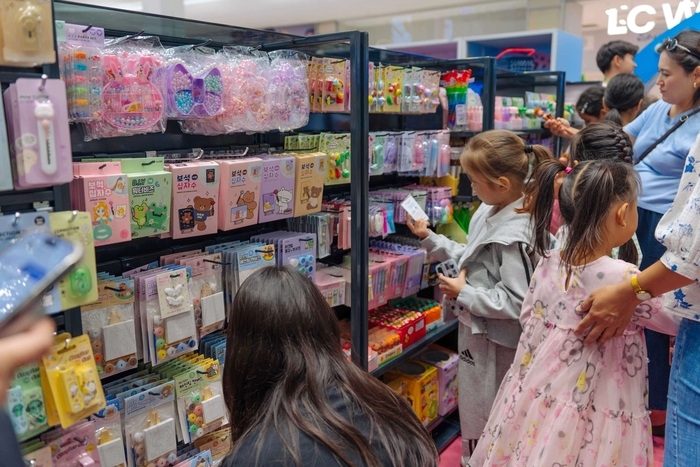
That formula has since gone global, though what goes in the box changes with each destination, according to the chain.
Working with local partners, Artbox reaches overseas shoppers through 57 stores across the US, Canada, Australia, Japan, Mongolia, Kazakhstan and Ecuador, in formats from standalone shops to shop-in-shops and pop-ups. It plans to reach 68 by year-end.
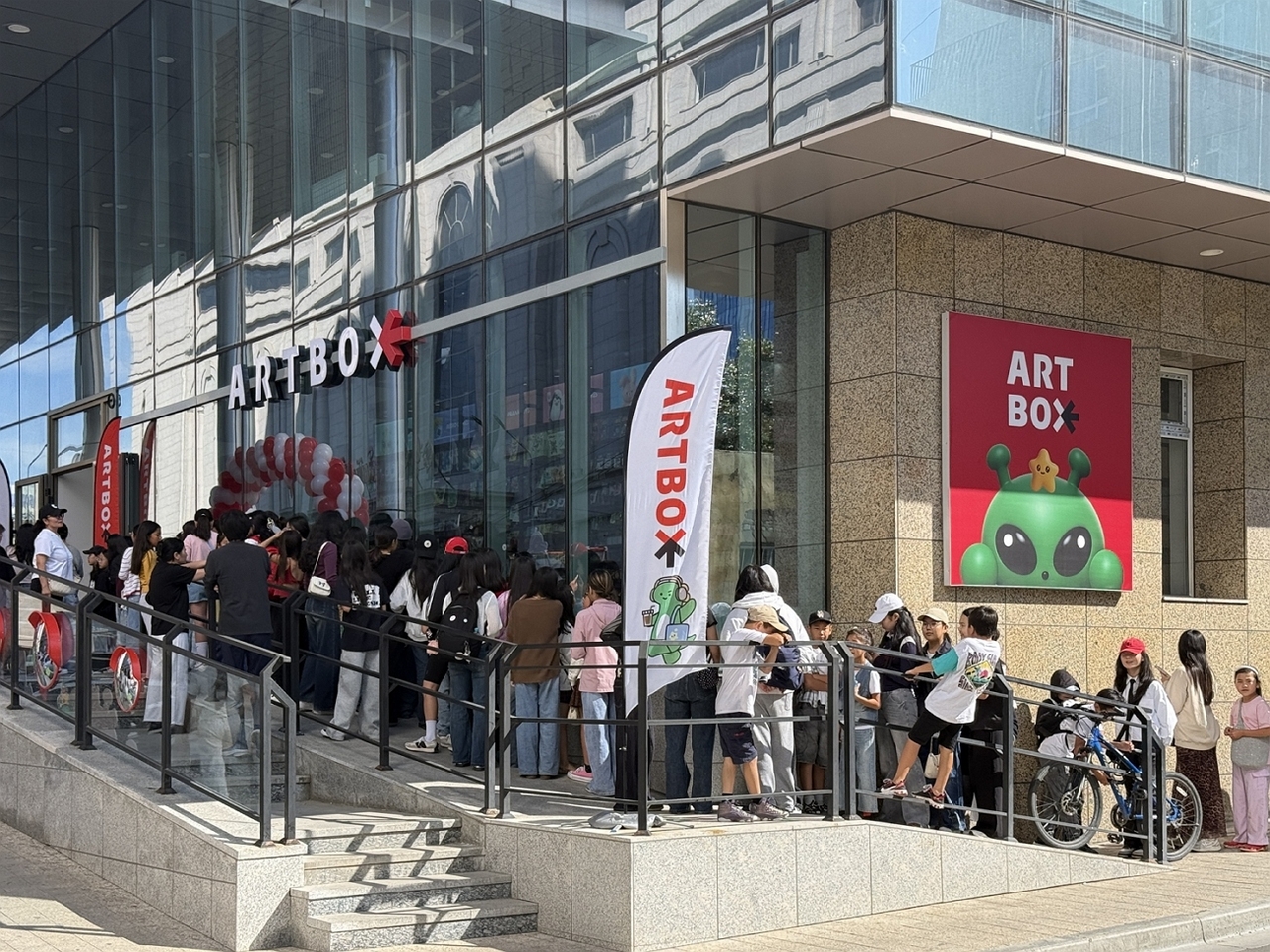
Mongolia delivered the most striking start. Of Artbox’s three stores in Ulaanbaatar, its downtown flagship topped every Artbox store worldwide in daily sales over its August opening weekend.
The same month brought Artbox to Japan, where key chains led early sales in Tsukuba. Stores in Asahikawa and Hiratsuka have since followed.
Where it has yet to plant roots, Artbox tests the waters with pop-ups. One in Almaty, Kazakhstan, drew about 34,000 visitors on opening day in September. At its Los Angeles pop-up in early October, K-pop girl group Illit, global ambassadors for Artbox, made an appearance.
The real proving ground may be the US, where shoppers are increasingly smitten with fandom collectibles. According to industry sources, commercial real estate firm CBRE has signed on as Artbox’s exclusive property partner there, and the chain is eyeing permanent stores on the West Coast.
Such plans would have seemed far-fetched just a few years ago.
Artbox slipped into the red in 2020 with an operating loss of 2.4 billion won, but revenue more than doubled from 131.4 billion won in 2021 to 269.7 billion won in 2025.
Profits have lagged sales. Revenue rose 8.8 percent last year, but operating profit fell 20.1 percent to 23 billion won, dragged down by store expansion costs and one-off charges from its 2024 merger with Litem L&C. The operating margin slid from 11.6 percent to 8.5 percent.
"Interest in Korean brands can bring consumers through the door, but turning visits into purchases requires competitive design, function, quality and price," one industry official said.
Squeezed by a shrinking school-age population and the digital shift, Korea’s stationery industry faces stiffer competition. Artbox contends with rivals such as pen-maker Monami, bookstore-run chain Hottracks and stationery boutique Point of View.
"Distinctive brand experiences and success in global markets have become the key factors that decide survival in the stationery and retail industry," the official added.
minmin@heraldcorp.com