From squishy toys to crack-open desserts, consumers seek comfort through touch, sound and texture

The stationery and toy shops of Changsin-dong in central Seoul were once largely the domain of children and parents. These days, office workers in suits and job seekers carrying backpacks have joined the crowd.
Many stop in front of displays piled with “mallang-i,” soft, often food- or character-shaped toys made for repeated squeezing and kneading, and “wakppu-bol,” or wax-crushing balls — palm-sized tactile toys with a thin, hardened wax-like outer layer. Squeeze one between your fingers and the shell gives way with a crisp, brittle crack.
For 22-year-old college student Lee Aa-young, the appeal is straightforward.

“I’ve always liked soft, squishy things, and they’re popular these days, so I’ve tried potato-shaped mallang-i and green apple wakppu-bol,” she said. “Playing with them makes me feel less tense. And because they’re cute, I find myself liking them even more.”
A 31-year-old office worker surnamed Park prefers the crunch.
“When I squeeze a wakppu-bol, the shell breaks with a crisp crackling sound,” she said. “It feels like my stress is released at that moment. Mallang-i and wakppu-bol have become essentials at the office.”
What looks like another toy fad is part of a wider appetite for sensory consumption — choosing things not only for what they do or how they look, but for how they feel, sound and respond to touch.
Grown-ups at the toy counter
Shop owners in Changsin-dong say the change in clientele has been especially noticeable early this year.
According to Small Business 365, a big-data platform run by the Small Enterprise and Market Service, average monthly sales at stationery and art supply retailers in Changsin 1-dong rose from 8.35 million won ($6,150) in November last year to 11.24 million won in February, an increase of 34.6 percent.
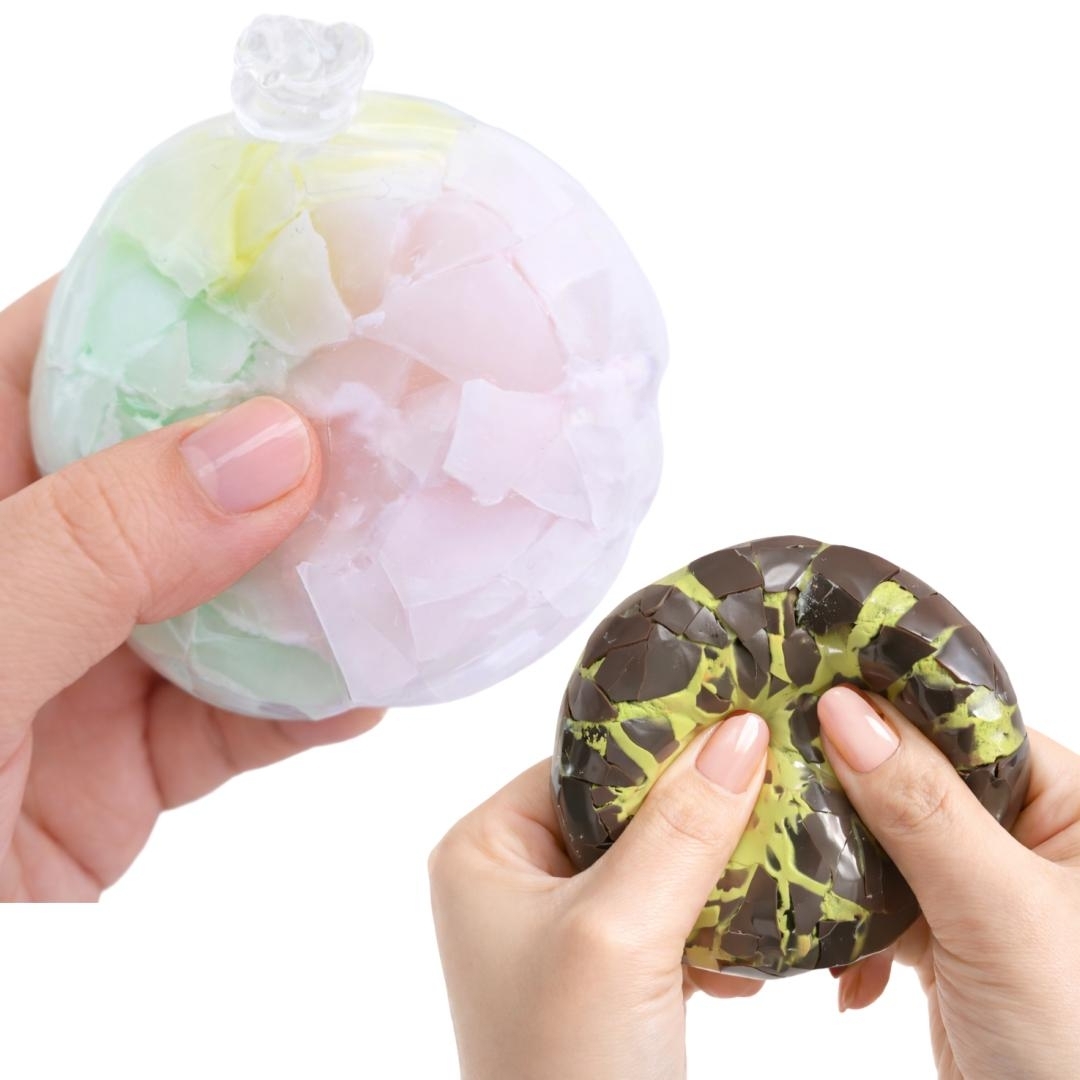
Many stores have cut back on older merchandise to put mallang-i and wakppu-bol front and center. Even shops traditionally focused on wholesale customers assign staff to outdoor squishy-toy stands on busy weekends.
“Most of our customers used to be families,” said a shop owner surnamed Kim, who has been selling stationery and toys in the area for more than a decade. “Since early this year, we’ve noticeably seen more people in their 20s. There are more customers on weekdays, too.”
The craze has spread online. On KakaoStyle’s fashion and lifestyle platform Zigzag, transaction volume for one type of squishy toy jumped 774 percent from June 14 to July 12 compared with the previous month, while wakppu-bol sales rose 500 percent.
A survey by market research firm Embrain Trend Monitor suggests the interest goes beyond a handful of viral products. Of 1,000 Koreans aged 13 to 59, 51.9 percent said they had bought, made or otherwise experienced tactile-consumption items. The figure rose to 69 percent among teenagers and 65 percent among those in their 20s.
For those who had tried them, touch mattered. Asked what influenced their decision to buy or make such products, 71.7 percent cited how they felt when touched, ahead of price, safety, sound and design.
For many, the appeal was emotional as well as sensory: 54.6 percent cited the pleasure of touch or sound as a reason for buying or making such items, while 43.4 percent pointed to stress relief or relaxation.
From fingers to teeth
The urge to touch and crack things is now showing up in food, too.
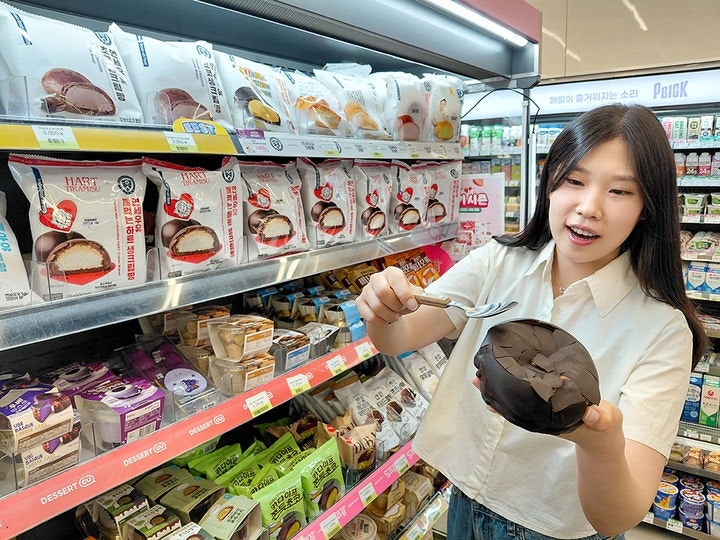
One recent social media hit is wakppu salt bread, which borrows directly from the wax-crushing toy. The bread is covered in a hardened chocolate coating that diners break with their hands or utensils before eating. The crack is part of the attraction.
Posts featuring the dessert have drawn millions of views on Instagram, while search interest in wakppu salt bread surged over the summer across major search portals, including Naver and Google.

Major food brands have experimented with similar ideas.
Tous les Jours introduced its Agjak cake in March, pairing a hard, fruit-shaped chocolate shell with soft mousse and fruit inside. CU’s crack-open heart cream bread similarly requires customers to break through chocolate before reaching the cream filling. The convenience store sold 1.1 million in the three months following their late-April launch.
In such desserts, taste is only part of the product. The snap of a chocolate coating, the resistance before it breaks and the contrast between crisp and soft become part of the experience consumers pay for.
For food companies, sensory appeal also offers a way to stand out in an increasingly crowded dessert market. As flavor alone becomes harder to differentiate, the crack of a coating, an unusual texture or the act of breaking something open can become a selling point in itself.
Lee Eun-hee, a professor of consumer science at Inha University, sees this as an expansion of what consumers expect from familiar products.
“With food, the primary satisfaction is that it tastes good,” Lee said. “Now consumers are looking for something beyond that — the texture, the sensation when they bite into it. What they seek is expanding from the primary satisfaction to a second or third layer.”
Why it feels so good
Consumer trend analyst Kim Young-chul points to the sense of control contained in a simple, repetitive action.
“When uncertainty grows, people tend to seek comfort in small, predictable actions they can control,” Kim said. “Repeatedly squeezing and kneading a squishy toy can be seen as an experience that satisfies that need.”
Kwak Keum-joo, professor emeritus of psychology at Seoul National University, said the appeal may be particularly strong among younger consumers.
“Young people have many more possibilities to consider,” Kwak said. “That can also mean more stress, more comparison and greater fatigue.”

That search for relief is unfolding in a marketplace already saturated with visual stimulation. As consumers grow accustomed to polished design and high-quality products, Kwak said, other sensory elements offer a new source of stimulation.
Sensory experiences can also briefly shift attention away from stress, she said, much like reaching for spicy food when upset.
Lee points to another factor: a lack of physical touch in increasingly contactless lives.
As more people live alone and more everyday interactions take place through screens, opportunities for direct physical and tactile contact may be diminishing, she said. Soft, responsive objects can offer one small outlet for that desire for physical sensation.
yeeun@heraldcorp.com


![[Weekender] Are men with type B blood really womanizers?](https://wimg.heraldcorp.com/content/default/2018/07/26/20180726000649_0.jpg?type=h&h=240)