Winning over moderate voters has become priority for parties, both struggle to do so without alienating core supporters
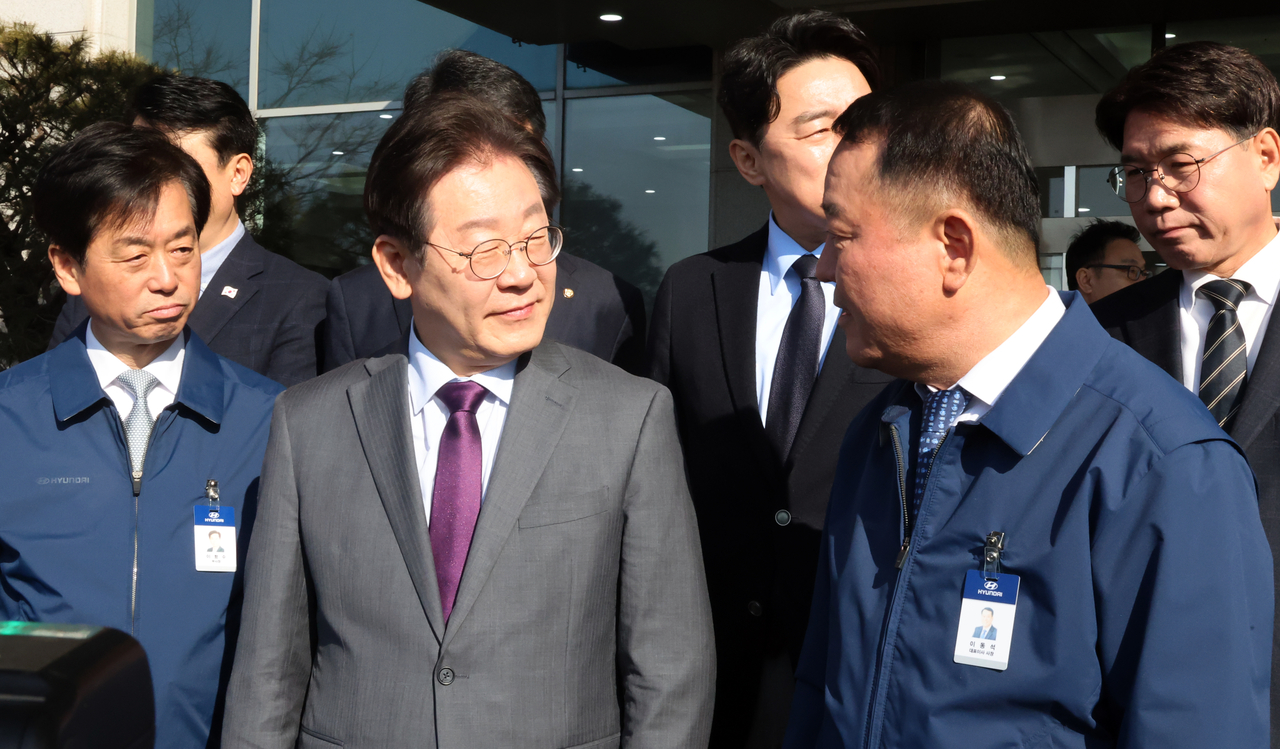
In an increasingly polarized political landscape, South Korea’s two major political parties currently share a common goal — wooing moderate voters.
Experts believe moderates account for around 40 percent of the roughly 44 million eligible voters in South Korea, making them a crucial demographic for any party with eyes on the presidency.
Observers say that the Constitutional Court is likely to deliver a verdict on whether to remove impeached President Yoon Suk Yeol from office or reinstate him by mid-March. If the court decides to uphold the parliament's impeachment decision, an early election will be held 60 days later.
With the possibility of a May election, both the left-leaning main opposition party and the ruling conservative party have been moving to appeal to the political centerground in the past month. But they have also been caught in a dilemma: Should they appeal to moderate voters even if it upsets their staunchest supporters?
Economy over pro-labor agendas
In recent weeks, Lee Jae-myung, the leader of the main opposition Democratic Party of Korea and its most likely candidate, has started to use new terms such as “centrist conservative” and “economy-focused” to describe his party. Such terms are traditionally associated with the policy positions of the ruling People Power Party, as the Democratic Party has generally leaned toward a more union-friendly agenda.
Lee’s apparent effort to rebrand the liberal main opposition party as more business-friendly and moderate triggered an immediate backlash from its long-time ally, the Korea Confederation of Trade Unions, the country’s largest umbrella union, which represents over a million workers.
Earlier this month, Lee signaled a rare willingness to consider passing a bill that would exempt semiconductor workers from South Korea’s 52-hour workweek limit — a move championed by the ruling People Power Party and the conservative government to bolster local chipmakers.
While the ruling party dismissed Lee’s stance as a “political gimmick,” the proposal, which marks a sharp departure from the liberal party’s traditionally pro-labor policies, drew fierce opposition from the KCTU.
On Feb. 10, a coalition of 72 organizations, including the KCTU, issued a joint statement denouncing the bill, arguing that challenges in the semiconductor industry stem from “incompetent management” rather than “employees working too few hours.”
Facing strong opposition from the KCTU, Democratic Party members ultimately blocked the bill, swiftly reverting to its pro-labor stance less than two weeks after suggesting it might back the proposal.
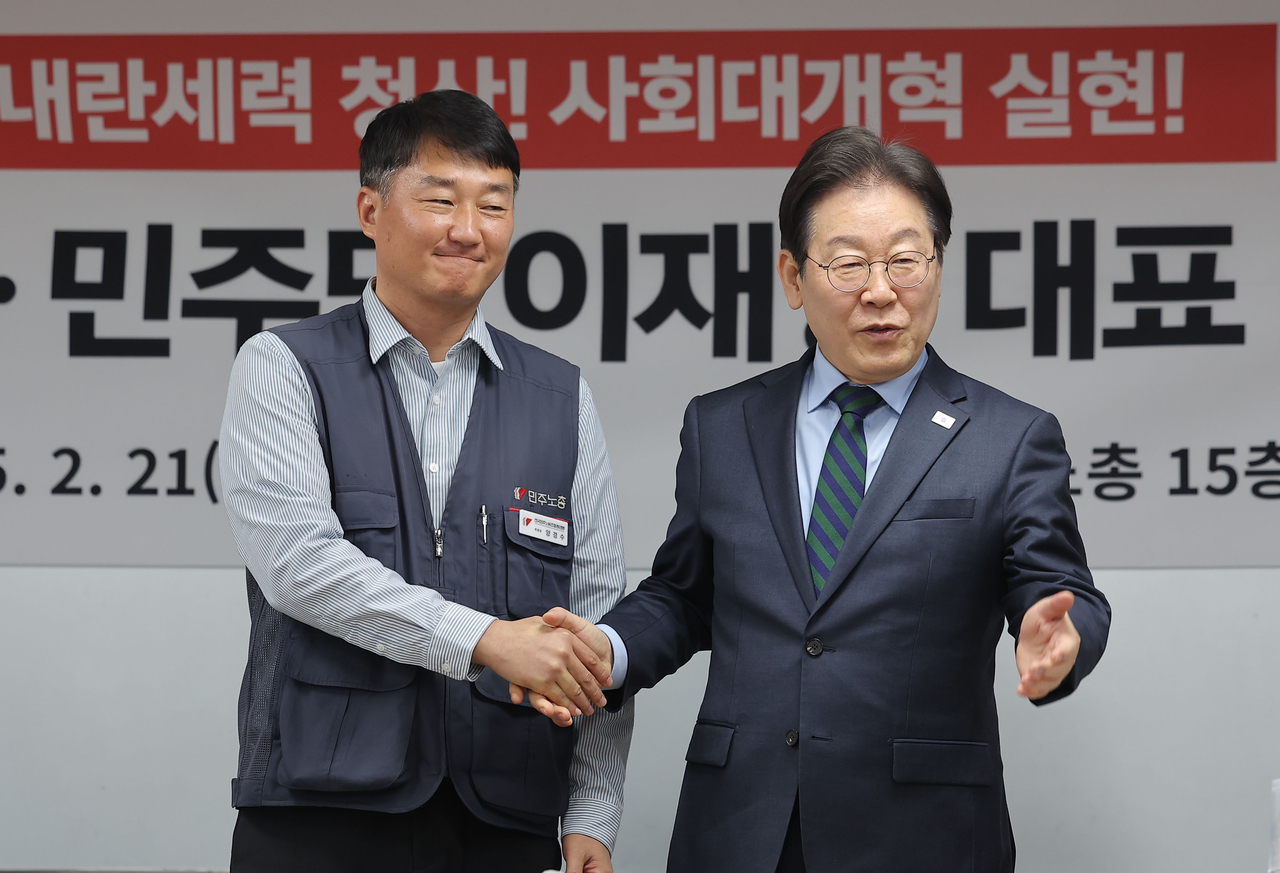
In a further effort to ease tensions, Lee soon visited the headquarters of both the KCTU and the Federation of Korean Trade Unions, South Korea’s other major umbrella labor group, to reassure union leaders that the main opposition party, which holds a parliamentary majority, would not support the bill.
“Many people have recently expressed concerns about the 52-hour workweek issue, but both the Democratic Party and I have a clear stance — our society must move toward shorter working hours and a four-day workweek,” Lee told union representatives.
Lee’s frequent shifts on pro-business policies suggest a strong awareness of the labor unions' significant voting power.
The KCTU has been a consistent supporter of the Democratic Party. Although 2022 KCTU data showed that 42.6 percent of the 3,979 members in leadership roles within the group voted for Lee during that year's presidential election, only 7.3 percent voted for Yoon.
The Democratic Party and Lee will likely continue to face dilemmas as they attempt to court moderate voters while risking friction with long-time allies like labor unions.
Pointing to Lee’s latest remarks and actions, the People Power Party on Saturday questioned the sincerity of Lee’s labeling of his party as “centrist conservative.”
“A party with a centrist conservative ideology does not (attempt to stop the market from growing),” the party said in a commentary released via senior spokesperson Rep. Kim Dae-sik.
“The Democratic Party has recently called itself centrist conservative and pledged to prioritize the economy and livelihood. … But in reality, it continues to lean far-left,” he added.
Instead of pursuing politics to improve the livelihoods of the people, it continues to take steps in favor of its supporters, Kim said.
Leaving or staying with Yoon
Following Yoon’s impeachment by the National Assembly and his detention, several ruling party lawmakers have been criticized for becoming openly associated with right-wing activists and supporters of Yoon.
On top of this, multiple ruling party lawmakers have made headlines in recent months for protesting in front of the Constitutional Court and visiting Yoon in prison, then relaying the impeached president’s messages to the public to the press afterward.
The recent moves by the ruling party lawmakers, which experts interpreted as an attempt to solidify the party’s and Yoon’s supporters ahead of a potential election, may backfire on the conservative party, according to another political expert.
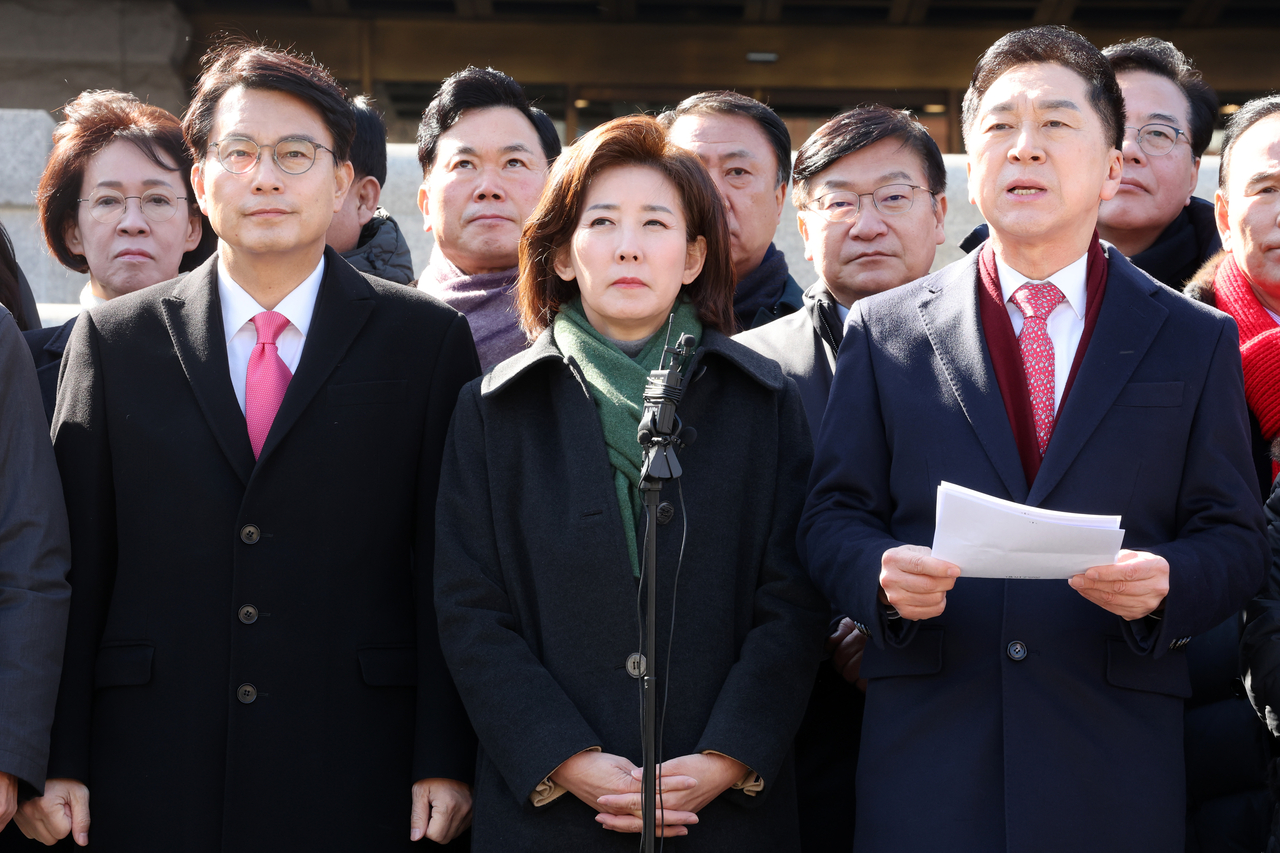
“Swing voters or moderate voters have begun to support the Democratic Party, seeing lawmakers protest in front of the Constitutional Court,” said Shin Yul, a political science professor at Myongji University.
“There are even conservative voters who support Yoon’s impeachment, due to the political uncertainty that is projected to persist even if the Constitutional Court reinstates Yoon to power,” he added.
Yoo Seung-min, a former lawmaker with the ruling party also raised concerns over the party keeping a close connection with President Yoon would disappoint the moderate voters.
"We have to contest the presidential election as a party that has officially opposed impeachment, insisted it wasn't an insurrection, and argued that the emergency martial law was neither unconstitutional nor illegal. How can we win over the moderates this way?" he said while speaking at a MBC radio show earlier this month.
According to a Gallup Korea poll released Friday, the approval rating for the ruling party fell 5 percentage points on-week to 34 percent, while the corresponding figure for the Democratic Party inched up 2 percentage points to 40 percent. The survey involved 1,002 eligible voters aged over 18 and was conducted from Tuesday to Thursday.
The support rate for the People Power Party by the respondents who defined themselves as moderate voters fell by a whopping 10 percentage points to 22 percent in the same period. The corresponding figure for the Democratic Party gained 5 percentage points to 42 percent. Some 69 percent of the group also claimed that they support Yoon’s impeachment. Of the total 1,002 respondents, those who defined themselves as moderate voters came to 308.
“In a two-party system, the moderate voters always play a crucial role,” Shin noted. “If the ruling party fails to appeal to moderate voters, it’s going to be difficult for them to win the potential snap election.”
Another dilemma for the ruling party is balancing its stance on President Yoon’s impeachment — leaving his fate to the Constitutional Court without taking a clear position — while also searching for a viable presidential candidate for the next election.
Unlike the liberal bloc, which has an obvious contender in its party leader, the conservative bloc lacks a clear candidate. A recent survey shows Lee’s popularity far surpassing other potential contenders, making him likely to run as the Democratic Party’s candidate. With Lee’s solid leadership, the Democratic Party is expected to launch its presidential campaign as soon as the Constitutional Court rules, while the People Power Party will need time to pick a challenger, likely facing internal clashes in the process.
The ruling party does have a list of potential candidates, Seoul Mayor Oh Se-hoon, Daegu Mayor Hong Joon-pyo and Minister of Employment and Labor Kim Moon-soo. But observers say the process will not be smooth, as the ruling party struggles to balance loyalty to Yoon amid an internal divide between his supporters and those distancing themselves from the impeached president.
mkjung@heraldcorp.com