
Seoul sees unusually swift response as bid to protect Pyongyang's international standing, keep cyber allegations from derailing potential talks with Washington
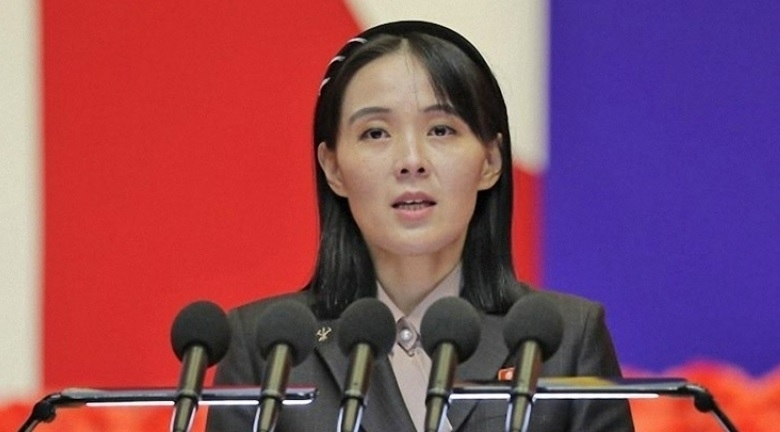
Kim Yo-jong on Tuesday rejected US allegations linking Pyongyang to a $6.3 billion cryptocurrency theft, just three days after the US findings were announced.
Experts say the unusually swift and high-profile nature of the statement from Kim — a department director of the Workers' Party of Korea's Central Committee and North Korean leader Kim Jong-un's sister — may reflect Pyongyang's concerns for its international reputation and an attempt to prevent the issue from complicating potential diplomatic engagement with Washington.
Kim denounced the FBI's findings as a "grave political provocation" in a statement carried by the Korean Central News Agency on Tuesday, a few days after US authorities attributed the massive cryptocurrency theft from Binance, the world's largest cryptocurrency exchange, to North Korean hackers.
While the statement contained familiar accusations of US hostility, observers noted that its unusually restrained conclusion, warning that Pyongyang had matters to "reconsider" without explicitly threatening retaliation, could signal an effort to preserve room for diplomatic maneuvering.
South Korea's Unification Ministry said Tuesday that Kim's personal intervention in a cybersecurity dispute was unprecedented and suggested that Pyongyang was increasingly sensitive to how it is perceived internationally.
"The fact that Kim Yo-jong personally responded to international criticism of North Korea's cyber activities is unprecedented," a ministry official, requesting anonymity, told reporters.
The official said the North appeared to have taken the allegations seriously enough to elevate its response, rather than leaving the matter to lower-level officials or state media commentary.
"North Korea has recently sought to portray itself as a normal state and expand its diplomatic outreach, and it appears to be increasingly conscious of its international standing," the official said.
The South Korean government also reportedly believes the statement was intended to prevent North Korea's illicit cyber activities from becoming a new issue in potential negotiations with the United States, while pressing Washington to abandon what Pyongyang describes as its hostile policy toward the regime.
Hong Min, a senior research fellow at the Korea Institute for National Unification, offered a similar assessment, arguing that "Kim's remarks should be interpreted less as a conventional response to a cybercrime investigation and more as a carefully calibrated diplomatic message to Washington."
According to Hong, Pyongyang appears determined to prevent the cryptocurrency allegations from becoming either a precondition for renewed engagement or a source of additional pressure that could undermine prospects for dialogue.
The statement, he assessed, "effectively warned Washington against using the cyber allegations as diplomatic leverage while stopping short of closing the door to future contacts."
The controversy stems from an Oct. 29 cryptocurrency theft at Binance, in which approximately $6.3 billion in digital assets was reportedly transferred within about 20 minutes, making it potentially the largest cryptocurrency heist on record.
Blockchain intelligence firm TRM Labs attributed the attack to TraderTraitor, a North Korean-linked hacking group, with a high degree of confidence. The FBI subsequently released an assessment on Oct. 31 linking the theft to North Korea and published a list of cryptocurrency addresses associated with the incident.
In her statement, Kim categorically rejected the allegations, accusing Washington of attempting to portray North Korea as a state engaged in cybercrime.
"The FBI is trying to brand the DPRK as a 'cyber criminal state', claiming that it obtained information that a hacking organization 'supported' by the DPRK was involved in the incident," Kim said, referring to the North by the acronym of its official name, the Democratic People's Republic of Korea.
"But the US assertion is an absurd rhetoric and nothing new."
She accused Washington of deliberately damaging North Korea's international image and undermining its sovereignty through what she described as politically motivated accusations.
"It is a grave political provocation against the DPRK that the US misleads the international public opinion as if all the cybercrimes in different parts of the world are our deeds," she said.
Kim also characterized the allegations as an attempt to undermine the country's dignity and national prestige, insisting that Pyongyang opposed malicious activities in cyberspace and rejected efforts to use cybersecurity issues as instruments of political interference.
Turning the accusations back on Washington, she pointed to the Trump administration's policy of establishing a strategic cryptocurrency reserve using confiscated digital assets.
"The international community needs to recall once again the fact that as soon as the present US administration took office last year, it announced that it would confiscate illegally stolen cryptocurrency assets and use them as a state's strategic reserve," she said.
"If it carefully examines who will get the large amount of the so-called stolen cryptocurrency when the latter is retrieved, it may get a clue about who is behind the hacking incident."
The remarks appeared intended to cast doubt on Washington's motives by suggesting that the United States itself stood to benefit from recovering the stolen cryptocurrency.
Hong, however, questioned the credibility of Pyongyang's denial, citing similarities between the Binance incident and the $1.5 billion Bybit cryptocurrency theft in February 2025, including hacking methods, the dispersal of stolen assets and the use of Chinese-linked money-laundering networks.
He also highlighted the unusually swift response from Kim, who had remained silent over the Bybit incident but issued a statement just two days after the FBI's latest announcement.
Hong suggested that Pyongyang was seeking to prevent the allegations from fueling additional US sanctions or undermining prospects for renewed dialogue with Washington, particularly amid speculation over potential diplomatic engagement following Kim Jong-un's recent visit to China.
More significantly, Hong highlighted the unusually restrained language in Kim's concluding remarks.
"We have issues to reconsider in diverse aspects as regards the very unpleasant US hostile attitude," Kim said in her latest statement.
Rather than explicitly threatening retaliation, Kim appeared to leave room for diplomatic maneuvering, Hong assessed, suggesting that Pyongyang may still be weighing the possibility of engagement with Washington.
At the same time, the statement could provide North Korea with grounds to blame Washington should potential talks fail to materialize, effectively keeping the door open to dialogue while preparing a justification for withdrawing from it.
Hong said Washington's response over the next one to two weeks, particularly any additional sanctions or measures by the US Treasury and State departments, could offer important clues about the prospects for renewed US-North Korea talks.
Meanwhile, Seoul has yet to decide whether to join any additional international sanctions over the Binance incident.
"We will first assess the situation and respond in consultation with the relevant ministries," a Unification Ministry official said Tuesday, adding that there was nothing further to comment on at this stage.
mkjung@heraldcorp.com