Trump may seek a North Korea breakthrough to cement his legacy, but Congress could make it harder to deliver what Pyongyang wants
The heavy Republican defeat in the midterm elections could prompt opposing reactions from US President Donald Trump and North Korea, fanning eagerness from the former and reluctance in the latter to seek a breakthrough in top-level diplomacy, experts say.
With Democrats having wrested control of both chambers of the US Congress in Tuesday's midterm elections — securing at least 54 Senate seats and surpassing the 218-seat threshold needed for a House majority — Trump faces a difficult final two years in office. This could prompt him to turn to foreign policy, where he enjoys greater freedom to act without congressional approval.
The prospect of renewed US-North Korea diplomacy is drawing particular attention ahead of Trump's planned visit to China for the Asia-Pacific Economic Cooperation summit later in November, raising speculation that he could extend an overture to North Korean leader Kim Jong-un.
Yet the election results have created a dilemma for both leaders: Trump may have more political incentive than ever to pursue a summit, while Kim may have less confidence that any agreement reached with Washington would translate into lasting concessions.
According to Park Won-gon, a professor of North Korean studies at Ewha Womans University, Republicans losing control of both the House and the Senate is likely to push Trump to pursue foreign policy even more aggressively.
"He might make greater efforts to meet Kim Jong-un, for instance, because he needs to leave behind a legacy. He needs something that will define his presidency."
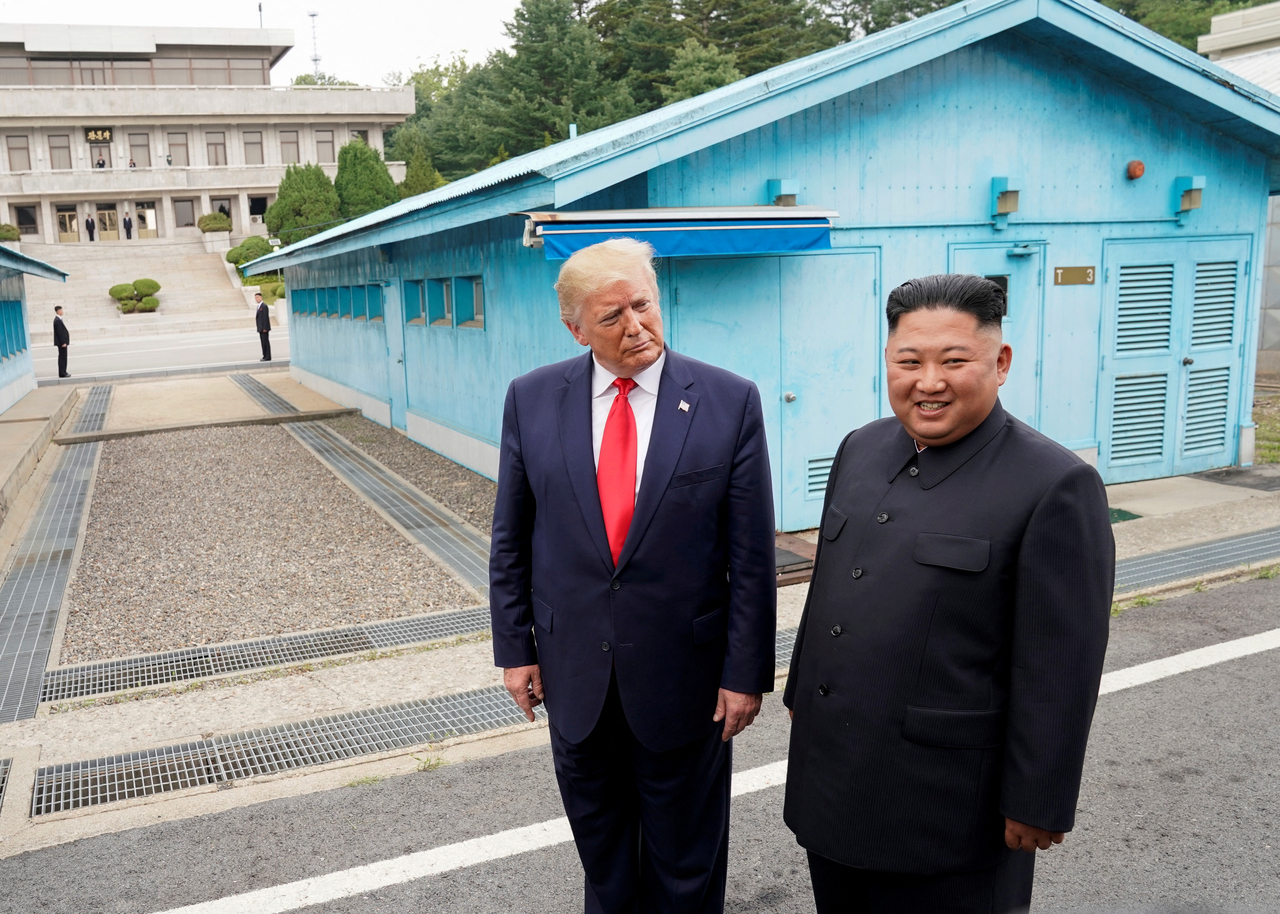
Trump has repeatedly signaled his willingness to revive personal diplomacy with Kim. Trump and the North Korean leader met three times during his first term, including at their historic 2018 Singapore summit and their ill-fated 2019 meeting in Hanoi, Vietnam.
Despite the unprecedented encounters, a lasting agreement on North Korea's nuclear program or the sanctions imposed against Pyongyang did not materialize.
Trump has nevertheless continued to emphasize his personal relationship with Kim.
"The fact that I get along with him, that's a good thing. Not a bad thing," Trump told reporters at the White House on Aug. 19, adding that he expected to meet Kim before the end of the year.
"Yeah, I will be," he replied when asked about the prospect of another meeting.
During an Oct. 3 campaign rally in Ohio, Trump again emphasized his personal rapport with the North Korean leader.
"I get along great with Kim Jong-un," Trump said. "When people have 112 nuclear missiles, it's nice to get along."
US Secretary of State Marco Rubio on Saturday also kept the possibility of another summit open, saying Trump would be willing to meet Kim again if the encounter could produce meaningful results.
Yang Moo-jin, a distinguished professor at the University of North Korean Studies, predicted that Trump would continue pursuing top-down diplomacy with North Korea despite the opposition's congressional gains.
"Dialogue does not require congressional approval, and Trump has ample incentives to pursue it, including distinguishing himself from his predecessors and building a lasting legacy," Yang said.
However, Yang cautioned that meaningful progress could prove difficult under a divided government, given congressional constraints on sanctions relief and the Democratic Party's emphasis on denuclearization.
The real challenge, therefore, may not be arranging another meeting between Trump and Kim, but translating any agreement into tangible concessions that Pyongyang would be willing to accept.
A summit Trump can arrange, but a deal he may struggle to deliver
While Trump could independently initiate talks with Kim, delivering the concessions North Korea seeks would be considerably more complicated under an opposition-controlled Congress.
Pyongyang has consistently demanded that Washington abandon what it calls its "hostile policy" toward the regime, a position encompassing economic sanctions, military pressure and US refusal to recognize North Korea's nuclear status.
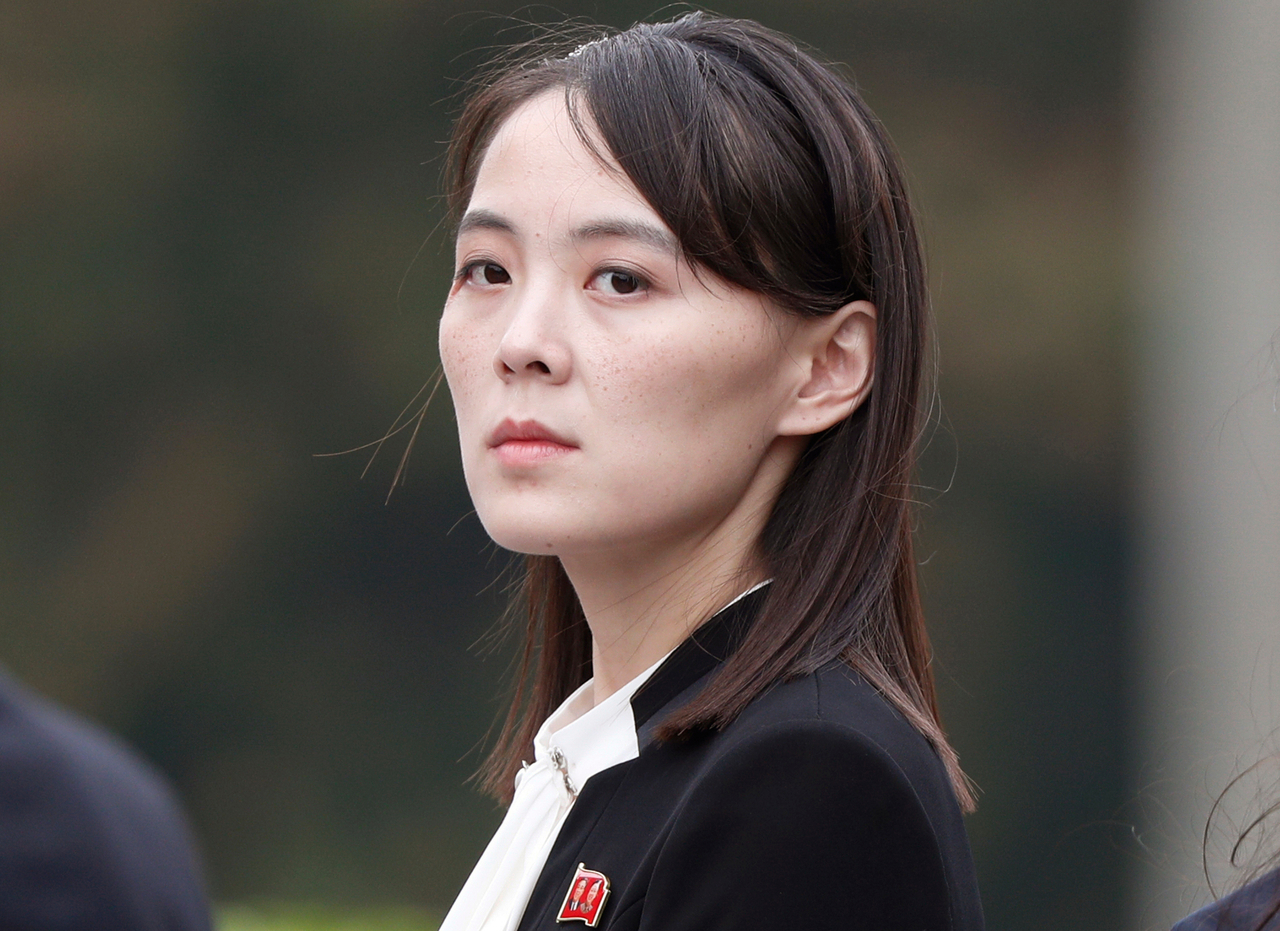
In a statement issued Wednesday, Kim Yo-jong, the North Korean leader's sister and a senior Workers' Party official, reiterated that Washington must abandon "hostile policies" before meaningful dialogue can take place.
While insisting that Pyongyang had no reason to engage with Washington under its current approach, Kim Yo-jong stopped short of ruling out dialogue altogether.
"The choice for peace includes dialogue of course, but this is not surely equated with national interests for us," she said.
The remarks suggested Pyongyang was not categorically rejecting negotiations but expected Washington to offer tangible incentives rather than another high-profile meeting without substantive results.
Among those incentives, sanctions relief remains one of the most significant.
North Korea has strengthened its economic and military ties with China and Russia in recent years, reducing the effectiveness of international efforts to isolate the regime.
But US unilateral sanctions continue to restrict North Korea's access to international financial networks and commercial channels, including through secondary sanctions targeting foreign entities that conduct prohibited transactions with Pyongyang.
Although the US president has the authority to suspend certain sanctions, statutory requirements under the North Korea Sanctions and Policy Enhancement Act limit the administration's ability to offer sweeping relief without meeting specified conditions and notifying Congress.
A Democratic-controlled Congress could also use hearings, legislation and budgetary oversight to scrutinize any concessions offered to Pyongyang, particularly if an agreement falls short of verifiable denuclearization.
Kim Jae-chun, a professor at Sogang University's Graduate School of International Studies, warned that senior Republican lawmakers could resist sweeping sanctions, especially those seeking to hold Trump accountable for the party's electoral losses.
The political obstacles could complicate any attempt to revive the leader-driven diplomacy that characterized Trump's first term.
For Pyongyang, the risk is familiar: another summit that generates international attention but ends without the economic or security benefits it seeks.
Is a weakened Trump an opportunity or a liability for Kim?
Analysts are divided over whether North Korea will view Trump's weakened political position as an opportunity to extract greater concessions or a reason to avoid negotiations altogether.
Some experts have suggested Kim could still view Trump's unconventional leadership style as a valuable diplomatic opening.
Unlike previous administrations that favored more institutionalized negotiations, Trump has demonstrated a willingness to engage in direct, personalized diplomacy and pursue unconventional agreements.
Pyongyang could capitalize on that approach to bolster its international legitimacy and lay the groundwork for improved relations with Washington.
One possible starting point would be a limited agreement under which North Korea suspends certain nuclear activities in exchange for partial sanctions relief and initial steps toward normalizing diplomatic relations. Such an arrangement could allow Trump to claim a diplomatic achievement without securing an immediate, comprehensive denuclearization agreement.
Lim Eul-chul, a professor at Kyungnam University's Institute for Far Eastern Studies, however, offered a more cautious assessment.
He argued that a Democratic-controlled Congress could hinder Trump's ability to deliver on any agreement, particularly given Democratic lawmakers' emphasis on denuclearization, verification and human rights.
While Kim may favor Trump's personalized negotiating style, Pyongyang could remain wary of agreements vulnerable to congressional opposition or reversal by a future US administration.
The collapse of the 2019 Hanoi summit over disagreements on sanctions relief and denuclearization serves as a reminder of the risks associated with high-stakes, leader-level diplomacy.
Lim suggested that North Korea could instead deepen its strategic cooperation with Beijing and Moscow while continuing to strengthen its nuclear and conventional military capabilities, rather than rush into negotiations with a politically weakened US president.
Yang likewise identified North Korea's assessment of Trump's remaining term, the divided government in Washington and the possibility of a lame-duck presidency as decisive factors.
Even so, Pyongyang has not completely closed the door.
Kim Yo-jong's recent statements have combined sharp criticism of Washington with carefully worded references to the possibility of dialogue, allowing North Korea to maintain pressure while preserving diplomatic flexibility.
In a statement carried by KCNA on Tuesday, Kim Yo-jong rejected US allegations that North Korea was behind a massive cryptocurrency theft from Binance, warning that Pyongyang could reconsider aspects of its approach toward Washington in response to what she described as continued US hostility.
In a subsequent statement issued Wednesday, she explicitly acknowledged dialogue as one possible means of safeguarding peace, while stressing that engagement would not necessarily serve North Korea's national interests.
The messages suggest Pyongyang wants Washington to demonstrate a meaningful policy shift before Kim Jong-un commits to renewed negotiations.
Ultimately, analysts say, a direct statement from Kim himself could provide the clearest indication of whether North Korea intends to pursue another summit with Trump.
Seoul's 'pacemaker' role faces a new test
Renewed leader-level diplomacy also presents both an opportunity and a challenge for South Korea, with President Lee Jae Myung seeking to position Seoul as a "pacemaker" for US-North Korea engagement — a term he has used to describe South Korea's role in facilitating dialogue between Washington and Pyongyang.
A surprise meeting between Trump and Kim could help ease tensions on the Korean Peninsula. It could also revive concerns that Seoul might be sidelined if Washington and Pyongyang negotiate directly without sufficient consultation.
Yang emphasized that South Korea should strengthen its role as a "peace pacemaker" by coordinating closely with the Trump administration ahead of any renewed diplomatic initiative.
He also called for greater diplomatic outreach to the US House of Representatives, arguing that congressional engagement would become increasingly important in navigating the political constraints on Washington's North Korea policy.
Beyond the immediate question of a summit, Seoul will need to ensure that any agreement involving North Korea's nuclear capabilities, sanctions or security guarantees reflects South Korea's national security interests.
For Trump, another encounter with Kim could offer the kind of dramatic diplomatic moment that has long defined his approach to foreign affairs.
For Kim, however, the calculation may be less about whether Trump wants a meeting than whether the politically weakened US president can deliver anything worth negotiating for.
mkjung@heraldcorp.com