At Seoul Arts Future Talks, artists and scholars explored what it means to think, learn and create in the age of AI
A decade ago in Seoul, Go champion Lee Se-dol lost four of five games to AlphaGo. He later retired, saying that even if he became the world’s top player, there would still be an opponent he could never beat.
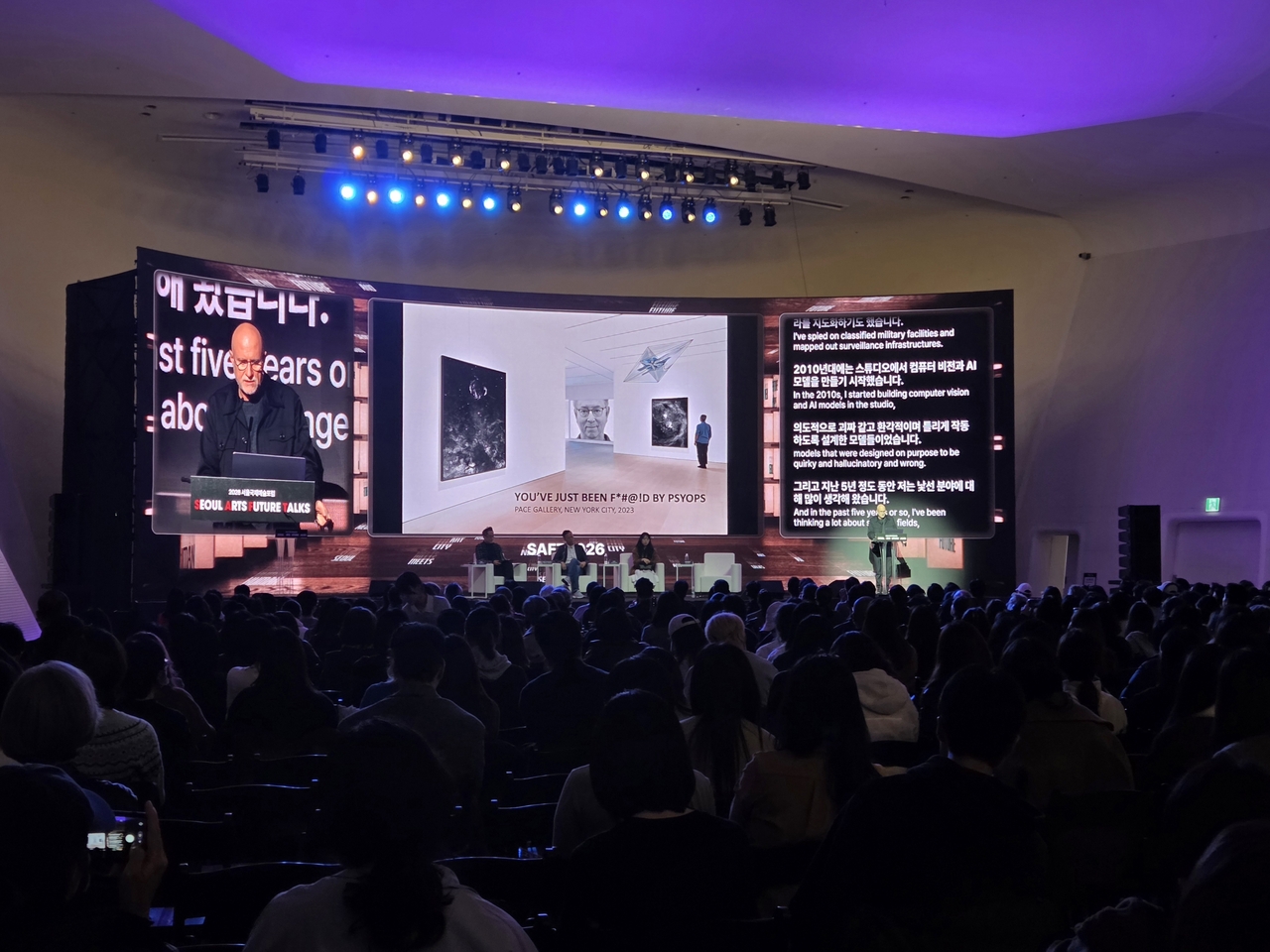
For artist Trevor Paglen, the rise of AI raises a question that extends beyond Go. When artificial intelligence can solve problems that people spend years trying to crack, what happens to the joy of figuring things out for ourselves?
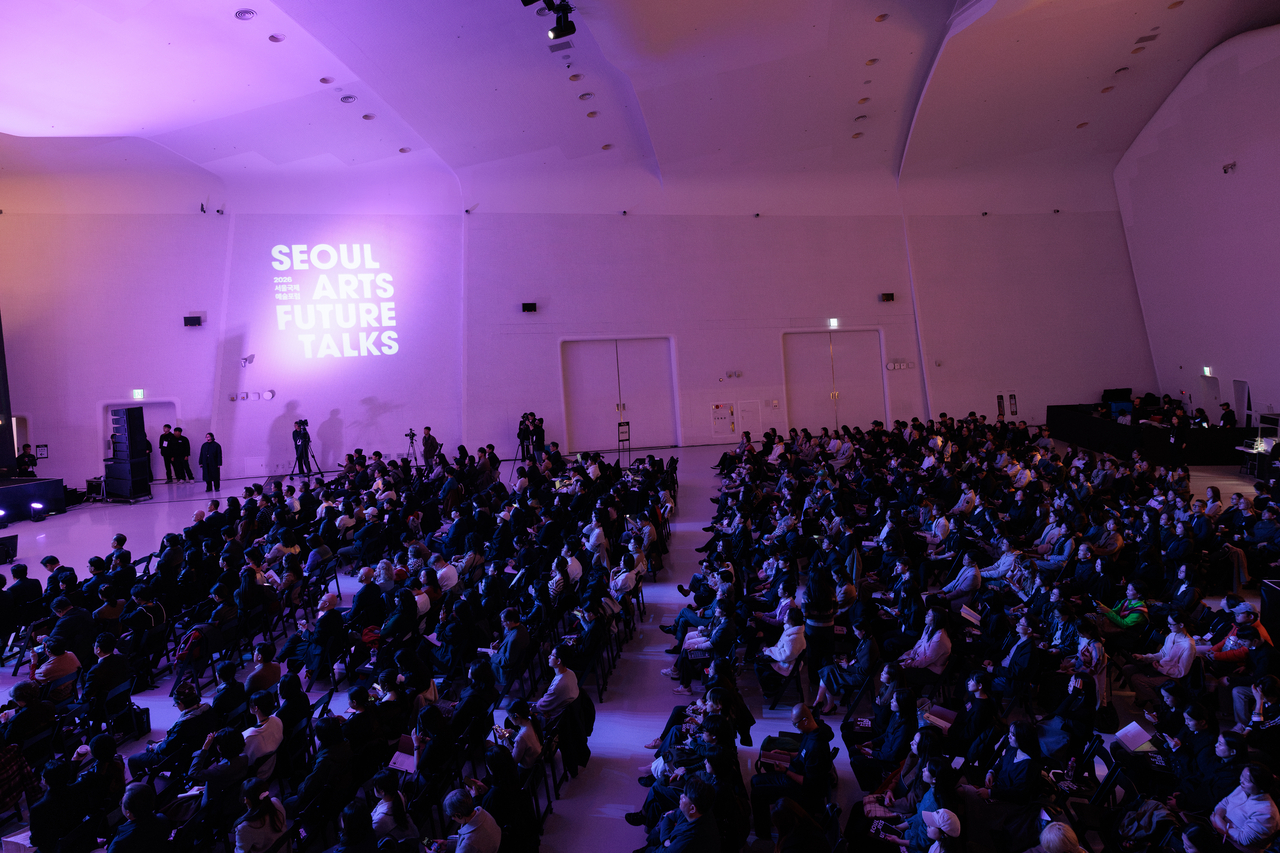
He was speaking at the second edition of Seoul Arts Future Talks, held Tuesday at Dongdaemun Design Plaza in Seoul, where speakers drew on art, philosophy and science to consider what AI’s rapid advances mean for humanity.
The forum, held under the theme “Unfamiliar Intelligence and New Intellect: Designing the Human Age Anew,” was part of the Seoul Autumn Festa, a networking platform and performing arts showcase organized by the Seoul Foundation for Arts and Culture and running from Sept. 18 to Nov. 29.
Paglen pointed to Korea’s pioneering video artist Nam June Paik, who placed a magnet on a television in 1965. Anyone who moved the magnet could distort the picture, giving viewers control over an image they would ordinarily only watch.
“I think the artists have a great advantage here, because changing the game is the game that we play,” he said, adding that AI had opened up a chance to rethink what art could be and how audiences could experience it.
The session, which also featured Yonsei University philosopher Nikolaj J. L. L. Pedersen and writer Cheon Seon-ran, looked at how AI is changing the way art is made and understood.
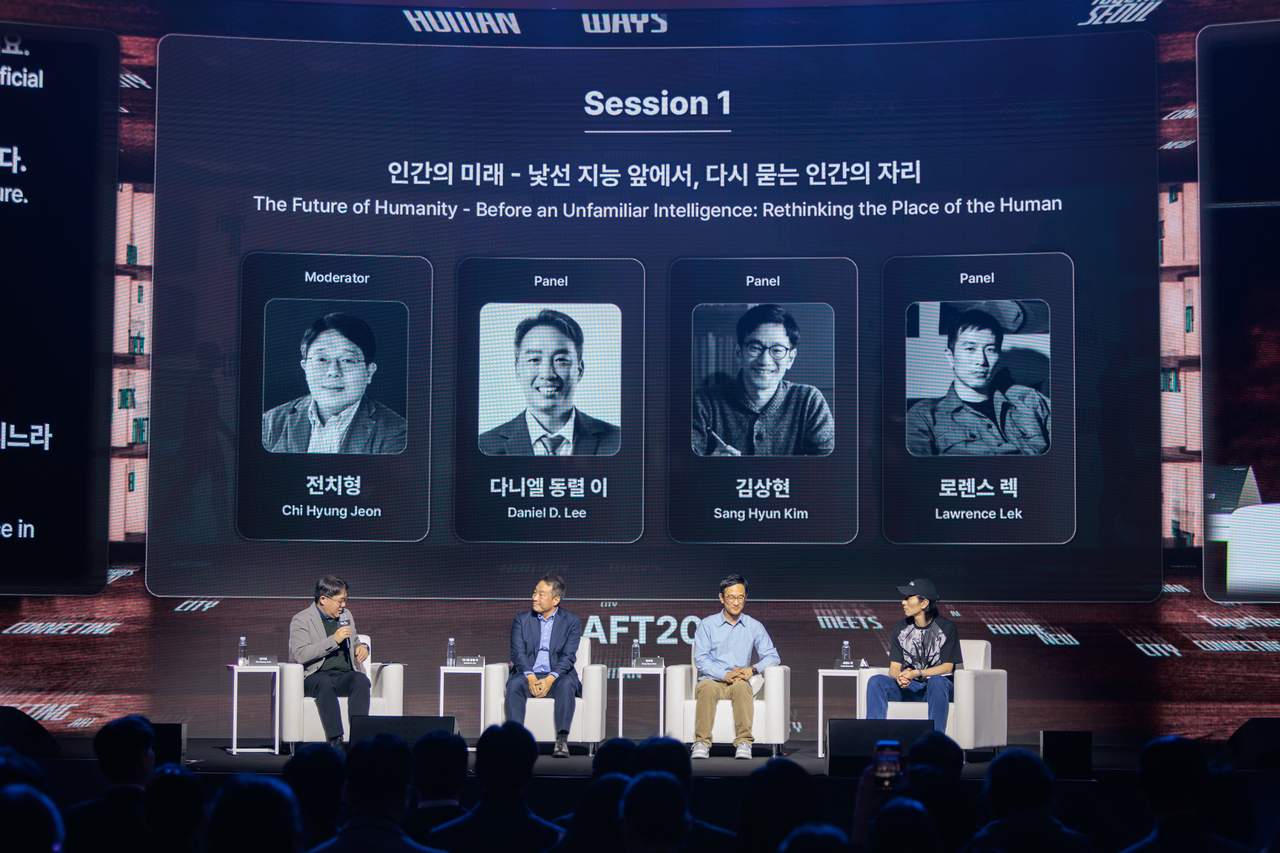
Kim Sang-hyun, a mathematics professor at the Korea Institute for Advanced Study, made a similar observation in the opening session, which sought to explore what it means to think for oneself as AI blurs the boundaries between human and machine intelligence.
He said that when AlphaGo beat Lee Se-dol, most mathematicians were impressed but saw little connection to their own work.
Now, he said, AI is producing mathematical results faster than researchers can make sense of them. That brought Kim back to the question of why mathematicians do research in the first place. He said the value of the work lies in gaining a clearer understanding of the world.
“What we wanted was to deepen our understanding so that we could make better sense of the world,” he said. “What we needed to hold on to was the desire to know more about the world.”
Kim appeared on a panel alongside Cornell University engineering professor Daniel D. Lee and artist and filmmaker Lawrence Lek.
In the final session, theater director Lukasz Twarkowski, Festival City Adelaide chief executive Glyn Roberts and Eva Soria Puig of the Barcelona Institute of Culture examined how the arts can bring people together in cities.
With South Korea’s national college entrance exam approaching, Julian Jinjoon Lee, a media artist and professor at KAIST, said concerns about AI-assisted cheating raised a broader question about how institutions assess human intelligence.
“This calls into question the very systems we’ve used to test our intelligence,” said Lee, the forum’s lead moderator.
“We need to pay more attention to human abilities that AI can’t account for. Perhaps that has something to do with our ability to appreciate and create art.”
yunapark@heraldcorp.com