Lee calls for more equal, mutually beneficial economic ties based on FTA deal
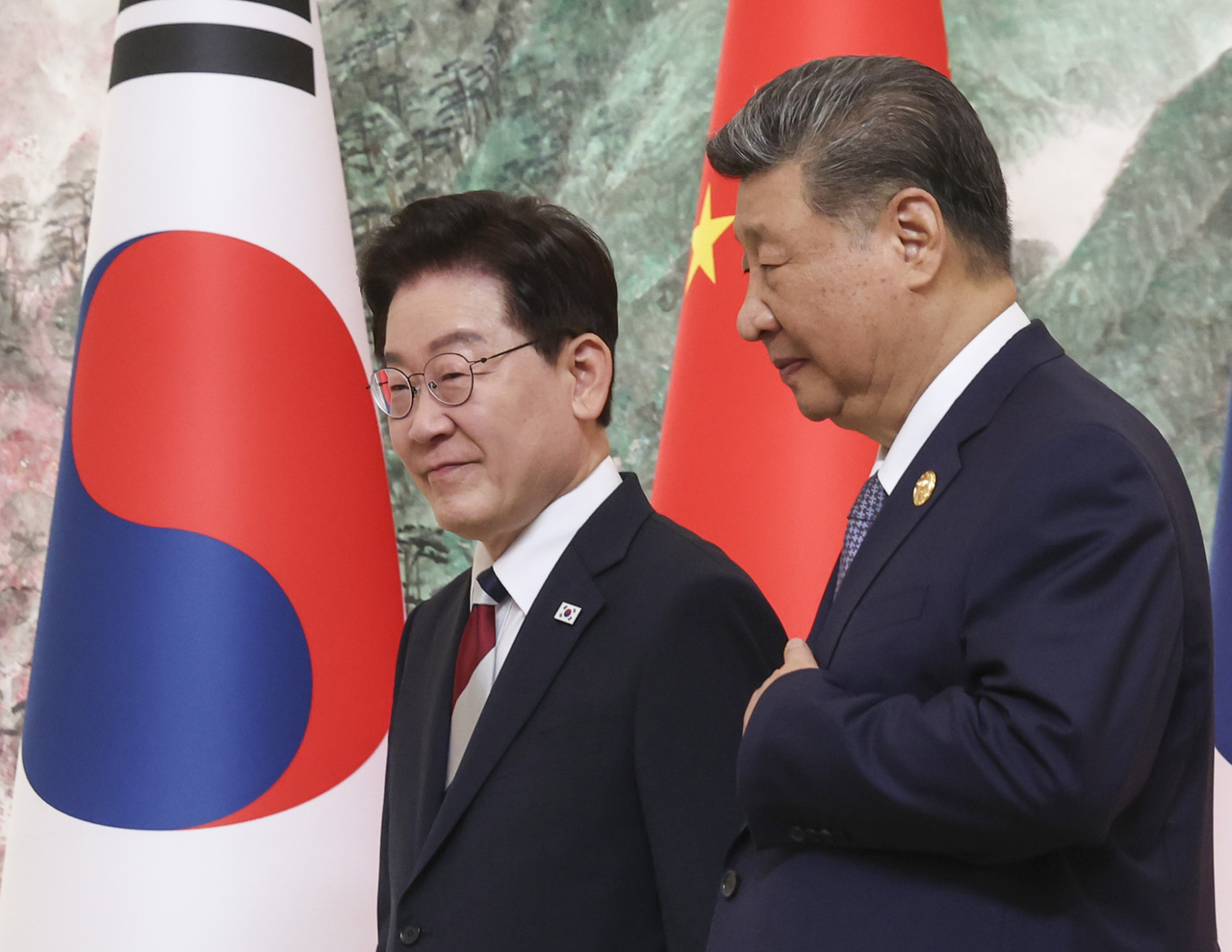
SHENZHEN, China — Peace and stability on the Korean Peninsula are essential for developing the cooperative partnership between Seoul and Beijing, President Lee Jae Myung said Wednesday.
Lee met Chinese President Xi Jinping on the sidelines of the Asia-Pacific Economic Cooperation summit in Shenzhen, notably a day before Xi is set to host an unprecedented trilateral summit with US President Donald Trump and Russian President Vladimir Putin.
“Above all, peace and stability on the Korean Peninsula must underpin the mature development of the strategic cooperative partnership between Korea and China,” Mr. Lee said during a meeting with Xi.
“Peace and stability on the Korean Peninsula are in the common interests of both countries. I hope we can work together to usher in an era of peaceful coexistence on the Korean Peninsula.”
Lee’s remarks came amid renewed speculation about a possible diplomatic opening with North Korea, as Trump has repeatedly expressed interest in meeting North Korean leader Kim Jong-un during his visit to China.
That possibility gained further attention Wednesday when US Secretary of State Marco Rubio said Trump was “serious” about pursuing dialogue with Kim, although no meeting had been scheduled.
The prospect of renewed US-North Korea engagement has added significance to Lee’s talks with Xi, placing Seoul’s push for peace and stability on the Korean Peninsula against the backdrop of potential diplomacy among the region’s major powers.
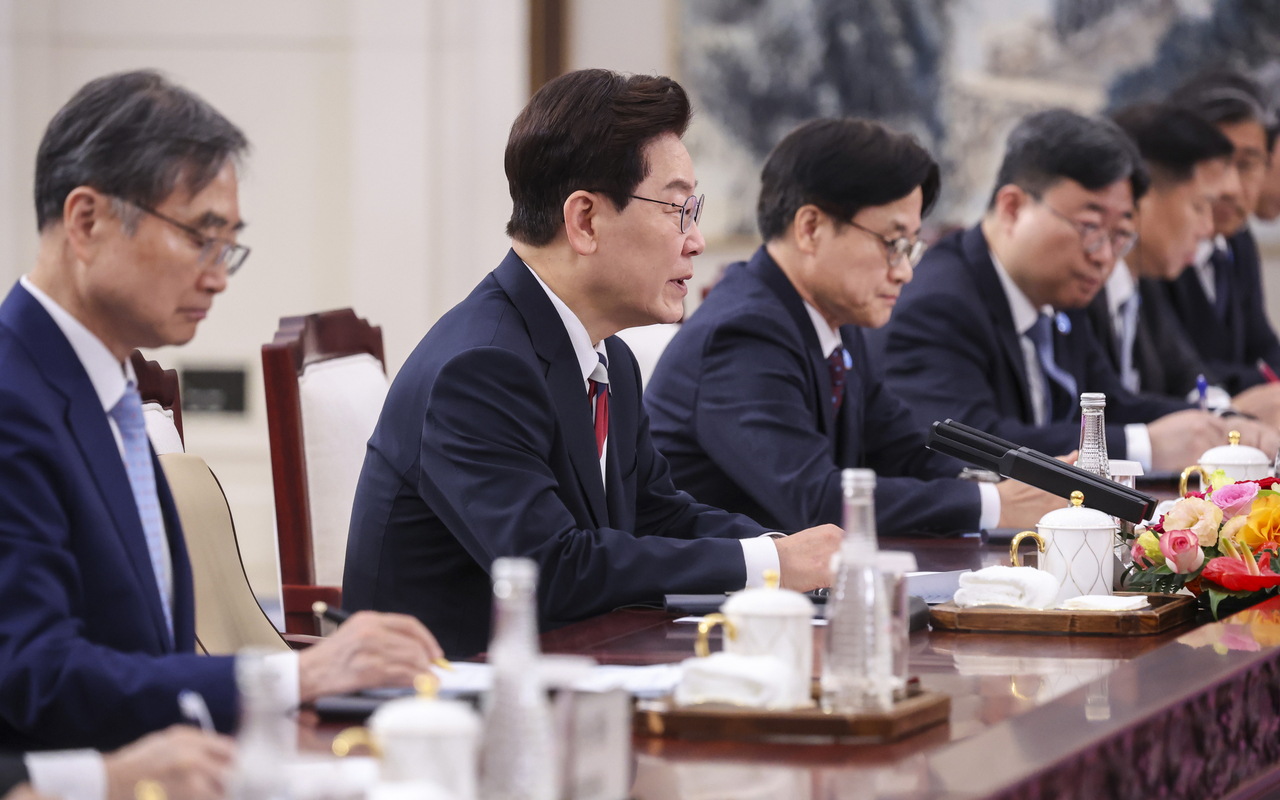
Beyond security issues, Lee expressed hope that the recent improvement in bilateral ties would pave the way for deeper cooperation.
“I hope that, by building on this momentum, Korea-China relations will move beyond a full restoration of ties and develop into a more mature strategic cooperative partnership,” he said.
The two leaders also discussed economic cooperation, including efforts to conclude negotiations on services and investment under their bilateral free trade agreement.
“I hope that, building on the conclusion of negotiations on services and investment under the Korea-China free trade agreement, our two countries will further develop an economic relationship based on equality and mutual benefit,” Lee said, without further details.
“I hope we can work together to promote people-to-people and cultural exchanges, and continue initiatives, such as the introduction of pandas, that help open the hearts of people in both countries,” he said.
Lee did not elaborate on the negotiations in his opening remarks at the summit. But The Korea Herald learned from government sources that Seoul and Beijing had reached an agreement in principle to conclude negotiations on services and investment under their FTA.
The negotiations are intended to expand the scope of the FTA, which took effect in 2015, beyond its original emphasis on trade in goods to include broader market access for services and investment.
A successful agreement stands to benefit South Korean businesses seeking greater access to China’s market, including in tourism, gaming, entertainment and other service industries. It could also provide an opening for easing longstanding Chinese restrictions on South Korean cultural products, widely known in South Korea as the "Hallyu ban," or restrictions on the Korean Wave.
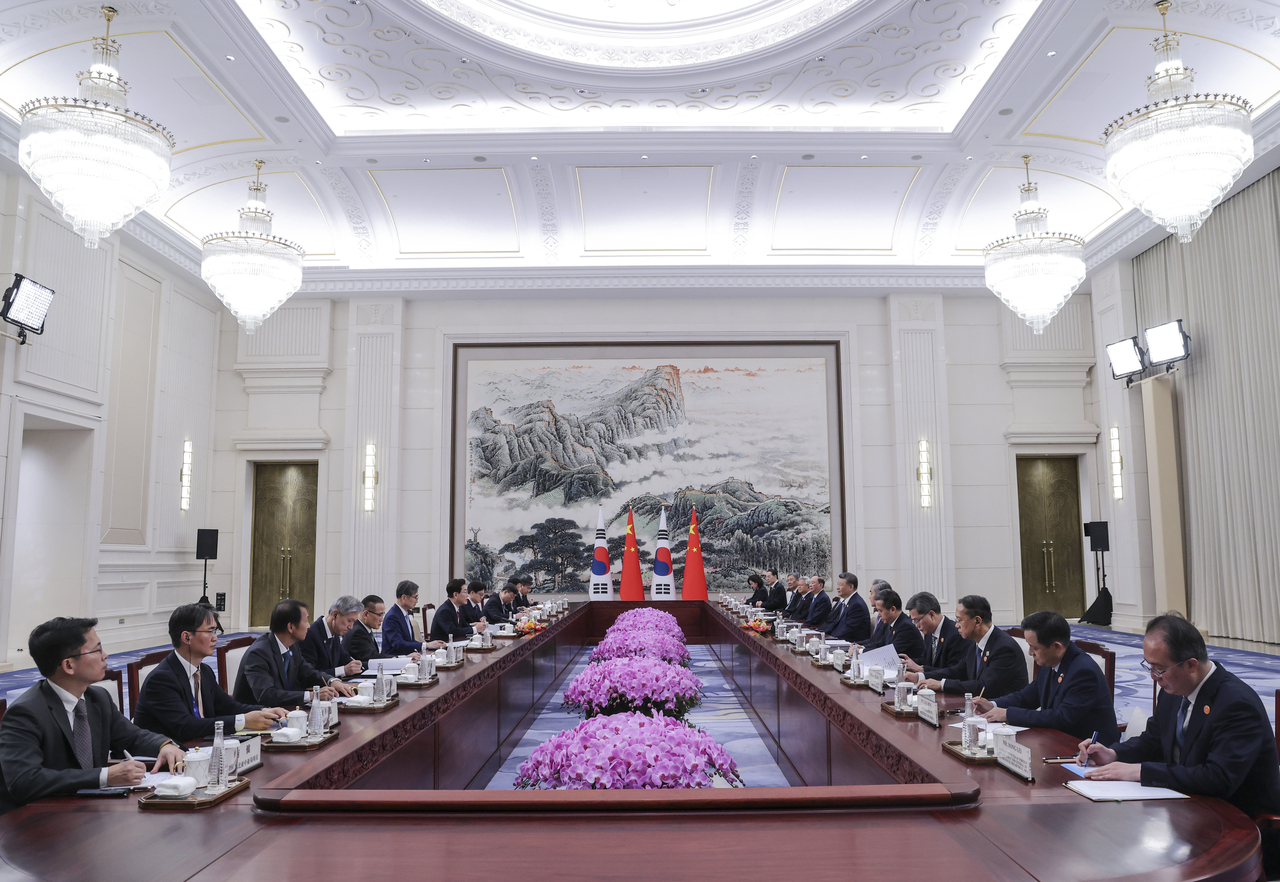
During the summit, Lee pointed to signs of improving bilateral relations over the past year, saying that the effort to restore ties had gained momentum.
“As we pledged a year ago, the momentum toward a full restoration of Korea-China relations has become firmly established, and our people are beginning to experience the benefits of improved bilateral relations in their daily lives,” he said.
Lee said bilateral trade had increased by nearly 50 percent in the first half of this year compared with the same period a year earlier. He also projected that exchanges of people between the two countries would exceed 10 million this year for the first time since 2019.
Lee further highlighted the approaching 35th anniversary of diplomatic relations between Korea and China in 2027, calling for the milestone to serve as a new impetus for bilateral cooperation.
“I hope we can work together to make this meaningful occasion a new driving force for the development of bilateral relations,” he said.
Xi called for the "healthy and stable development of bilateral relations" on the 35th anniversary, describing South Korea and China as "close, friendly neighbors and strategic cooperative partners."
Xi further emphasized the importance of economic cooperation amid growing international uncertainty.
“Although the international situation is changing rapidly, both China and Korea are beneficiaries of multilateralism and free trade,” he said. “China is willing to strengthen communication and coordination with South Korea, safeguard the stability and smooth functioning of global industrial and supply chains, and promote improvements to the global governance system.”
Wednesday’s talks marked the third summit between Lee and Xi, following their meeting in Gyeongju, South Korea, last November on the sidelines of the APEC summit hosted by South Korea, and another during Lee’s state visit to Beijing in January.
dagyumji@heraldcorp.com