China’s aggressive venture incubation across physical AI, offers contrast with Hyundai’s Big Tech outsourcing on robot brains
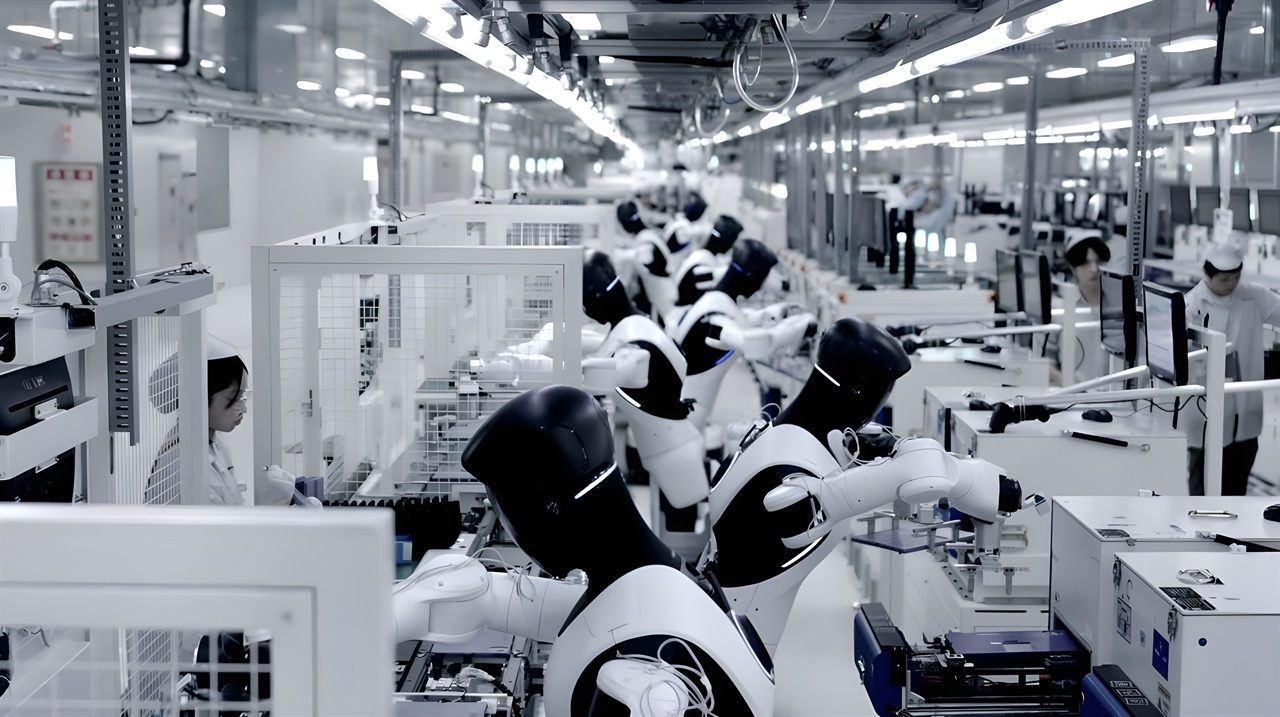
In the race for humanoid robotics supremacy, hardware is no longer the main battlefield: it now hinges on whoever secures the physical-AI ecosystem.
That contest has split the industry into two divergent playbooks. China’s robotics leaders are pouring venture capital into local semiconductor, sensor and AI startups to build a tightly integrated domestic supply chain immune to foreign restrictions.
Hyundai Motor Group’s Boston Dynamics is taking the opposite route, outsourcing its robot’s brains and virtual training systems to Google DeepMind and Nvidia.
Commercialization is nearing, and this high-stakes test will determine whether China’s vertical self-sufficiency or Hyundai’s global tech alliance will capture the future of physical AI — a key to unlocking general-purpose human-like labor.
From robot makers to tech incubators
Despite a cooldown in robotics funding across China in the second half of this year, industry frontrunners are aggressively expanding investments in early-stage startups across AI semiconductors, precision sensors, dexterous robotic hands and physical-AI models to secure key technologies.
According to media reports Wednesday, AgiBot recently scaled up its venture incubation initiative, “startup incubation plan A,” aiming to nurture over 50 ventures globally over the next three years. Over the past year, the company has backed more than 20 startups across sensors, chips, biomimetic robotics, data collection and physical-AI architectures.
Going forward, AgiBot plans to widen its investment scope into next-generation AI infrastructure, frontier models, aerospace and life sciences to push the boundaries of embodied intelligence.
Similarly, key rival Unitree is pursuing the corporate venture strategy by partnering with Sequoia China to launch the “Shanyuchuang plan.” The joint incubation program aims to fund early-stage developers of core components and physical-AI solutions, blending Unitree’s engineering prowess with the venture firm’s capital expertise.
Unitree also seeks to cultivate an ecosystem of over 200 partner companies covering robotics software, simulation platforms, AI algorithms and overseas distribution networks. Total collaboration commitments are projected to reach several billion yuan, or hundreds of millions of dollars, over the next five years.
Industry insiders say Chinese humanoid robotics leaders are embracing vertical integration — controlling the full technology stack from physical components to AI algorithms within localized ecosystems — largely in response to fierce domestic price wars and US chip curbs.
Arnold Platz, founder and CEO of Hungary-based AI recycling firm General Future Holding, which partners with Chinese robotics manufacturers, highlighted the sector’s aggressive momentum.
“There are still some teething problems, but on price-to-value nobody can beat them right now, and a lot of small startups are jumping into humanoids at the same time. Platz said. “In a price war like that, owning the (full) stack is how you survive on margins.”
According to Patrick van Stokhem, AI and robotics director at Dutch installation and construction firm Breman Installatiegroep — which deploys Chinese humanoids at European industrial sites — instead of building every part internally, leaders such as AgiBot are forming a keiretsu-style network of minority venture stakes to secure control over the industry’s scarcest components.
Noting that future profits will hinge on high-barrier elements spanning dexterous hands, tactile sensing, compute and training data, van Stokhem said, “In a price war, the robot body becomes a commodity. China is buying the bottlenecks, not the margins.”
Hyundai’s Big Tech partnership
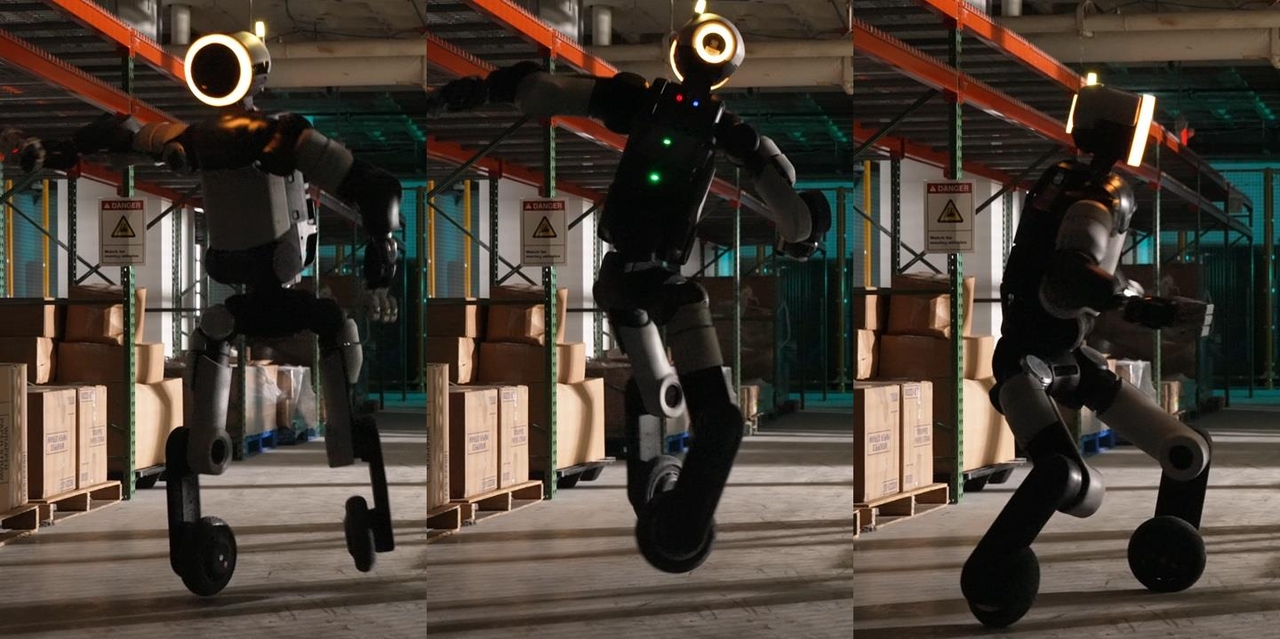
Hyundai is pursuing a global alliance-driven approach for Boston Dynamics — leveraging its automotive manufacturing and industrial testbeds while outsourcing foundational AI and Vision-Language-Action models to Google DeepMind and digital-twin simulation to Nvidia.
This horizontal strategy offers an immediate shortcut, but the trade-off is operational control and speed.
Platz warned that reliance on third-party software fundamentally constrains long-term development momentum. “Partnering gets you world-class AI fast, and Hyundai has real factories to test in, which matters a lot. … (But) when the brain of your robot belongs to a partner, you move at the partner’s speed,” he said.
Platz also highlighted the vulnerability of relying on external partners, saying, “Your roadmap depends on someone else’s priorities and leadership. … The leadership change at Nvidia this month shows how fast a partner can turn into a question mark.”
Van Stokhem echoed these concerns, emphasizing that the central weakness of an alliance lies in slow feedback loops. Chinese rivals, however, can upgrade hardware and software within weeks through tightly integrated local supply chains.
More critically, he warned that real-world factory data from Hyundai risks training foundation models that Big Tech partners could later license to competitors — a risk underscored by deep historical ties, including Google’s past ownership of Boston Dynamics and Boston Dynamics’ former longtime chief technology officer joining Google DeepMind.
“Today’s AI partner keeps the option to become tomorrow’s competitor,” he cautioned.
Early verdict?
Experts remain divided over whether China’s tightly integrated supply chain or Hyundai’s cross-border partnership model will ultimately capture the market.
“Robot makers that have to compete with China are in serious trouble," Platz said. “Actuators are where Chinese companies are still behind, but I’d measure that gap in months or a few years, not decades. After that, at least on price-to-value, they’ll lead in almost every component.”
He noted that China combines manufacturing scale, a tighter supply chain and faster public acceptance of robots — alongside potential defense applications — creating an advantage rivals will struggle to match.
Yun Dong-won, a professor of robotics and mechatronics engineering at Daegu Gyeongbuk Institute of Science and Technology, noted that Hyundai’s approach mirrors South Korea’s deeply rooted “fast follower” playbook.
While forging external partnerships is an effective approach to quickly build near-term competitiveness, Yun warned, “Developing sovereign core technologies is essential… Without long-term investments in homegrown intellectual property like China’s, the company risks falling behind over time.”
Van Stokhem noted that while China is poised to dominate commoditized robot hardware, Western-aligned alliances like Hyundai’s are better positioned to win over heavily regulated industrial facilities across trusted markets where security and compliance play a pivotal role.
He emphasized commercial supremacy will be decided not in the lab, but on the factory floor — where uptime, safety certification and integration determine the winner.
hyejin2@heraldcorp.com